

We would like to share here the interview by the greek journalist Yiannis Papageorgiou to the President of the Union of European Federalists Domenec Ruiz Devesa and published in the newspaper Insider with the title: "Be ready for a veto": Devesa's message for the new European budget
To read in Greek here
The debate on any Community budget usually lasts until the last minute before it is implemented. And it is one of the debates that all European institutions, including the European Parliament, play a decisive role in shaping it.
With the Commission's proposal for the Multiannual Financial Framework 2028-34 on the table, the controversies are already intense. The main objections raised by the "traditional" Eurogroups, including that of the European People's Party, mainly concern the proposed merger of cohesion and CAP funds as well as the proposed amount of the budget based on the increased needs and additional objectives of the Union.
A few hours after his statement to Politico about the need for determination in the possibility of the use of the veto by the European Parliament, the President of the Union of European Federalists (UEF) and former Spanish MEP of the Social Democrats (SnD) Domenec Devesa was in Athens and spoke to insider.
An opportunity for a political deepening of the Union
He argued that the European Parliament must be prepared to use its "veto" on the one hand to strengthen the amount of the budget and the support of Regions and farmers and on the other hand to achieve further political deepening beyond the expectations for a common defense approach.
"We need to strengthen the role of the Regions and the European Parliament in the multiannual budget. At the same time, however, it is an excellent tool for institutional innovations. That is why we must encourage Parliament to be smart and to tell the governments of the member states... look, if you want us to vote on your MFF — which must be approved — then you must also move forward with both defense and political union," he stressed.
He added: "The European Parliament is on our side. Now, we have to do the work with the member states."
The interview in detail
You recently openly called on the European Parliament to be ready to veto the proposal for the next budget. Because; And how would this help create the consensus needed for the next Multiannual Financial Framework or for the European Commission's omnibus packages?
From our point of view, the federalist point of view, it is very clear that we need a defensive union. A defence alliance cannot only be about the purchase or joint production of weapons. It must include a European chain of command, a European staff, a system of territorial defence. And that means that we also need a political union. We cannot have a defence union without democratic control, without democratic legitimacy. I believe that public opinion is in favour — if you look at the Eurobarometer, a large majority wants a European army and a veto-free system. A federal political union also means this.
We have the European Parliament in favour. However, the governments of the member states are not moving in this direction. So, either we can convince them — we have not been very successful in this so far — or the European Parliament can make use of an important tool: a possible veto on the European Union's multiannual budget. The Multiannual Financial Framework is not an end in itself. It is very important to increase its size because 1% of European GDP is not enough. And we must not "kill" the funding of the Regions and farmers in order to give more money to defense. So we need to increase the budget as a whole.
We need to strengthen the role of the Regions and the European Parliament in the multiannual budget. At the same time, however, it is an excellent tool for institutional innovations. That is why we must encourage Parliament to be smart and to tell the governments of the member states... look, if you want us to vote on your MFF — which must be adopted — then you too must move on to defence and to political union.
On the one hand, I understand that when you are in crisis or under pressure, you need to make more difficult decisions. On the other hand, do you think that the federalists, or your political group, need some repositioning to deal with the current geopolitical reality?
These geopolitical shifts strengthen the argument in favor of federal union. We are 27 nation-states. We cannot survive alone against Russia. Trump is not an ally, it's very clear. And the Chinese too. So we need to be more united. And what does this mean? It's easy to say — almost like a slogan — "a more united Europe". But what does it mean in practice?
It is the federalist proposal: to have a European defense that we can activate if NATO is not available or if the Americans are not available. And to have a more efficient and democratic decision-making process. That is, a system without a veto and a Parliament that can also decide on revenue and taxation.
You have already referred to the new MFF. To build consensus, you need to persuade the so-called "frugal" to invest more in the EU. Under geopolitical shifts and current pressure, how is this possible? Do you think there is a way to convince them?
The "thrifty" are also in favor of funding new priorities: research and defense — and we can all agree on that. But to get there, they need a new MFF with the support of the European Parliament. Otherwise, we keep the current MFF, which will be extended. They therefore do not receive funding for the new priorities. This is an incentive for compromise, for them to understand that we need a bigger budget so that we do not sacrifice important policies for the non-"thrifty" - let's call them so, Greece, Spain, Italy, France... For us, cohesion and agricultural policy are important. Therefore, we need a compromise.
Under this pressure and these current shifting developments, how optimistic can a federalist be?
Jean Monnet had said "I am not optimistic, I am determined". And I agree with that. The point is not to make assumptions about what will potentially happen. It is to be determined, to defend our positions with logic, with facts and with conviction, in order to convince. The European Parliament is on our side. Now, we have to do the work with the member states.
Greece hosts, for the first time, the meeting of the Union of European Federalists, with a landmark event in the Hellenic Parliament that underscores its upgraded role in shaping the new European agenda
With a historic and high-profile event in the Hellenic Parliament, the Union of European Federalists (UEF) officially launched the proceedings of its Federal Committee in the emblematic and fully attended Senate Chamber on Friday, 21 November. European political figures, Greek and foreign Members of Parliament, Members of the European Parliament, and prominent personalities shaping the public debate participated in a substantial discussion on deepening and accelerating European integration.
Under the central theme “For a stronger, more democratic, and inclusive European Union – towards a European federation,” the event highlighted the need for bold institutional reforms and for a renewed European vision capable of responding to the challenges of our time.
Ahead of Greece’s Presidency of the Council of the European Union in 2027, the country is emerging as a decisive actor in shaping the new European agenda. Hosting the UEF’s proceedings in Athens confirms Greece’s leading role within the European landscape.
In parallel, a structured dialogue is underway with Greek Members of Parliament for the creation of a Federalist Group in the Hellenic Parliament. This initiative is of particular importance for strengthening institutional dialogue and aims to: support reforms for a more effective and democratic EU, enhance the role of the Hellenic Parliament in European affairs, and promote Greece as a driving force in European integration.
The event was organized by the UEF, the Spinelli Group, and the UEF Greece (EEEnOE), marking a key moment for the European debate on the future of the Union and the transition towards a stronger, more democratic, and inclusive European Federation.
The program included an official guided tour of the Parliament—a symbolic reminder of the parliamentary dimension of European democracy—as well as high-level opening remarks by:
• Ioannis Plakiotakis, First Vice-President of the Hellenic Parliament
• Domenec Devesa, President of the UEF
• Gabriele Bischoff, President of the Spinelli Group, Member of the European Parliament
• Daphne Gogu, President of UEF Greece
A special highlight of the event were the video messages delivered by Sandro Gozi, Member of the European Parliament and Honorary President of the UEF, and Josep Borrell, former High Representative of the EU and former President of the European Parliament, both of whom emphasized the historic significance of European integration and the need for political courage to complete it.
The event also featured the presentation of the questionnaire results concerning the upcoming Cypriot Presidency of the EU, with remarks by Christos Stylianides, Member of Parliament and former Commissioner of the Republic of Cyprus.
Two high-level thematic panels followed:
The first panel, moderated by journalist and political analyst Angelos Athanasopoulos, brought together leading figures of the European political scene, including UEF President Domenec Devesa, Members of the European Parliament Dimitrios Tsiodras and Daniel Freund, as well as Dimitris Mantzos, Member of Parliament for PASOK – Movement for Change. The discussion underscored the need for a unified and effective European voice on the international stage, with a focus on defence, energy, enlargement, and the EU’s strategic autonomy.
The second panel, moderated by author and economic analyst Giannis Papageorgiou, highlighted the importance of completing the Single Market and strengthening competitiveness, as well as the critical role of negotiations on the Multiannual Financial Framework. Participants included Gabriele Bischoff, President of the Spinelli Group, Dimitris Kairidis, MP for New Democracy, Nadia Giannakopoulou, MP for PASOK, former MEP Petros Kokkalis, MEP Raquel Garcia Hermida Van der Walle (online), and Giannis Bournous, Vice-President of the Party of the European Left. The contributions also addressed key issues related to technology, migration, and the climate crisis, confirming that completing European integration requires political synthesis and a shared strategic direction.
Speakers stressed that Europe stands at a pivotal moment: geopolitical instability, hybrid threats, the rise of populism and disinformation, energy challenges, the need for green and technological transition, and the forthcoming enlargement all demand deeper institutional integration and stronger democratic legitimacy for European decision-making.
As Greece prepares for its Presidency of the Council of the EU in 2027, it is emerging as a key actor in shaping the new European agenda, hosting the heart of the European federalist movement in Athens.
The Federal Committee proceedings continued on 22 and 23 November in Piraeus, at the building housing the Historic Library of the Aikaterini Laskaridis Foundation. The sessions focused on developing concrete proposals and initiatives in preparation for the organization’s future strategy, ahead of the pan-European Congress to be held in early 2026 in Spain.
The meetings in Athens and Piraeus were institutionally supported by the Municipality of Piraeus, represented by Deputy Mayors Mr. Dimitris Karydis and Ms. Andriana Zarakeli, acting on behalf and with the continuous support of the Mayor of Piraeus. The active involvement of the municipal authority underscored the importance the Municipality places on hosting international institutional processes and on strengthening Piraeus’ role as a hub for dialogue and cooperation at the European level.
For more information click HERE
UEF Greece (EEEnOE)
For the questionnaire regarding the Cypriot Presidency during the first half of 2026 click HERE

©Copyright: Hellenic Parliament-Photographer: Aliki Eleftheriou
Athens-Greece

©Copyright: Hellenic Parliament-Photographer: Aliki Eleftheriou
Athens-Greece

©Copyright: Hellenic Parliament-Photographer: Aliki Eleftheriou
Athens-Greece

©Copyright: Hellenic Parliament-Photographer: Aliki Eleftheriou
Athens-Greece

©Copyright: Hellenic Parliament-Photographer: Aliki Eleftheriou
Athens-Greece

©Copyright: Hellenic Parliament-Photographer: Aliki Eleftheriou
Athens-Greece

©Copyright: Hellenic Parliament-Photographer: Aliki Eleftheriou
Athens-Greece

©Copyright: Hellenic Parliament-Photographer: Aliki Eleftheriou
Athens-Greece

©Copyright: Hellenic Parliament-Photographer: Aliki Eleftheriou
Athens-Greece

©Copyright: Hellenic Parliament-Photographer: Aliki Eleftheriou
Athens-Greece
Media Contact
Press Office – UEF Greece
📩 info@uef-greece.gr
🌐 www.uef-greece.gr
Please find here below the resolutions and the urgent statement approved
- Resolution 1 - Federalist Strategy for a Federal Reform of the EU
- Resolution 2 - A Federal Europe to build a genuine European Defense and foreign policy
- Resolution 3 - Tonight or Never
- Resolution 4 - European Digital Sovereignty Now
- Urgent Statement - Ukraine and the EU should stand firm and come up with a proper peace plan for peace between Ukraine and Russia
Please find here below the documents presented by UEF Secretariat and EB Members
- Activity Report of the UEF (covering the period from early July to the end of November 2025)
- Analysis of UEF advocacy achievements in the field of defence
- UEF Budget Presentation 2026
Report from UEF Sections (the UEF Secretariat can receve more reports by other sections)
- Report UEF France Activities 2023-2025
- Executive Summary EUD Activities 2025
- Report MFE Activities June - Nov 2025
- Report UEF Spain Activities 2025
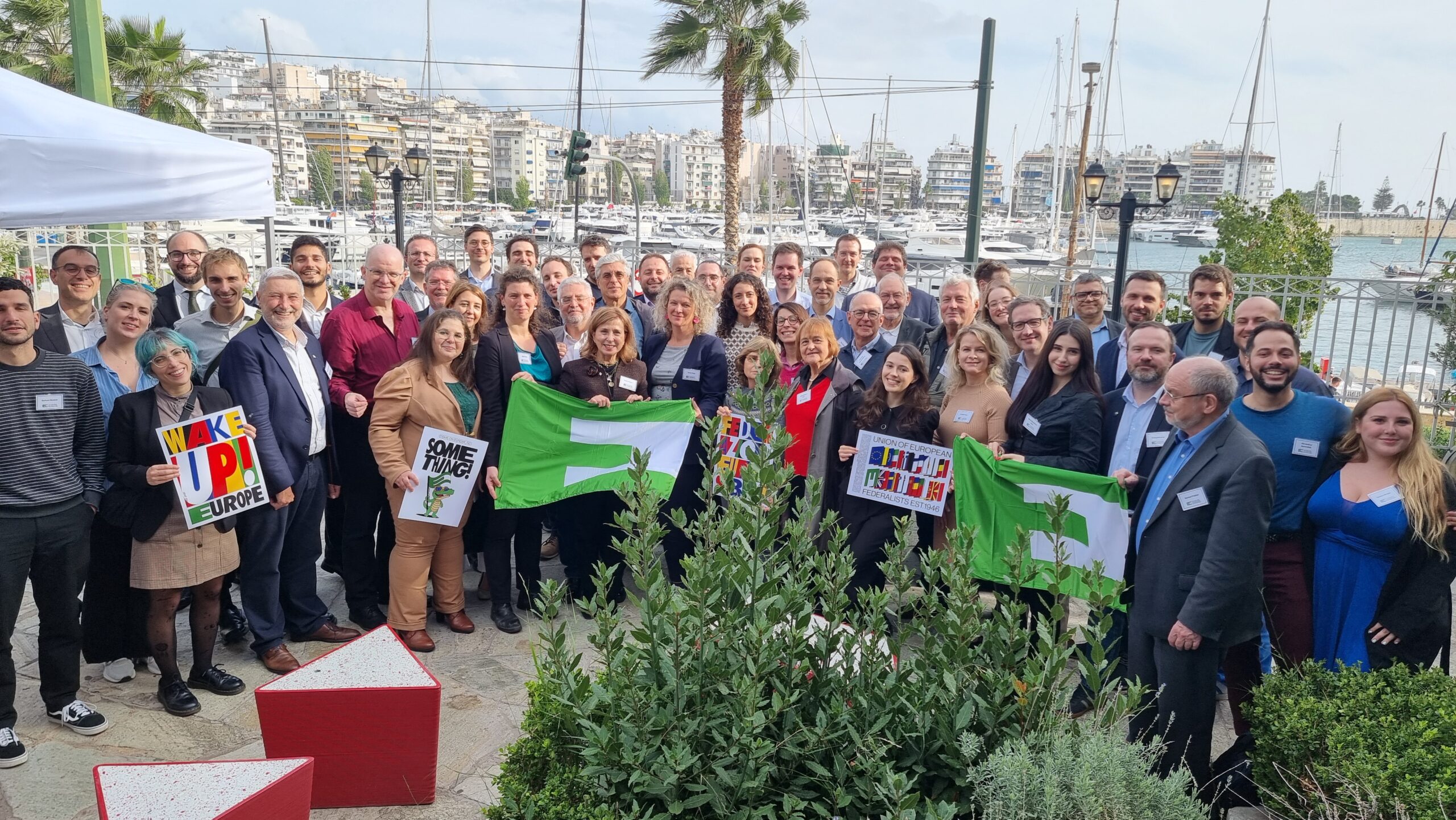
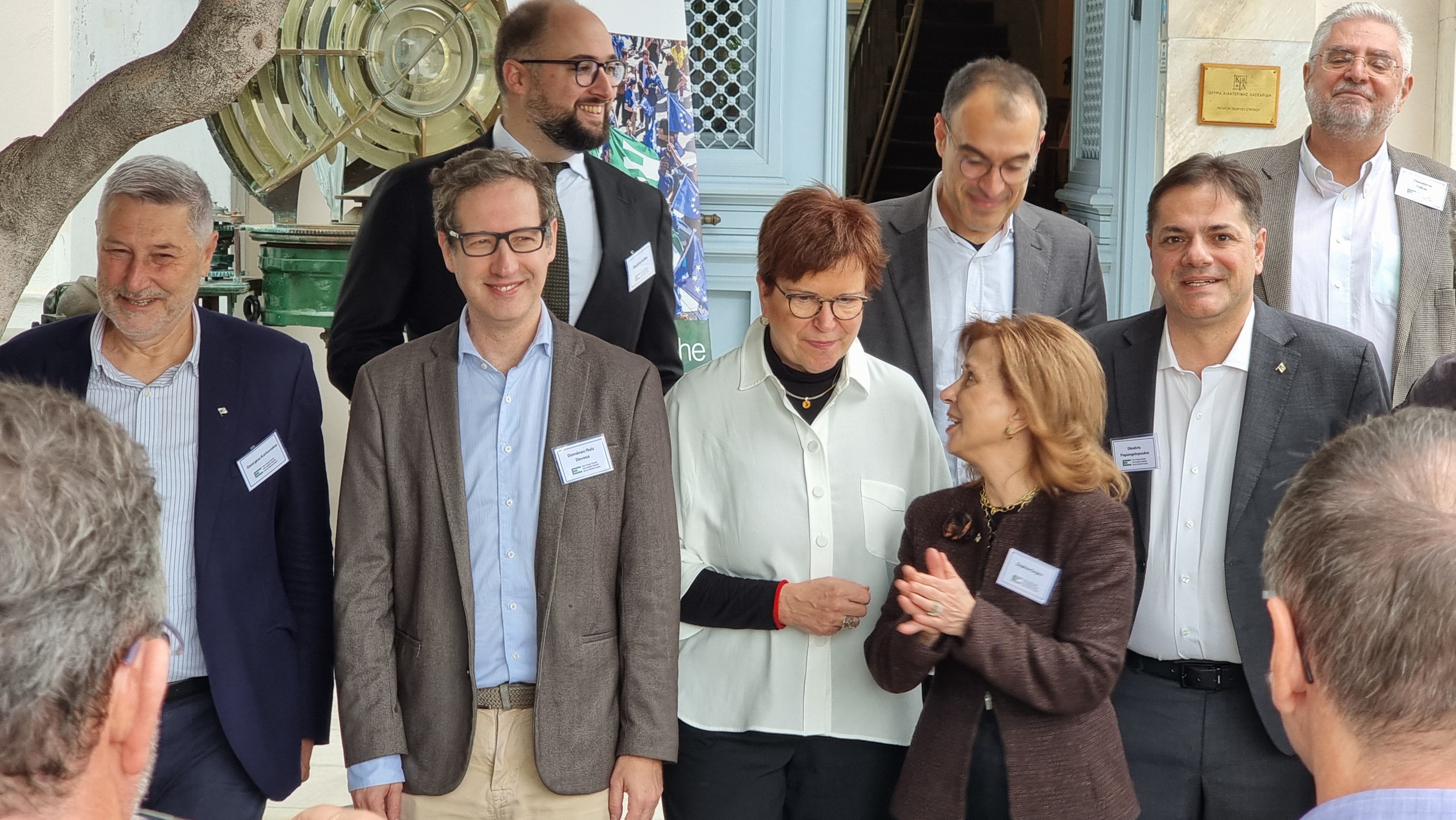
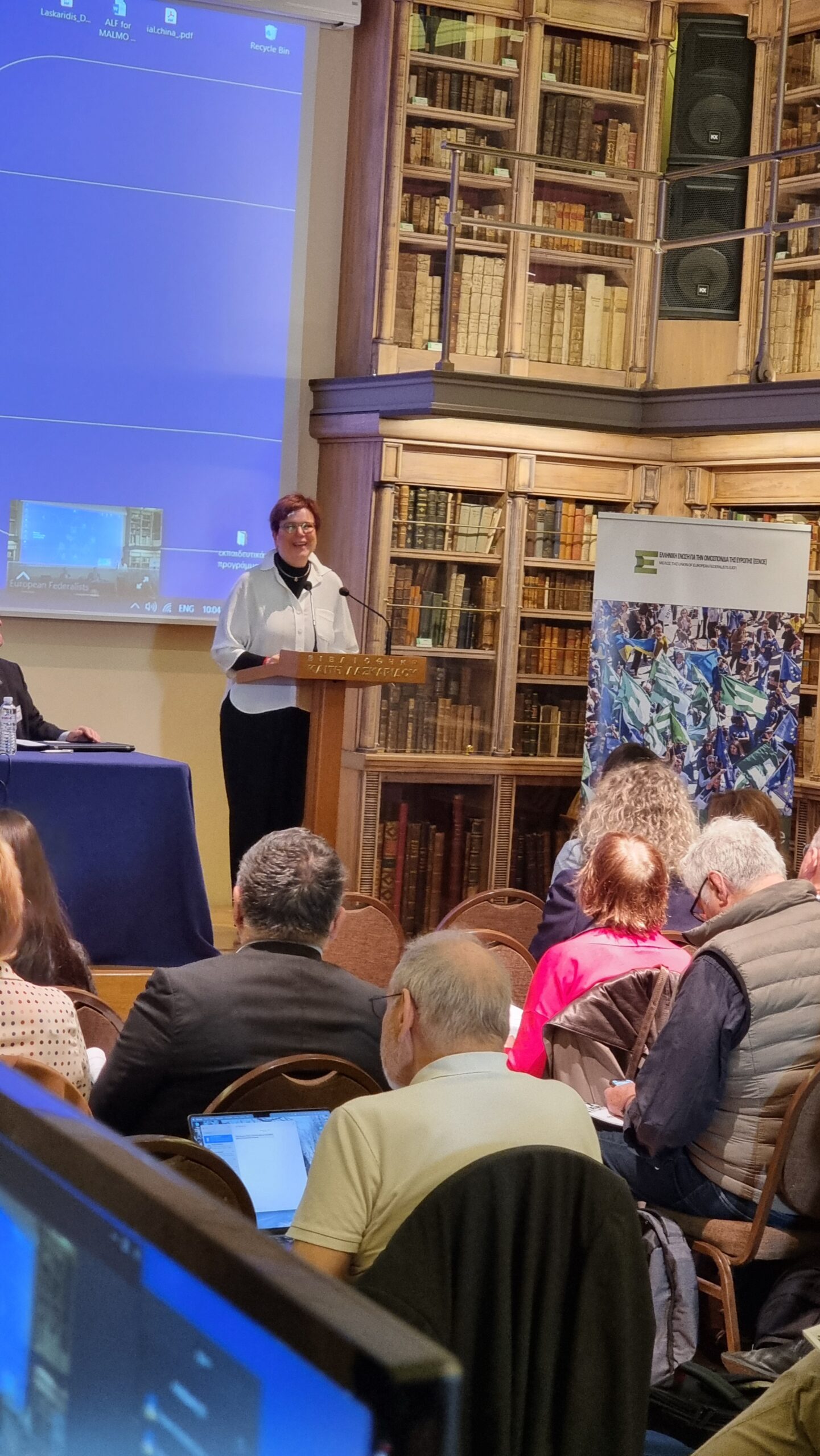
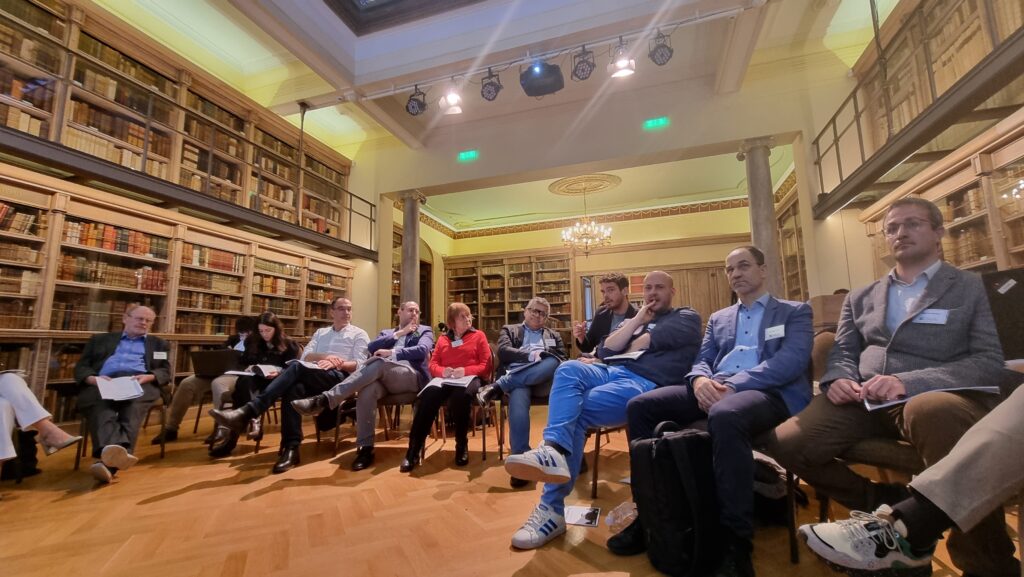
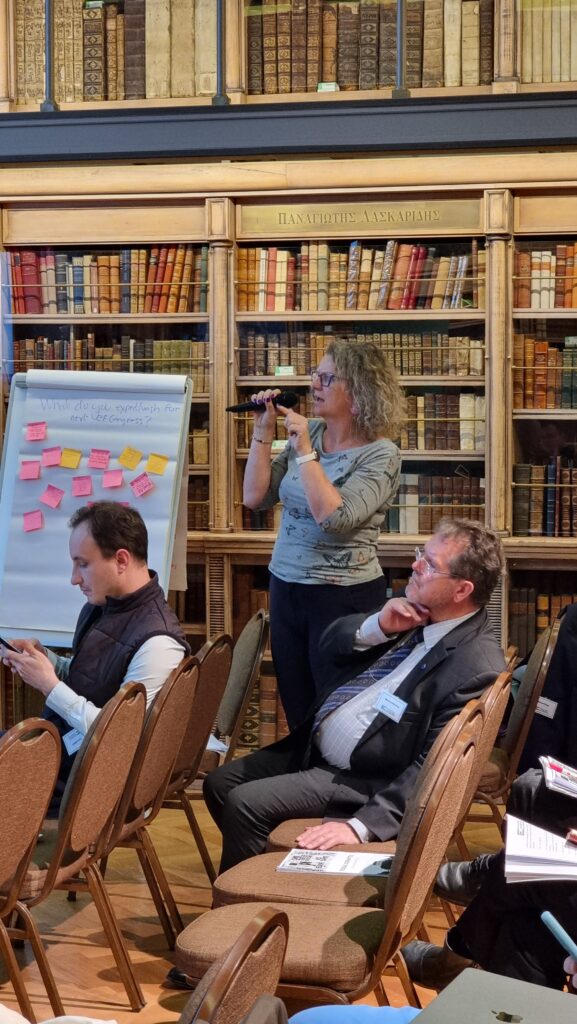
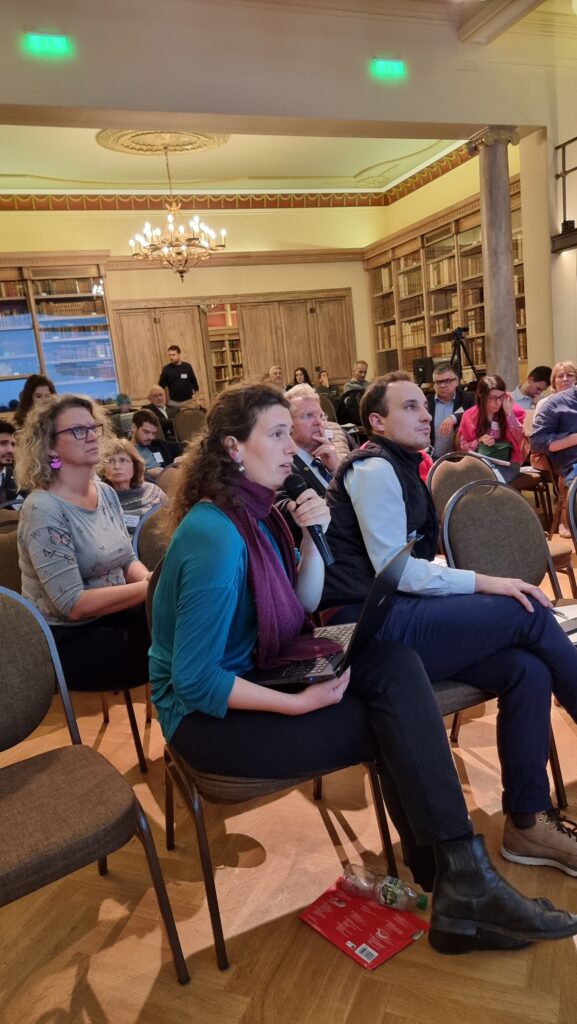
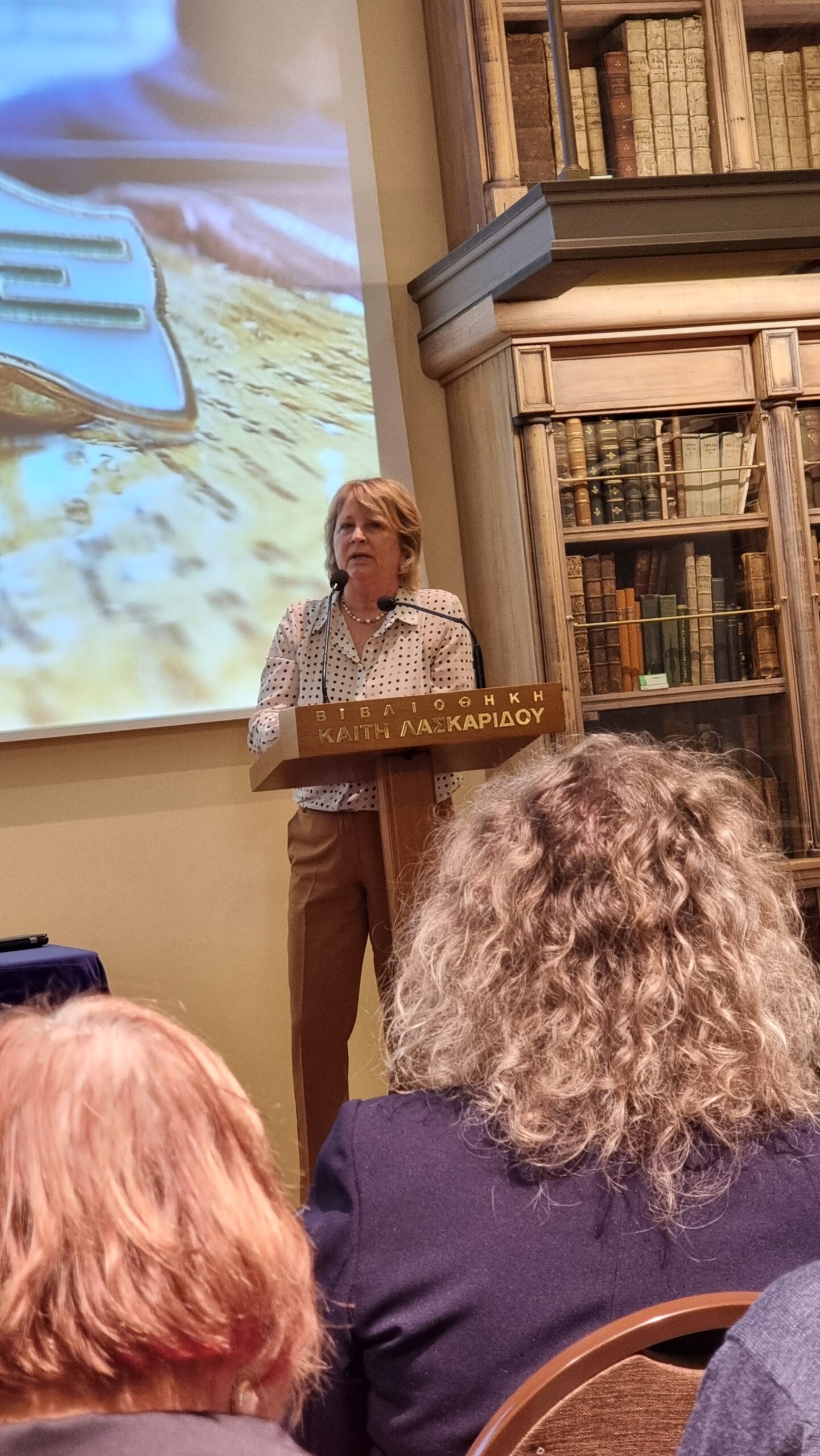
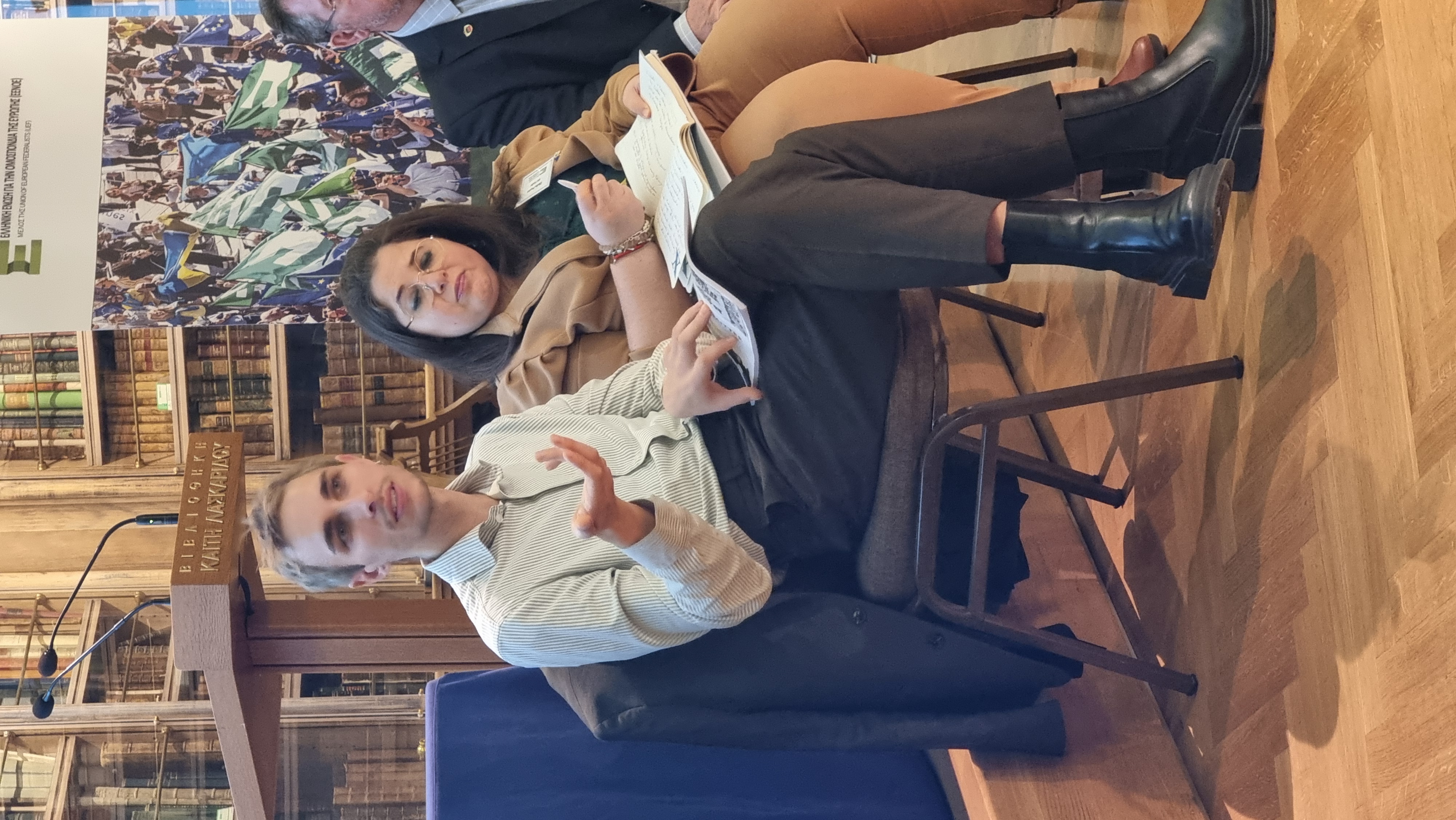
Some pictures of the event
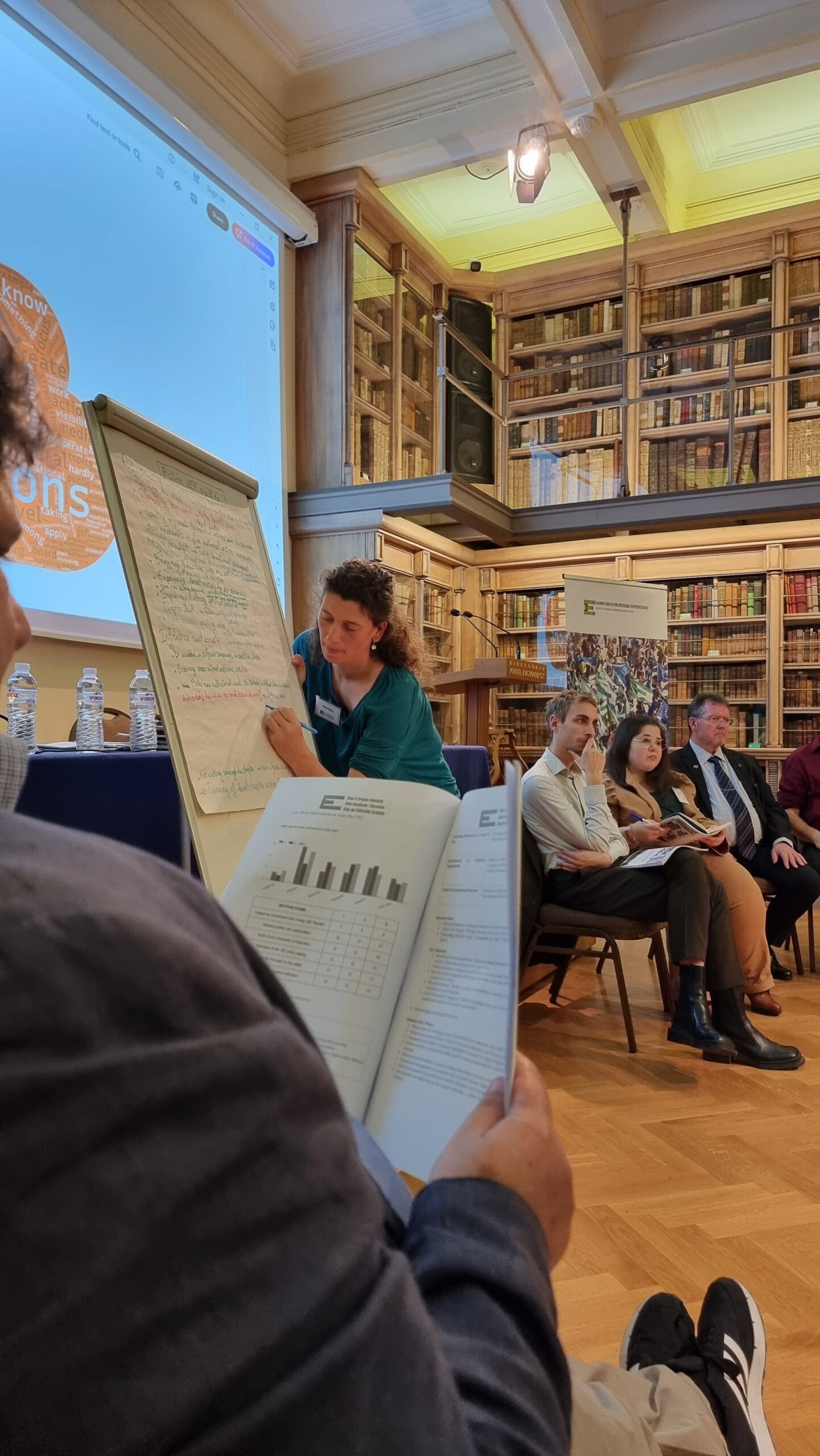
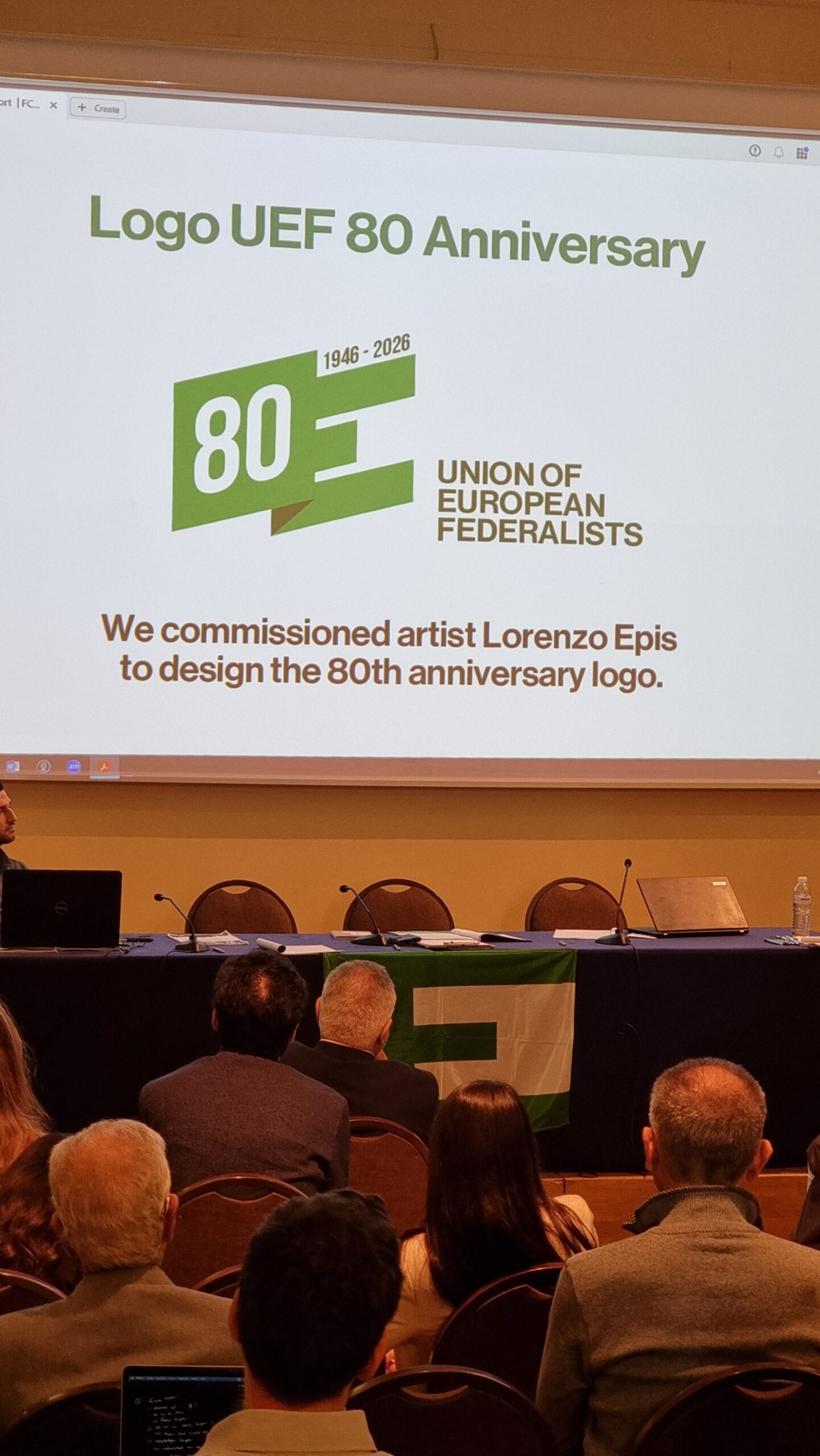
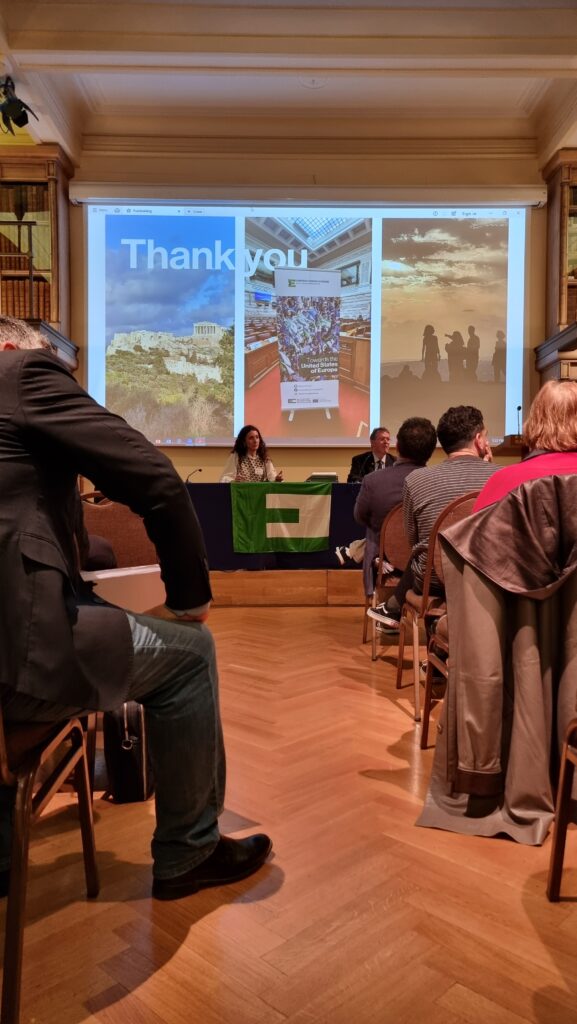
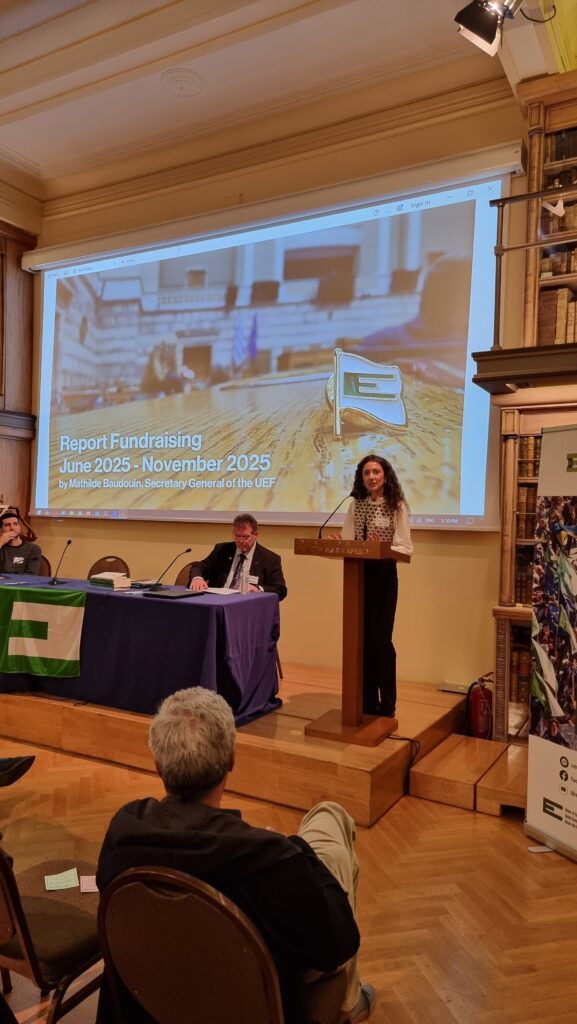
Here the press release the inform about the event: LINK
Here the interview article to Domenec Ruiz Devesa form ATHENS DIGEST: LINK
Brussels, February 18, 2025
The week of the 10th of February 2025 will go down in history as one of infamy. The Trump administration started a bilateral dialogue with Putin on Ukraine, setting up a negotiation process that excludes both the attacked country but also Europe; hinted at the end of US security guarantee to the continent; and disparaged European democracy at the Munich Security Conference. In a meeting of selected EU leaders in Paris on 17 February, they struggled to show a united approach to position our Union in view of this new geopolitical situation. They also failed to put forward concrete institutional plans to achieve more political unity and a Defence Union, beyond agreeing on increasing defence expenditures.
The aggression and humiliation that Europeans are suffering at the hands of the Trump Administration leave no room for doubt or speculation. A dual attack is underway: on European security—now seen as nothing more than a burden by Washington, which seeks to abandon Ukraine in the hands of Putin in a logic of “spheres of influence”; and on liberal democracy—also regarded as an obstacle to the project of a new autocratic and populist international order.
In light of the opening of negotiations between the U.S. and Russia for the partition of Ukraine, what alternatives remain? The future of Ukraine is at stake, and with it, the future of Europe itself. If Europeans cannot provide Ukraine with support and certainty, the European Union itself will be overwhelmed. In this emerging world of great autocratic imperial powers, the only way to save democracy and freedom is to counterbalance them with the political weight of a great democratic and federal state, able to secure its own defence, since the US is not anymore a reliable partner, and more likely, and it has become an adversary.
Right now, citizens want a common defense, as confirmed by surveys with overwhelmingly high percentages; and many European states are already directly threatened by Russia. The only current alternative proposed by EU leaders seems to be the individual rearmament of countries, aiming to increase integration and interoperability but only on a voluntary basis. However, the industrial dimension alone will not produce a Defence Union able to guarantee the territorial defence of Europe. Moreover, under these conditions, the rush to rearm will inevitably result in a significant portion of new defense investments being spent on purchasing arms and technology from third countries, primarily the US. That will be folly.
Building an autonomous security and defense requires strong political will for integration, which is essential to address two crucial issues: developing a collective strategy based on a shared analysis of priority threats and interests to be protected; and mobilizing significant financial resources. Whatever model is chosen to build a European armed, it must be acknowledged that, in parallel, the formation of a unified political leadership is necessary—one capable of representing the common interest and making political decisions accordingly.
Therefore the UEF calls for:
- Continued and stronger support to Ukraine, particularly in terms of delivery of weapons and its range of use, filling if needed the potential gap left by the US.
- The rejection of any deal between the US and Russia that is not accepted by Ukraine and that does not provide long-term security for our continent.
- An urgent an extraordinary meeting of the European Council to address concrete steps for the political unification of Europe, in line with the European Parliament´s 2023 constitutional proposal, and the available possibilities for setting-up a European Defence Union, including among others, those offered by the Permanent Structured Cooperation (PESCO).
We call on the European Parliament to support the said objectives in its plenary meeting of 10th-13th March 2025, and on the most responsible and active Member States to mobilize within the European Council accordingly.
Europe is in its darkest hour since 1945. But now, there are no saviors across the Atlantic, while we face an imminent danger in our Eastern border. Europe can only count on itself and must decide whether to remain passive and allow itself to be dominated by the emerging Trump-Putin Axis, or to react with unity and decisiveness.
RELATED LINKS
- Resolution | A European foreign and security policy in a Changing World
- Resolution on Building Consensus for Treaty Change


The European Letter is back and it is dedicated to the Mario Draghi's Report.
Mario Draghi's Report on the Future of European Competitiveness analyses Europe's decline with irrefutable data, and identifies internal fragmentation as the primary reason for the EU's inability to advance the common European interest and to mobilise sufficient resources for innovation and economic development. The solution indicated by Draghi is to equip Europe with the political-institutional instruments to act united as often as necessary, on many interdependent political levels. For this it is indispensable to introduce the necessary institutional changes in the Union by reforming the Treaties.
The European Letter is published in 7 languages - from the edition 77 - under the auspices of the Luciano Bolis European Foundation in cooperation with the Union of European Federalists.
The European Letter is a periodical publication started in 1997 with the aim of stimulating political debate in national parliaments and governments, and in the European Parliament.
The European Letter 82 entitled "Draghi's Plan for Europe: To Be Competitive, the Union Must Be Reformed", is sent to parliamentarians in the following legislative bodies:
- European Parliament
- Bundestag
- Parliament of the French Republic
- Parliament of the Italian Republic
- Cortes generales (Spanish Parliament)
- Nationalrat (Austrian Parliament)
- Belgian Federal Parliament
- Hellenic Parliament
- Parlamentul României
Here the version avaiable:
We re-publish here the article published in the Greek national newspaper TO BHMA, by MEP Nikolas Farantouris who has just been appointed as a member of the Board of the Spinelli Group for The Left component, on 19 September at the first meeting of the Spinelli Group in Strasbourg.

TRANSLATION IN ENGLISH
"I believe in a Left that does not indulge in introspection, internal conflicts, divisions and dogmatism", said SYRIZA MEP Nicolas Farantouris.
SYRIZA MEP and LEFT member Nicolas Farantouris was elected member of the Spinelli Group's Board of Directors. On Wednesday 18/9 on the sidelines of the Plenary Session of the European Parliament in Strasbourg, the Spinelli Group Board was constituted and held its first meeting.
In a statement from Strasbourg, Nicolas Faradouris stressed: "I feel great pleasure and honour as a Greek and European citizen, but also as the only MEP of the Left who participates in the Spinelli Group's Board. The legacy of Altiero Spinelli is the 'Left that gives birth', which steps forward with a vision for future generations, which embraces, which does not indulge in introspection, internal contradictions, divisions and dogmatism. I believe in this Left as a bulwark against the extreme right, for Europe and for Greece and for a new beginning of the process of European integration."
The Spinelli Group and federalism
The federalism movement or federalism is the political theory that advocates the federalization of the political and social organization of Europe. On 1 September 2024, on the initiative of the Spinelli Group, the Declaration on the revision of the Treaties was signed on the island of Ventone in Italy, where in 1941 Altiero Spinelli, imprisoned by the fascist Mussolini regime, wrote the "Manifesto for a free and united Europe".
After the end of the war Spinelli was actively involved in the creation of the European Union along with other pioneers of European integration, Robert Schuman and Jean Monnet.
Nicolas Faradouris is also a member of the European Parliament's Committees on Budgets, Environment, Public Health and Constitutional Affairs (Co-ordinator).
«Πιστεύω στην Αριστερά που δεν αναλίσκεται σε ενδοστρέφεια, εσωτερικές αντεγκλήσεις, διχασμούς και δογματισμούς» δήλωσε ο ευρωβουλευτής του ΣΥΡΙΖΑ, Νικόλας Φαραντούρης.
Μέλος του Διοικητικού Συμβουλίου του Spinelli Group εξελέγη ο ευρωβουλευτής του ΣΥΡΙΖΑ και μέλος του LEFT Νικόλας Φαραντούρης. Την Τετάρτη 18/9 στο περιθώριο της Ολομέλειας του Ευρωπαϊκού Κοινοβουλίου στο Στρασβούργο το ΔΣ του Spinelli Group συστήθηκε σε σώμα και πραγματοποίησε την πρώτη συνεδρίαση του.
Σε δηλώσεις του από το Στρασβούργο ο Νικόλας Φαραντούρης τόνισε: «Αισθάνομαι μεγάλη χαρά και τιμή ως Έλληνας και Ευρωπαίος πολίτης, αλλά και ως ο μόνος ευρωβουλευτής της Αριστεράς που συμμετέχει στο ΔΣ του Spinell Group. Η παρακαταθήκη του Αltiero Spinelli είναι η ‘Αριστερά που γεννά’, που μπαίνει μπροστά με όραμα για τις επόμενες γενιές, που αγκαλιάζει, που δεν αναλίσκεται σε ενδοστρέφεια, εσωτερικές αντεγκλήσεις, διχασμούς και δογματισμούς. Σε αυτήν την Αριστερά πιστεύω ως ανάχωμα στην ακροδεξιά, για την Ευρώπη και για την Ελλάδα και για ένα νέο ξεκίνημα της διαδικασίας ευρωπαϊκής ολοκλήρωσης».
To Spinelli Group και o φεντεραλισμός
Το φεντεραλιστικό κίνημα ή φεντεραλισμός είναι η πολιτική θεωρία που υποστηρίζει την ομοσπονδοποίηση της πολιτικής και κοινωνικής οργάνωσης της Ευρώπης. Την 1η Σεπτεμβρίου 2024 με πρωτοβουλία του Spinelli Group υπογράφηκε η Διακήρυξη για την αναθεώρηση των Συνθηκών στη νήσο Βεντοτένε της Ιταλίας, εκεί όπου το 1941 ο Altiero Spinelli συνέγραψε, φυλακισμένος απ’ το φασιστικό καθεστώς Μουσολίνι, το «Μανιφέστο για μια Ευρώπη ελεύθερη και ενωμένη».
Μετά το τέλος του πολέμου ο Spinelli συμμετείχε ενεργά στη δημιουργία της Ευρωπαϊκής Ένωσης μαζί με άλλους πρωτεργάτες της ευρωπαϊκής ολοκλήρωσης, τον Robert Schuman και τον Jean Monnet.
O Νικόλας Φαραντούρης είναι επίσης μέλος των Επιτροπών Προϋπολογισμών, Περιβάλλοντος, Δημόσιας Υγείας και Συνταγματικών Υποθέσεων (Συντονιστής) του Ευρωπαϊκού Κοινοβουλίου.
The European Letter is back and it is dedicated to the post European Elections.
The election of Ursula Von Der Leyen as President of the Commission with the vote of the pro-European forces sends an important signal of stability, also reinforced by the downsizing of the Rassemblement national in France after the legislative elections. In her keynote speech, she also announced the next Commission's commitment to treaty reform. The window of opportunity to reform the Union thus remains open, however complex. In the meantime, history continues to knock on Europe's doors to finally come of age and assume its responsibilities.
The European Letter is published in 7 languages - from the edition 77 - under the auspices of the Luciano Bolis European Foundation in cooperation with the Union of European Federalists.
The European Letter is a periodical publication started in 1997 with the aim of stimulating political debate in national parliaments and governments, and in the European Parliament.
The European Letter 81 entitled "After the election of the EU Parliament, the reform of the EU Treaties enters into the agenda of the new European Commission", is sent to parliamentarians in the following legislative bodies:
- European Parliament
- Bundestag
- Parliament of the French Republic
- Parliament of the Italian Republic
- Cortes generales (Spanish Parliament)
- Nationalrat (Austrian Parliament)
- Belgian Federal Parliament
- Hellenic Parliament
- Parlamentul României
Here the version avaiable:
Find here the link to the article entitled "Green Deal at a crossroads: The impact of European Parliament elections on EU climate policies" published on the EUROPEAN INTEREST site.
This article was written by Theodoros TSIKAS (Political Scientist – International Relations Expert, Vice-President of the Greek Union for the Federation of Europe – EEnOE/ UEF Greece) and Ms. Marovita Nikolaidou, Communications Officer of the UEF Greece.
The European Union (EU) prides itself on leading the charge toward decarbonisation, aiming to become the first climate-neutral continent by 2050. The European Green Deal, initiated in January 2020, has been the foundation of this effort, driving significant energy and environmental legislation across various sectors. However, political opposition and climate skepticism are gaining momentum, especially evident in the recent European Parliament elections.
Despite climate change remaining a critical issue for Europeans, economic concerns and security issues are now taking precedence, as shown by recent Eurobarometer polling. The evolving political landscape in the European Parliament could have substantial implications for EU climate policies, potentially hindering progress toward decarbonisation goals and influencing global climate policy standards.
The legacy of the previous European Parliament elections in 2019 saw climate change as a key voter issue, leading to Ursula von der Leyen‘s commitment to strong climate action through the European Green Deal. This initiative included ambitious policies like the Fit for 55 package, which expanded the EU emissions trading system, introduced the Carbon Border Adjustment Mechanism, and set new standards for land use, transportation, and energy sectors.
Despite initial progress, the EU’s green momentum has waned due to a sluggish economic recovery, persistent inflation, and rising energy costs exacerbated by Russia’s invasion of Ukraine. This has led to increased protests and opposition at both the national and EU levels, with key examples including a weakened German climate law and calls for a “pause” on EU environmental regulations from French President Emmanuel Macron.
The recent European Parliament elections saw a significant loss for Green parties, reducing their influence. The center-right European People’s Party (EPP), which holds the largest number of seats, supports global climate leadership but advocates for technology-neutral approaches, often clashing with the Greens and Socialists.
Looking ahead, the Socialists and Democrats (S&D) group and the liberal Renew Europe group will continue to support the Green Deal, albeit with differing emphases on social justice and pragmatic implementation. Meanwhile, conservative and far-right groups like the European Conservatives and Reformists (ECR) and Identity and Democracy (ID) oppose the Green Deal, advocating for local climate strategies and deeming decarbonisation targets unrealistic.
While the green agenda faces challenges, it is unlikely to be abandoned completely, especially if von der Leyen remains as European Commission president. The new distribution of parliamentary seats could lead to more conservative coalitions, but the Green parties might still play a crucial role in maintaining climate action priorities.
Abandoning the green transition would be a strategic error for European policymakers. Despite competing priorities, the climate crisis remains urgent, with Europe warming at twice the global average. To ensure the Green Deal’s success, policymakers need to link climate action with competitiveness and focus on implementation over new legislation, requiring strong political leadership from figures like von der Leyen and the EPP.
The urgency to reduce global greenhouse gas emissions is escalating, with the remaining carbon budget to limit global warming to 1.5 degrees Celsius shrinking rapidly. Although the EU contributes only about 7% of global emissions, it aims to lead by example through stringent domestic measures. However, the EU’s influence on global emissions necessitates a stronger external strategy, particularly in supporting international climate action and fostering equitable partnerships.
Drivers and challenges of EU Green diplomacy:
- Implementation of Climate Goals: The effectiveness of the EU’s strategy hinges on turning Nationally Determined Contributions (NDCs) into actionable green-transition plans. These plans, especially in emerging markets and developing economies (EMDEs), should be linked to international climate finance.
- Trade and Competitiveness: The Green Deal will impact trade partners significantly through mechanisms like the Carbon Border Adjustment Mechanism (CBAM) and reduced demand for oil and gas. Managing these repercussions requires strengthened EU external action and CBAM diplomacy.
- Critical Raw Materials: The transition to a green economy will heighten demand for critical raw materials, necessitating partnerships to secure these resources sustainably.
Priorities for enhanced Green diplomacy:
- Strengthening Partnerships: The EU needs to consolidate various partnerships into unified green-industrialisation frameworks with key EMDEs, promoting sustainable practices and technological innovation.
- Carbon Pricing and Taxation: Advancing global carbon pricing mechanisms and exploring international green taxation avenues will be crucial in aligning global efforts towards emission reductions.
- Trade and Climate Agreements: To prevent a green trade war, the EU should advocate for plurilateral agreements on green subsidies and tariffs, fostering collaboration with major global partners.
Addressing fragmentation and governance:
- Cohesive governance: The document calls for a dedicated Executive Vice President for the Green Deal to oversee both internal and external climate policies, ensuring streamlined and coherent action.
- Team Europe initiatives: Enhancing these initiatives through inclusive decision-making and financial incentives will bolster coordinated efforts across member states.
The EU faces a multifaceted challenge in implementing the Green Deal while maintaining global influence and addressing geopolitical and economic pressures. A pragmatic and cohesive approach to green diplomacy, centered on effective implementation, strategic partnerships, and robust governance, is essential for the EU to lead global decarbonisation efforts successfully. The upcoming 2024-2029 institutional cycle presents a critical opportunity for the EU to reinforce its leadership in global climate action.