

IN SMALL CONFIGURATION WG DEFENSE, ENERGY SECURITY & DIPLOMACY
TRUST AS A BASIS FOR AUTHORITY RELEVANCE, STRUCTURES, STARTING BLOCKS, PREDICTABILITY, CREDIBILITY WORKING AT PREDICTABLE FAIR PARTNERSHIPS
“The question is not whether Europe needs unity, as it clearly does. The question is how to make it operational” We picked this significant quote up from a study published by the Brussels Institute for Geopolitics (BIG) entitled ‘Green Realpolitik: Recasting Europe’s Climate and Energy Diplomacy’, written by Professor Thijs Van de Graaf from Ghent University, back in July 2025.
Another quote from this same study is: “ Deep decarbonization at home remains essential, but for different reasons, not because it will save the planet, but because it underpins Europe’s credibility abroad.” This reminds us of the fact how crucial credible branding is in political, cultural and economical diplomacy, having in mind that not only the individual but also the collective responds to a famous quote to be found in a novel of 1962 by Kurt Vonnegut, ‘Mother Night’, saying ”We are what we pretend to be, so we must be careful about what we pretend to be!” How to deal with this important issue of perception and in what way the Draghi, Letta and Niinisto reports are showing the way?
As mentioned in previous TAC Documents focus in this first working year of the design office(DO) remains on questions of civil and military preparedness in support of the choice of the TAC for this field of action, whereby we discuss it in the DO from a multitude of angels, transversally, in line with the approach followed during the 3 Houjarray Foresight Talks in the Maison Jean Monnet in previous years.
As Ms Muriel Delaporte from the Defense Magazine Operationnels SLDS rightly points in her article “From Algorithms to Kilowatts” published in the margin of the Eurosatory Fair in June 2025 in Villepinte (Paris), “Energy is rightly described as operational by many armed forces. It has become a decisive factor on the battlefield, inseparable from the logistics component. The battles of tomorrow will therefore be won not only with algorithms, but also-and always-with kilowatts”. We may add, as the ongoing war in Ukraine clearly shows, these battles are fought on many fronts and not only at the geographical frontline.
It all points to the inherent paradox of the technological turn our contemporary societies are taking, offering them manifold possibilities for operational superiority but also new vectors of several vulnerabilities.
In what way AI applications are affecting everything we are doing through the integration of existing applications?
As is reminded in the 2025 Houjarray Declaration rebuilding trust requires strengthening our communication and education systems, certainly in times we are confronted by what some experts qualify as cognitive warfare. What began and is still presented as essentially an augmentation helping humans to take better and faster decisions, becomes bit by bit a dependency because of managerial decisions looking often too exclusively to easiness and financial gains at the expense of human labour and so atrophies human expertise. Where do we invest in AI so that it is for good? Where and how do we obtain the necessary means?
Is the Rearm Europe initiative up to its promise to mobilise substantial national and EU-level resources to scale up defence investment across the Union? What about its financial underpinnings: are they fit for purpose and coherent enough? Should we look at a reframing of the European Stability Mechanism (ESM) to repurpose it to also support public investment in defense?
More than enough questions are here on the plate. Looking at them through different experienced glasses is what we want to do.
With the activities of the TAC and its design office we want to build further upon what was central in both Monnet’s and Kohnstamm’s approach: organizing peace by organizing trust. We invite you to take part in this exercise to look more closely into operational vulnerabilities, logistical strains, environmental and social pressures and the challenges they purport for European autonomy, sovereignty and the need for frugality.
Brussels, 6 March 2026
As European Federalists we express our solidarity to the Iranian people and recall the urgent need for a common European foreign policy.
The Union of European Federalists strongly condemns the military escalation in the Middle East which took, in a few hours, a dramatic dimension involving 15 States. The use of force by the United States and Israel against Iran, and the subsequent retaliation by Iran against countries in the region, undermine international peace and security and constitute a clear violation of international law. The recent experience in Iraq, Libya, Syria and Afghanistan has demonstrated that wars seeking to overthrow authoritarian regimes could not successfully install democratic regimes but instead proliferate chaos and dictatorships.
We recall that all States must respect their obligations under international law, including the Charter of the United Nations, which clearly prohibits “the threat of the use of force against the territorial integrity or political independence of any state, or in any other manner inconsistent with the purposes of the United Nations.”
As European Federalists, we recall our support for democracy in Iran and we focus on standing with the Iranian people, and in particular women and youth, in their fight against authoritarianism. We condemn the regime’s violent suppression of protests over the past decades. We express our solidarity with the Iranian people, commending their courage and determination for freedom, liberty and the fight for a better future. We emphasize that Iranians deserve to live under a government that respects human rights, fundamental freedoms and human dignity.
We welcome the January 2026 EU decision to officially designate the Islamic Revolutionary Guard Corps (IRGC) as a terrorist organization, as requested by the European Parliament; a long overdue decision which puts an end to the impunity of the main actor of the Iranian regime.
We regret the absence of a strong common European Union position concerning the escalation in the Middle East, due to the division of the 27 Member States, which weakens the Union’s global role. We emphasize the direct impact of the current crisis on all Member States and the urgent need for a common European foreign policy.
We call the Union to be actively involved in initiatives aimed at an immediate cessation of hostilities and de-escalation. The risks of a wider regional conflict could have grave consequences on the proliferation of nuclear weapons, chronic economic instability and the forced displacement of people. We strongly encourage the European Union to actively participate in diplomatic initiatives looking for a peaceful settlement of the crisis in the Middle East, in full accordance with international law, including the UN Charter.
We call on all EU institutions and Member States to reject Trump’s trade threats against Spain and take the appropriate defensive measures in the event.
We finally reiterate the urgent need for a strong European common foreign policy and strategic autonomy, calling on European leaders to start the process of the necessary Treaty changes, towards a federation which will save our democratic way of life, peace and freedom while at the same time respecting European security and economic interests.
UEF STATEMENT ON FRENCH ADVANCED NUCLEAR DETERRENCE
President Emmanuel Macron’s proposal to extend France’s nuclear deterrence to European partners offers a significant political signal towards the establishment of a common European defence outside the NATO framework, even if it stops far short of creating a fully shared European nuclear force. The French proposal is a response to the relaunch of Russian and Chinese nuclear forces but also to US ambiguous stance towards European security.
With this proposal, France has declared that the overall continental security affects its vital national interests and therefore offers to integrate the interests of other European partners in its strategic reflection, including common consultations on threats; joint work on intelligence and detection, air defence, and deep-strike capabilities; the possibility to participate in nuclear military exercises; and the deployment of nuclear-armed French air forces in other European countries to enhance forward deterrence.
In addition, while the French-German joint statement of 2 March states that advanced deterrence it is meant to strengthen the NATO nuclear mission, and the “systems of collective security” of both the Atlantic Alliance (article 5 of the Treaty of Washington) and of the EU (article 42.7 Treaty on the European Union), the proposal would create a second, independent, and NATO-consistent layer of European nuclear deterrence. Both France and Germany emphasize that this plan respects the Treaty on Non-Proliferation.
On the other hand, President Macron has ruled out any allied participation in planning, implementation or decision about the use of the French nuclear arsenal. It will remain strictly under national command and control, with the President of the Republic retaining sole authority over its use. In legal terms, the force de frappe remains entirely French.
Macron has also stressed that advance deterrence is not an explicit security guarantee. Any extension of deterrence would remain deliberately ambiguous, preserving the flexibility that is central to the current nuclear strategy. As a result, partner states would gain political assurance and strategic dialogue, but not a codified, legally binding nuclear guarantee.
These two limitations constitute the price that Europe as a whole is paying because of decades of missed opportunities to integrate and strengthen its defence cooperation while national governments did not address the issue of creating shared sovereignty in time by thoroughly reforming its institutions, despite the process undertaken in this regard by the Conference on the Future of Europe and the proposals drawn up in the European Parliament in recent years.
Even in the current intergovernmental framework, however, and with the noted restrictions, this major move will not only benefit France but potentially all EU Member States, by offering a second, European layer of nuclear deterrence.
Therefore, the Union of European Federalists welcomes that some EU member states already accepted the French proposal of advanced deterrence and calls on all the others to do so, with a view of integrating it in the Common Defence envisioned on article 42 of the Treaty of the European Union, through Permanent Structured Cooperation. In this regard, the UEF recalls its policy proposal for a Common European Defense System published in March 2025, which supported already the “Europeanisation of French uclear capabilities with shared financing from willing EU member States”.
This can be the very first step towards pooling warheads and the establishment of a European multinational force comparable to NATO’s nuclear sharing arrangements, a common European nuclear budget, and share decision-making power, with an EU “nuclear button,” eventually with the transfer of operational control to the European Union.
UEF also calls all Member States and EU institutions to support our proposal on a common European defence, consisting of the national armies of the Member States and a 28th European Army, coordinated in a common structure, compatible with NATO and serving as its European Pillar.
For this purpose - since European security requires to move towards collective burden-sharing, from intelligence gathering to budget allocating, and therefore the democratic governance of this evolution - the answer lies in a parallel progressive federalization of matters of European interest, so that European citizens can decide their future and the means to reach for it, through their European Parliament and executive.
The UEF share also the French president's view that the ultimate goal is a world without nuclear arms. This is a goal that can only be fully achieved through a world federation, but a sovereign Europe could already contribute to bringing this goal closer by committing itself to building a cooperative world order based on shared rules, in which diplomacy and international law once again become the instruments for pursuing international political objectives.
Euractiv has published today an opinion editorial written by our President, Domenec Ruiz Devesa:
https://www.euractiv.com/opinion/orbans-abuse-of-the-veto-must-not-be-tolerated
The article reminds that, while in the medium term a reform of the Treaties and progress towards a European federation will be necessary to remove the veto right, the existing Treaties already provide tools that can be used in the short term to limit abuses of the veto and prevent the European Union from being constantly paralysed.
In the article, Devesa argues that the abuse of the veto cannot be tolerated and recalls that the EU Treaties clearly establish the principle of sincere cooperation. Article 4(3) of the Treaty on European Union stipulates that Member States must facilitate the achievement of the Union’s tasks, while Article 24(3) requires them to support the Union’s external action actively and unreservedly, in a spirit of loyalty and mutual solidarity. These obligations are legally binding, as repeatedly affirmed by the Court of Justice, and EU institutions should act together to address violations of these principles.
The op-ed has also been shared on our social media channels. We encourage you to amplify it and share it through your networks:
- LinkedIn: https://www.linkedin.com/feed/update/urn:li:ugcPost:7432771433480744961
- Facebook: https://www.facebook.com/269256431976123/posts/1262273696007720
- X: https://x.com/20503242/status/2027005665391038648
- Instagram: https://www.instagram.com/p/DVONYwBEQKw/
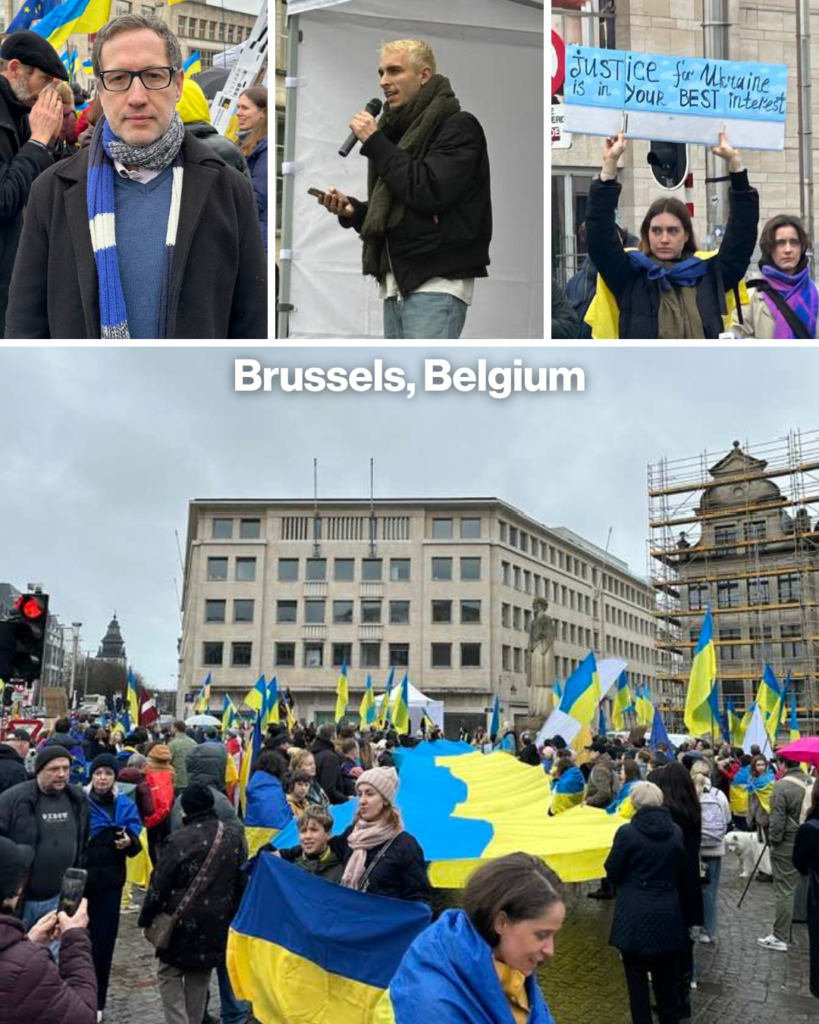
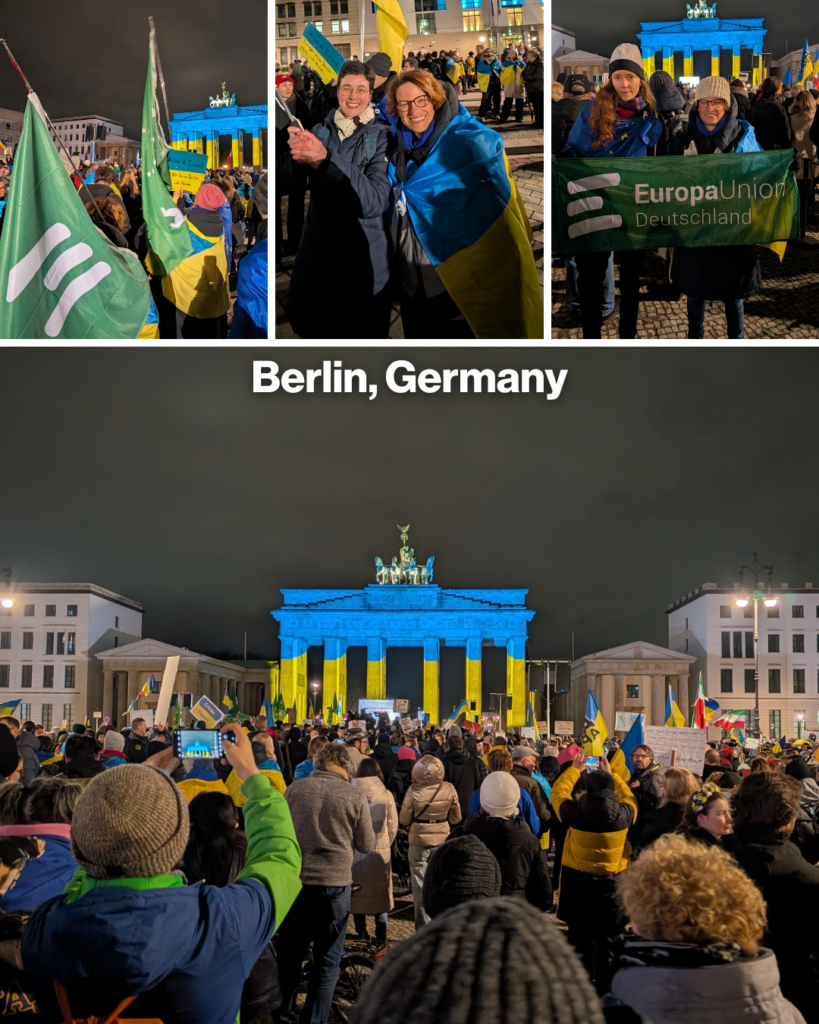
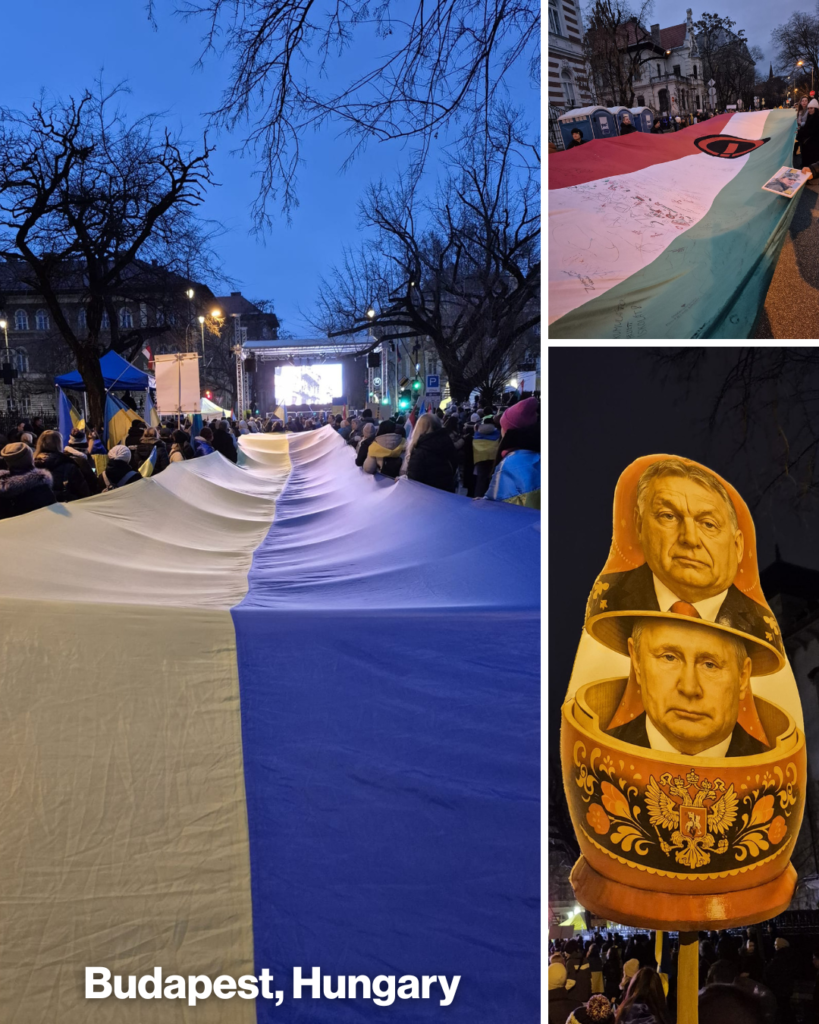
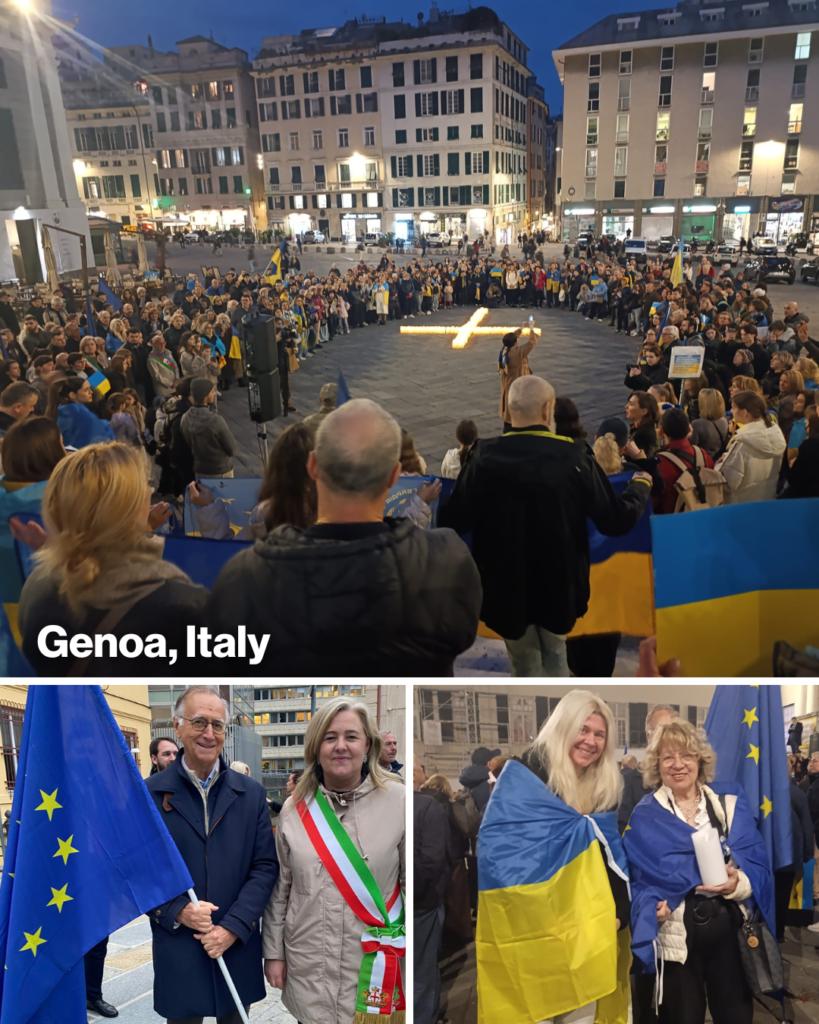
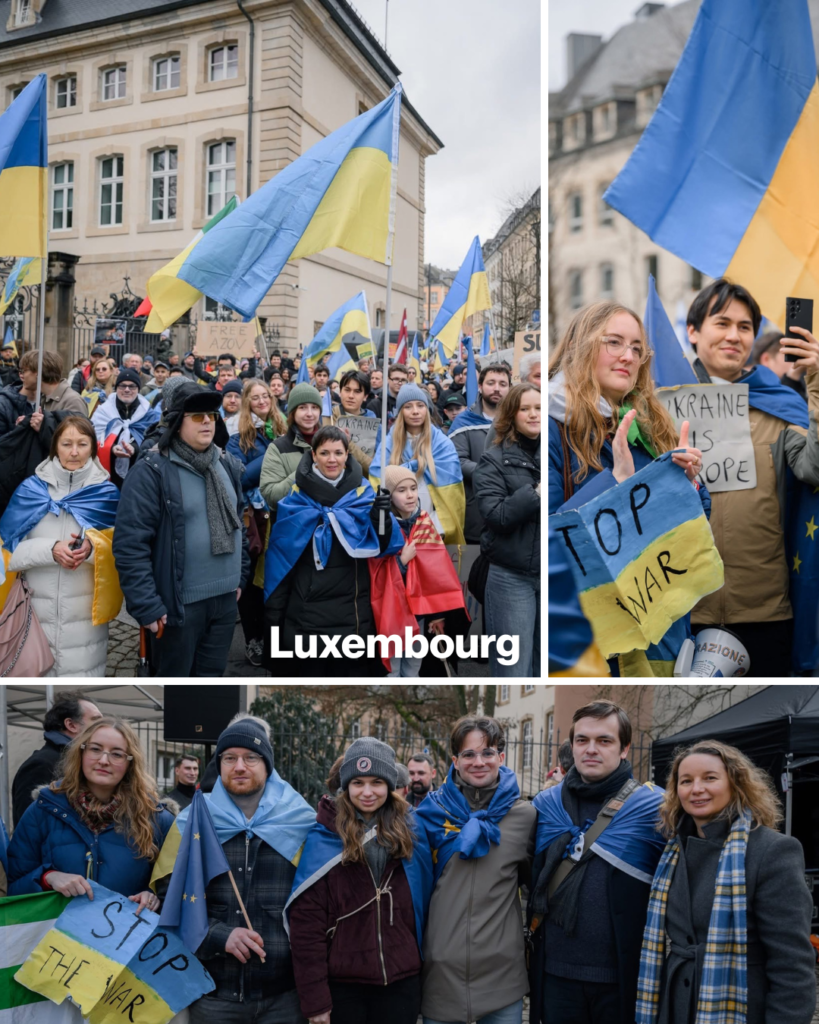
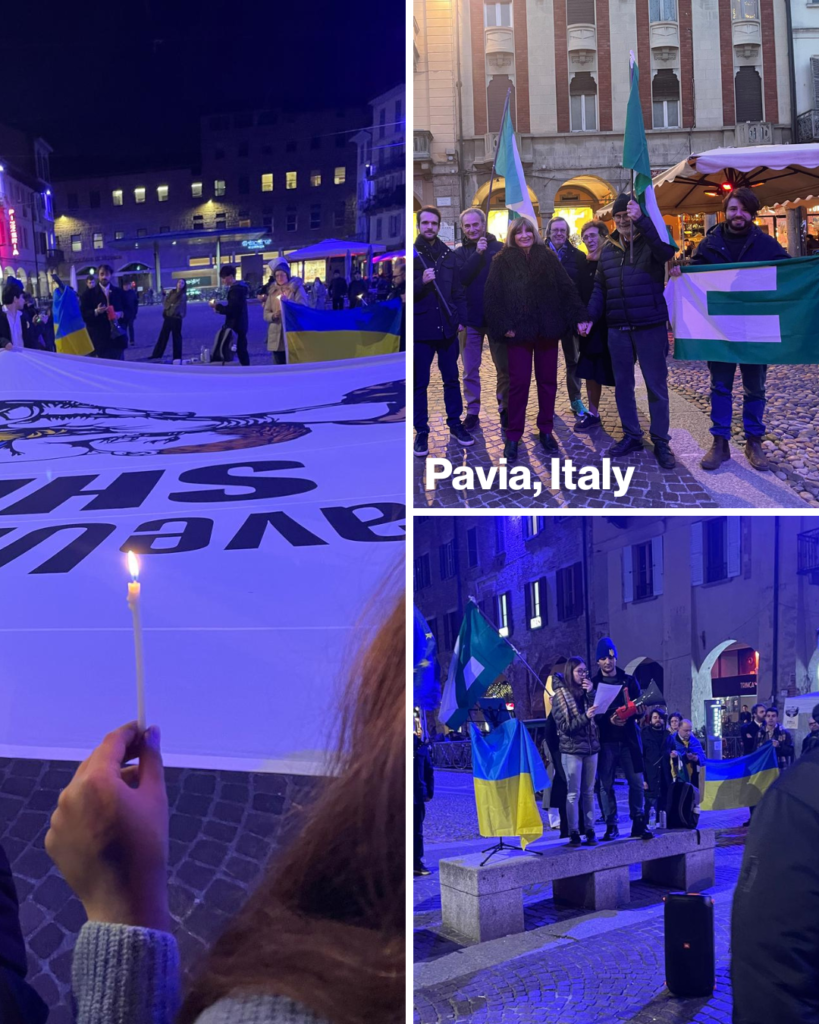
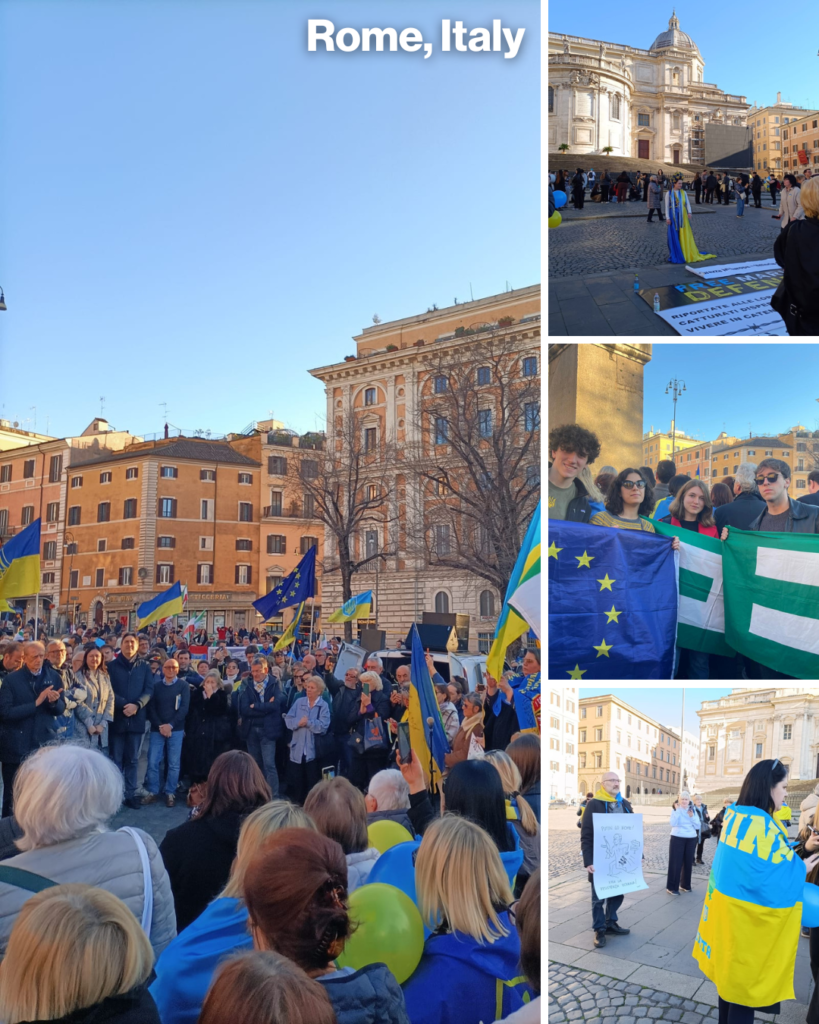
In the fourth year since Russia’s full-scale invasion of Ukraine, European Federalists took to the streets in 17 cities across Europe to send one clear message: Ukraine is not alone.
From Berlin to Vienna, from Brussels to Rome — and in Bremen, Paris, Strasbourg, Luxembourg, Munich, Lyon, Bucharest, Budapest, Florence, Genoa, Verona, Vicenza and Pavia — our movement showed up, united and determined.
One shared commitment: Ukraine’s future belongs in the heart of Europe.
For freedom. For peace. For a stronger, more united Europe.
The European Letter is back.
The return of power politics under the new American administration forces Europe into a dramatic awakening: in order to preserve seventy years of European integration, safeguard democracy on the Old Continent, and attempt to avert global destabilization, the Union is compelled to confront emergencies using the limited instruments it already possesses, from the issuance of common debt to the mobilization of multinational forces. However, Europe’s chronic weakness cannot be overcome, nor can its survival be guaranteed, without a decisive political leap: integration must evolve toward the creation of a genuine federation.
The European Letter is published in 7 languages - from the edition 77 - under the auspices of the Luciano Bolis European Foundation in cooperation with the Union of European Federalists.
The European Letter is a periodical publication started in 1997 with the aim of stimulating political debate in national parliaments and governments, and in the European Parliament.
The European Letter 88 entitled "Only Europe Can Save Itself", is sent to parliamentarians in the following legislative bodies:
- European Parliament
- Bundestag
- Parliament of the French Republic
- Parliament of the Italian Republic
- Cortes generales (Spanish Parliament)
- Nationalrat (Austrian Parliament)
- Belgian Federal Parliament
- Hellenic Parliament
- Eduskunta (Parliament of Finland)
Here the version avaiable:
Brussels, February 6, 2026
As Europe is facing existential challenges and a rapidly eroding multilateral order, we, the Spinelli Group, the group of federalist-minded MEPs within the European Parliament, today released a powerful manifesto outlining a vision for a sovereign, deepened, and federal Europe. This document rallies all those who envision a Europe that acts decisively, defends its values, and shapes its own destiny.
The manifesto calls for:
- Addressing our strategic vulnerabilities to turn them into strategic sovereignty, ensuring Europe can protect its values, its democracies, and interests without excessive external dependencies.
- A federal Europe capable of swift, democratic decision-making, rooted in our unique socio-economic model.
- A federalist interpretation of the Lisbon Treaty to overcome the unanimity rule in key areas, enabling ambitious action on defence, foreign policy, and fiscal policy through the use of Passerelle Clauses. At the same time, Treaty reform should remain a near-term objective to consolidate these changes.
“This is Europe’s make-it-or-break-it moment.” the Group declares, “We choose a fully sovereign Union with a high level of autonomy, we choose a Europe that is a geopolitical power.”
The Spinelli Group invites all Members of the European Parliament who share this vision to join forces and help strengthen the group, as a pro-European platform within the Parliament. Together, we can turn this Manifesto into action. The European Moment is now.
Read here the full Manifesto: LINK
Read here the presentation of the Spinelli Group: LINK
If you are a member of the European Parliament, join the Spinelli Group by writing to: secretariat@federalists.eu or gabriele.bischoff@europarl.europa.eu
The Union of European Federalists Secretariat on behalf of the Spinelli Group
This is article on Politico is written by our President Domenec Ruiz Devesa as senior researcher at Barcelona Centre for International Affairs and Emiliano Alessandri is an affiliated researcher at Austrian Institute for International Affairs.
The article argues that Mark Rutte is wrong to claim that Europe cannot defend itself without the United States. According to the authors, such statements risk turning Europe’s dependence on the US into a political doctrine rather than encouraging Europe to strengthen its own defence capabilities.
It highlights that US foreign policy is gradually shifting away from Europe, regardless of who is in the White House. In an increasingly competitive and multipolar world, Europe can no longer rely almost entirely on American military protection.
The authors therefore argue that NATO should evolve toward a more balanced alliance, with a much stronger European pillar. This would require greater European defence investment, deeper military integration, and the development of autonomous European capabilities.
In conclusion, a stronger European defence would not weaken NATO but make it more sustainable, by ensuring that Europe can take greater responsibility for its own security.
Brussels, February 3, 2026
Dear Member of the European Parliament,
Ahead of the upcoming resolution marking the fourth anniversary of Russia’s full-scale war of aggression against Ukraine, the Union of European Federalists urges you to take into consideration some proposals:
1. European responsibility for Ukraine’s defence
Support for Ukraine is a European responsibility. This means it cannot depend on decisions taken in Washington. The European Union must act on the assumption that U.S. policy may be uncertain or transactional.
In light of the continued and devastating Russian air attacks, including the ones suffered in early February 2026, the EU must urgently accelerate the delivery of advanced military hardware. It is no longer enough to provide defensive shields; the Union must ensure the immediate provision of both air and missile defence systems and long-range precision strike capabilities. To effectively protect Ukrainian lives and sovereignty, Europe must empower Ukraine to neutralize not only the “arrows” but also the “archers” by targeting the launch sites of these aggressions.
In addition, we need to achieve a substantial strengthening of European and Ukrainian critical strategic enablers:
– satellite intelligence and secure communications
– strategic airlift and logistics
– cyber defence and electronic warfare
The objective is clear: ensure that Europe and its partners can sustain Ukraine’s defence effort over time, reducing both Ukraine’s and Europe’s structural dependence on U.S. military assets and establishing a genuine autonomous European system of defence.
2. Stricter sanctions to halt Russia's war machine.
We urge the European Parliament to champion a resolution that moves beyond incrementalism toward total strategic decoupling from Russia. We call for a ‘zero-exception’ sanctions regime that enforces the absolute isolation of the aggressor’s financial and energy systems and the total ban on its maritime transport. This is the moment to signal that Ukraine’s security is an indivisible component of European Territorial Integrity, requiring not just support, but a full commitment to a sovereign defence architecture that guarantees peace through unyielding strength
3. Ukraine’s EU accession and institutional reform.
The resolution should firmly support accelerated Ukraine’s accession to the European Union as a strategic priority. However, to overcome the obstacles that make entry controversial, enlargement must go hand in hand with institutional reforms. The Union cannot function effectively with an expanded membership under the current system. Not only would the decision-making process, already paralyzed by vetoes, remain blocked, but the current financing system, which is already completely inadequate, would also be unable to function and need to be reformed. The European Parliament should therefore reaffirm the need for decision-making reforms that limit or overcome unanimity in the Council, especially in foreign, security and fiscal matters, including by reforming the current Treaties. – and to increase the legislative and financial powers of Parliament.
4. Use of frozen Russian assets.
The EU must continue and intensify work on mobilising frozen Russian state assets. This would be a highly significant political act in order to show clearly Europe’s firmness towards Russia. Aggression must carry material consequences. These resources should underpin EU financial assistance to Ukraine, including the EU loan mechanism, and contribute to Ukraine’s reconstruction.
5. 24 February as European Day of Resistance.
In light of the ties between the Ukrainian Resistance and the fate of Europe, the European Parliament should proclaim 24 February a European Day of Resistance. This date unites Ukraine and Europe in the shared struggle to defend freedom, sovereignty and international law.
6. Immanuel Kant and the meaning of Europe’s support for Ukraine.
The resolution should also recognise Immanuel Kant as a founding philosophical figure who inspired the vision of a united Europe. Kant’s idea of a federation of free states gruled by law, under a common constitution, to ensure peace, speaks directly to today’s challenges. Supporting Ukraine means for Europe defending an order based on rule of law, rights and democracy against imperial aggression. This is not only geopolitics. It is the defence of the European idea itself.
This anniversary resolution is an opportunity for the European Parliament to show strategic clarity and political leadership. Europe must act as a political actor to secure true peace, justice and freedom.
Many thanks in advance for your interest and support,
Domènec Ruiz Devesa
President of the Union of European Federalists and MEP 2019-2024
Mathilde Baudouin
Secretary General of the Union of European Federalists