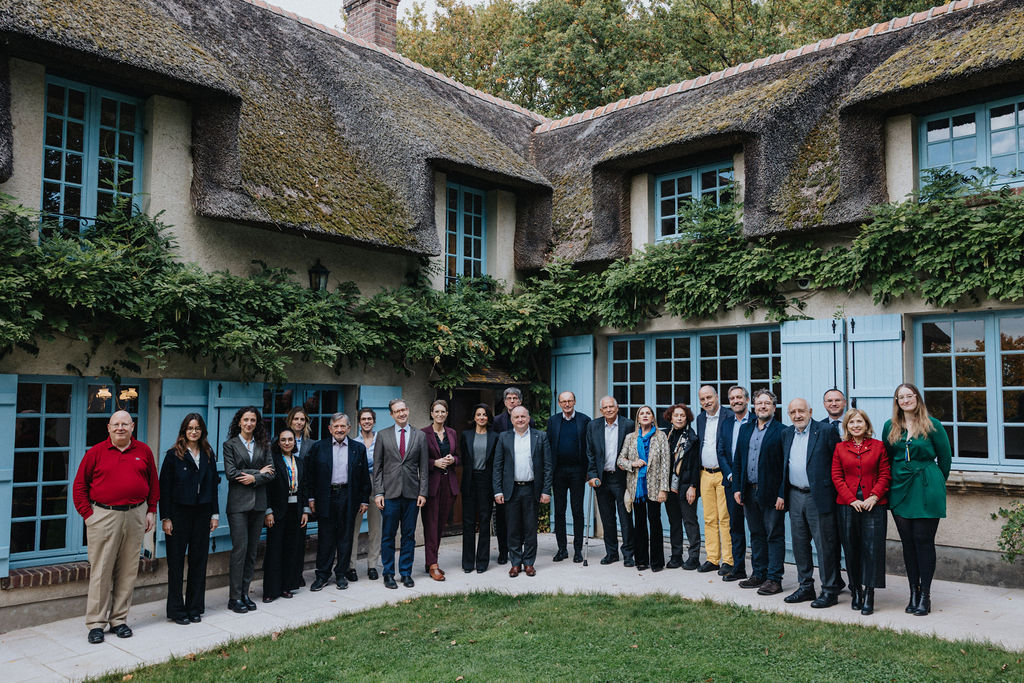
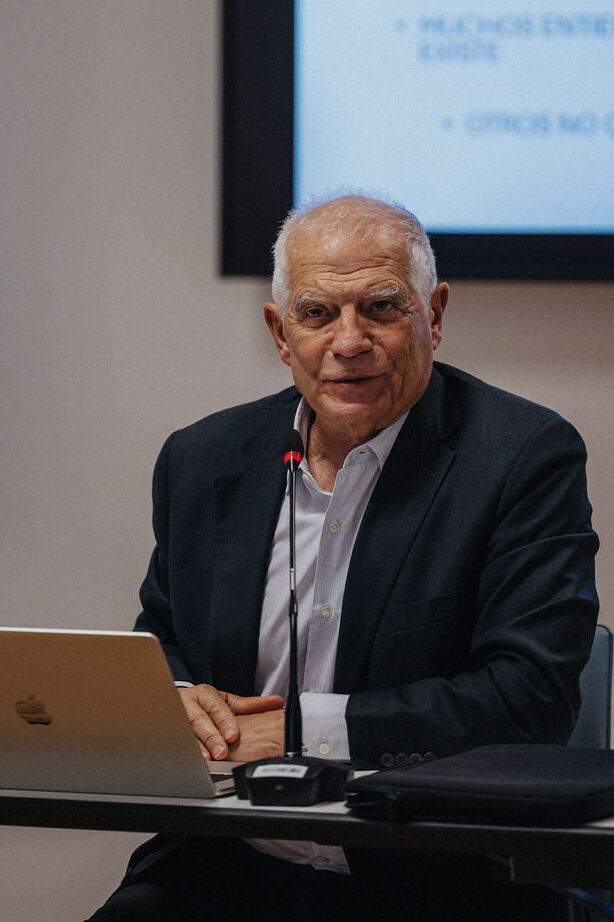
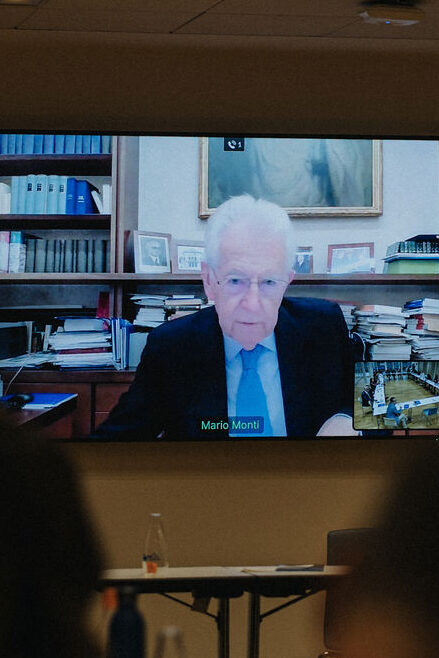
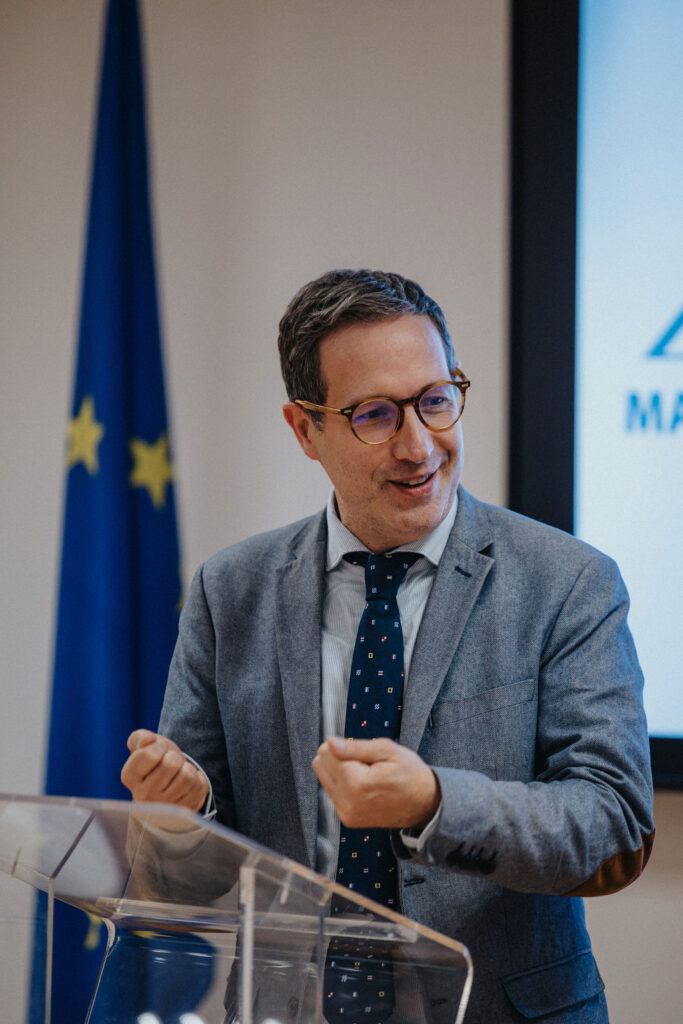
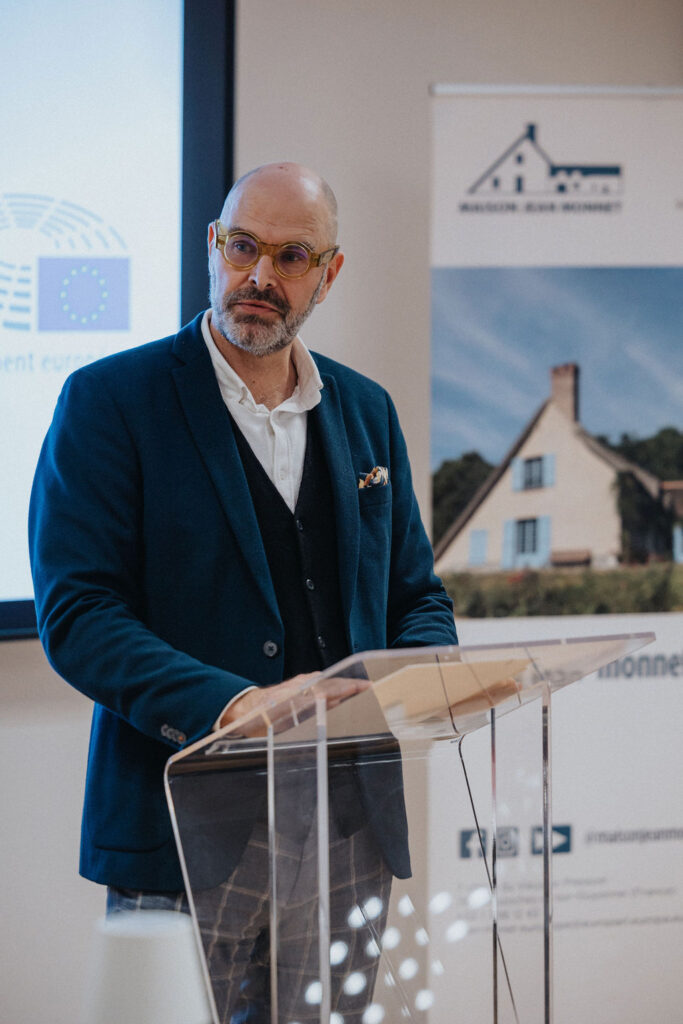
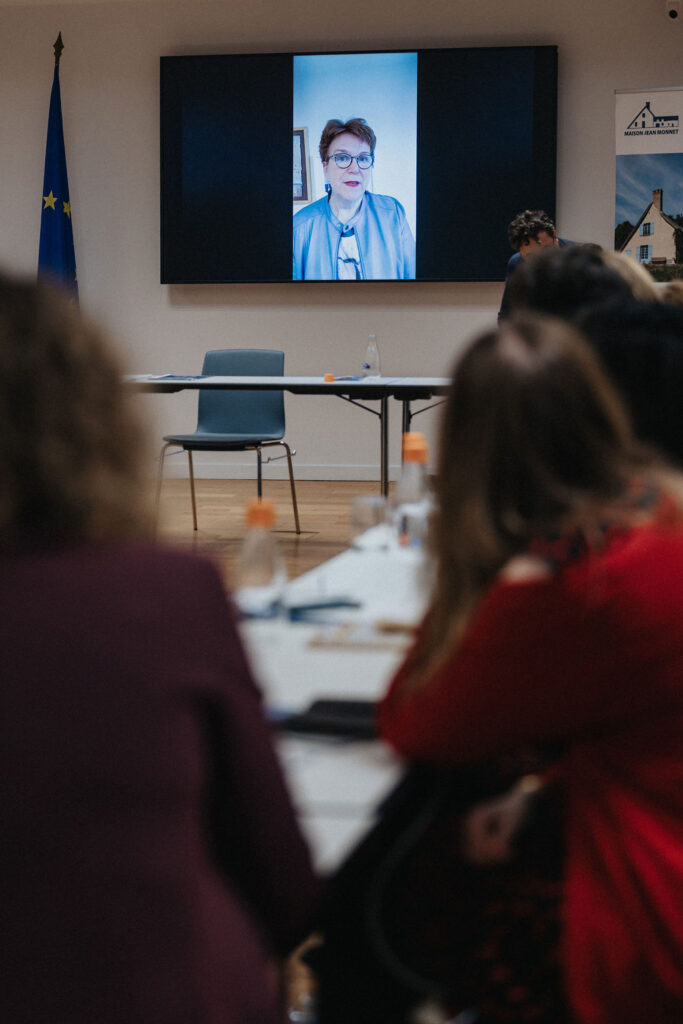
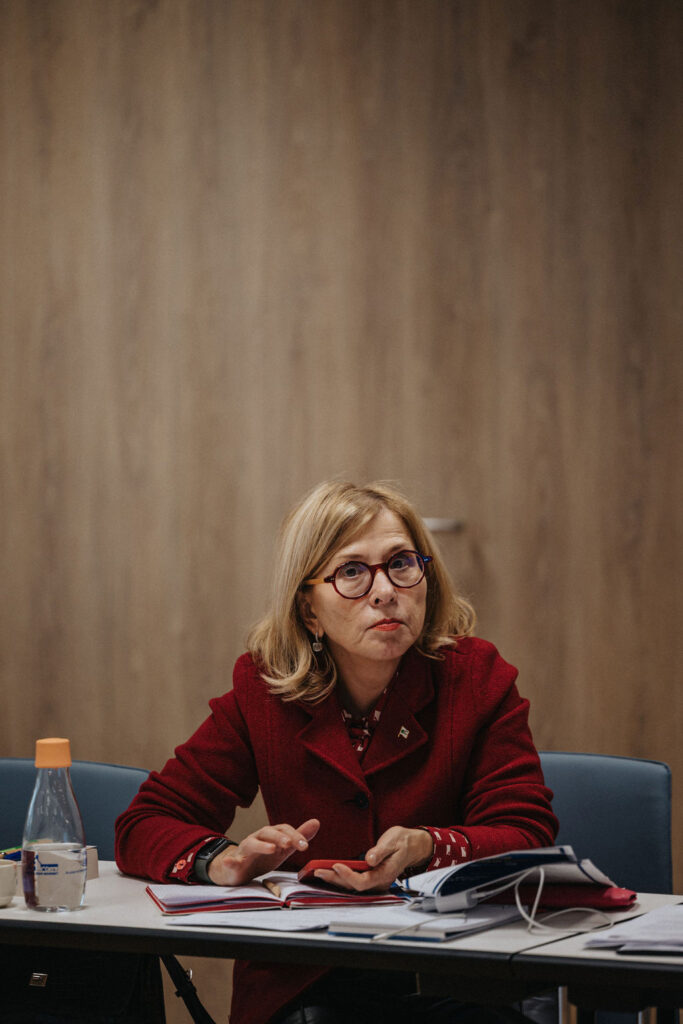
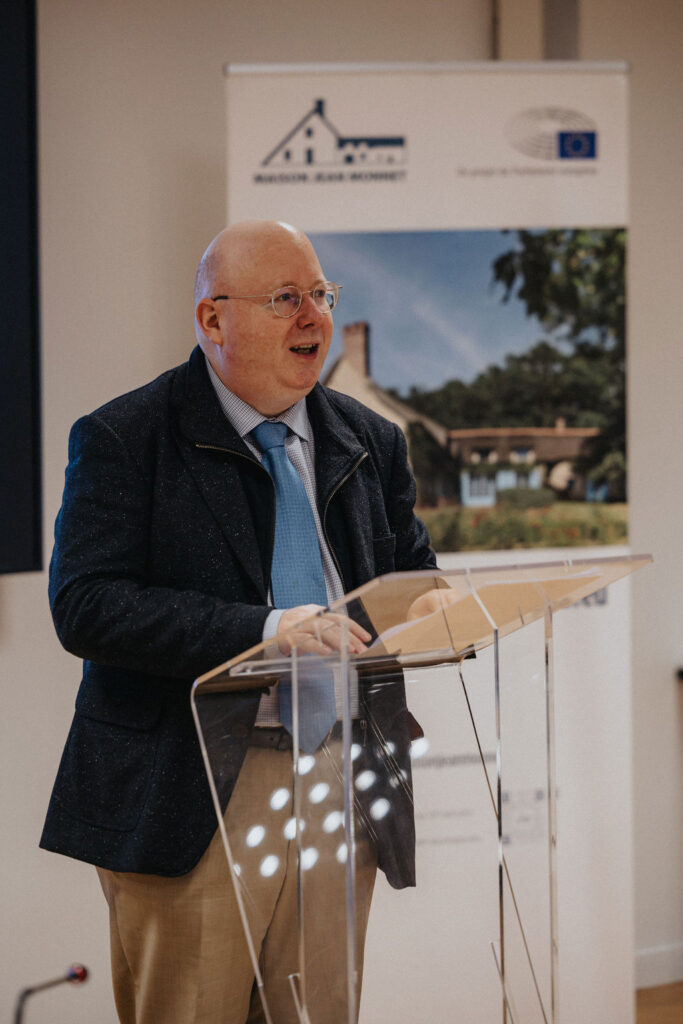
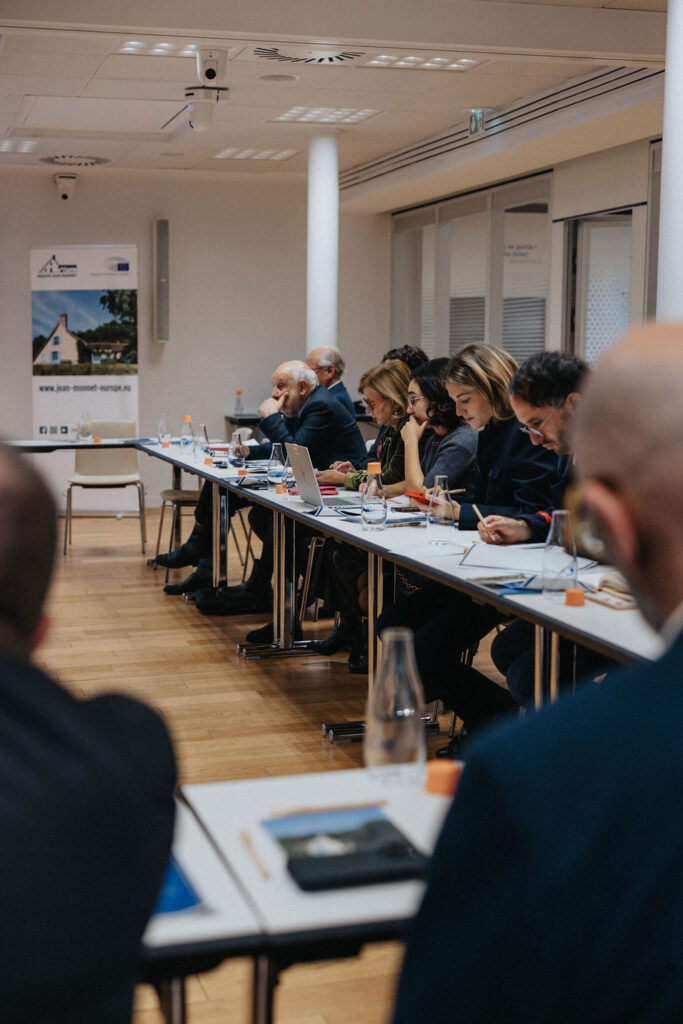
Brussels, 10 September 2025 — One year after President Ursula von der Leyen called for an “ambitious reform agenda” to improve the functioning and legitimacy of the European Union, the Spinelli Group and the Union of European Federalists (UEF) express deep concern that no meaningful steps have been taken to deliver on those promises. The time for speeches is over. The time for action is now.
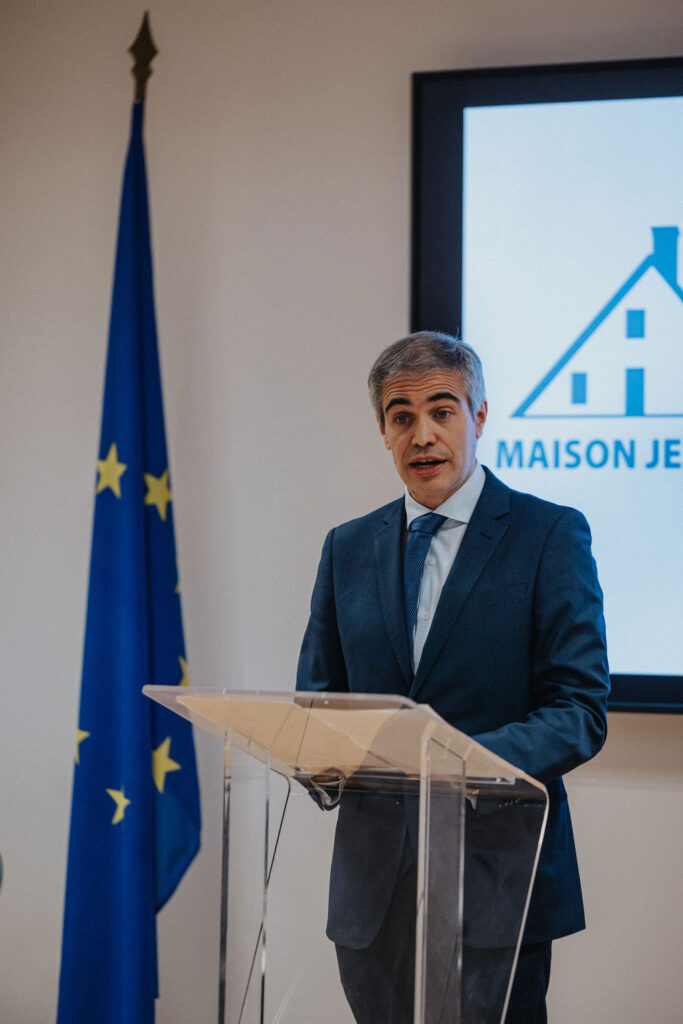
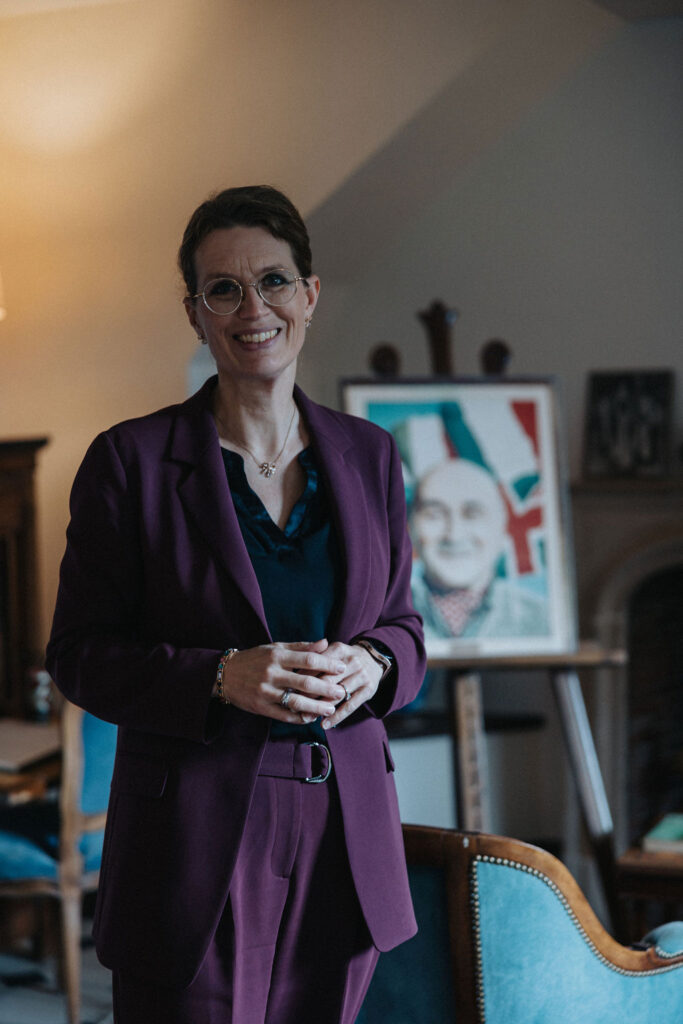
“Democracy is under enormous threat, also in the EU. The European Commission has failed to present any substantial initiatives to strengthen European integration, especially in the fields of security, defence and foreign policy. We call to deliver now, before it is too late. Time is overdue for a targeted reform to increase the EU’s capacity to act and by doing this to deliver for its citizens and strengthen democracy.”
— Gabriele Bischoff, MEP (S&D), Chair of the Spinelli Group
In 2024, both the Spinelli Group and the UEF welcomed President von der Leyen’s call to work with the European Parliament on a roadmap for reform—acknowledging that enlargement made institutional reform not only necessary but urgent. However, despite growing geopolitical instability, the European Commission and Council have failed to act. Instead, the Union is now perceived as weaker and fragmented, unable to protect its sovereignty or make credible choices on the international stage.
“Trump is not our ally, and contracts seem to bind only the opposing party. Instead, Europe must unite politically and develop its own Common Defence and strategic independence. Neither Putin nor Trump should set Europe’s strategic horizon. Europe must lead the free world by its own agency.”
— Domenec Ruiz Devesa, former MEP and President of the UEF
The European Union has been cornered into one-sided concessions—particularly with the United States—while failing to assert its own strategic interests. As highlighted in the Draghi report, Europe is facing an existential challenge: it must renew its governance and act swiftly to remain competitive, protect its citizens, and secure peace and democracy.
The Spinelli Group and UEF urge the European Parliament to rise to the challenge and lead the Union out of institutional inertia. As the only directly elected EU institution, Parliament must be the engine of a federal transformation—starting now.
READ HERE THE DECLARATION ONLINE
DOWNLOAD PDF THE DECLARATION HERE
The President of the Union of European Federalists (UEF), Domènec Ruiz Devesa, has sent a letter to all Members of the European Parliament, urging them to take decisive action in defence of European democracy and to ensure that the demand for Treaty reform under Article 48 TEU is not ignored.
Key messages of the letter
In his letter, the UEF President warns that the European Union is facing a historic moment:
- Global instability — marked by Russia’s war of aggression, conflicts in the Middle East, and rising authoritarian powers — makes a more effective and united Europe indispensable.
- Institutional paralysis — the unanimity rule and national vetoes prevent the EU from acting on defence, foreign policy, and economic competitiveness.
- Democratic legitimacy at stake — the European Parliament’s resolution of 22 November 2023, demanding Treaty reform and a Convention, remains ignored by the European Council, in breach of Article 48 TEU and the principle of loyal cooperation.
The letter calls on MEPs to defend the prerogatives of the Parliament and to use all available means — including budgetary leverage and political resolutions — to oblige the European Council to act.
Why this matters
The UEF stresses that without institutional reform, Europe risks losing its global relevance and its ability to protect the social model, environmental standards, and fundamental rights that define the Union. Moving towards a federal and democratic Europe is not only a political choice, but a necessity for the Union’s survival.
Next steps
This initiative marks another step in UEF’s continuous advocacy campaign at EU level. By directly addressing all MEPs, the UEF is mobilising parliamentary support for a stronger, more democratic, and more sovereign Europe.
We invite all citizens and organisations to amplify this call and join us in pushing for the opening of a Convention for Treaty reform.
We would like to share here the opinion-editorial (OP-ED) signed by UEF President Domenec Ruiz Devesa, former EU HRVP Josep Borrell, and President of the International European Movement and former MEP and Prime Minister of Belgium Guy Verhofstadt published in the following newspaper:
Le Soir, entitled "An appeal from Ventotene: federation or vassalage?" - LINK HERE
BeMorgen, entitled "Europa hoeft echt geen Amerikaans protectoraat te worden" - LINK HERE
Politico, entitled "It should be clear by now that Trump isn’t, and never will be, an ally" - LINK HERE
Le Nouvel Obs, entitles "Union européenne : « Devenir un protectorat américain n’est pas inévitable " - LINK HERE
Quotidiano Nazionale, entitles "Federazione europea o vassalli nazionali" - LINK HERE
Informacion, entitles "Un llamamiento desde Ventotene: federación o vasalización" - LINK HERE
HotNews.ro, entitles "Ar trebui să fie clar până acum că Trump nu este și nu va fi niciodată un aliat" - LINK HERE
ARTICLE TEXT IN FRENCH (LE SOIR)
C’est devenu une tradition pour les pro-européens de commencer l’année politique européenne à Ventotene, où Spinelli a rédigé le projet de Manifeste pour une « Europe libre et unie ». Se souvenir de l’esprit de Ventotene n’a jamais été aussi urgent : notre Union apparaît dangereusement fragmentée et faible dans un environnement interne et externe hostile. Avec seulement 5 % de la population mondiale et un écart économique croissant avec les autres grandes puissances, l’Europe est non seulement confrontée à un monde d’empires continentaux, de la Russie de Poutine aux Etats-Unis de Trump en passant par la Chine de Xi Jinping, mais aussi à un risque réel de devenir la vassale de l’Amérique. Cela est devenu évident après les concessions non réciproques faites à Trump en matière de dépenses de défense et de commerce, et l’acceptation d’un rôle subalterne dans la gestion de la guerre en Ukraine. De plus, le rôle de l’UE dans les conflits à l’étranger est largement insignifiant, de Gaza au Haut-Karabakh, soit par manque de crédibilité internationale, soit par manque d’unité.
Sur le plan intérieur, la deuxième Commission von der Leyen a décidé, contre toute attente, de renoncer au Pacte vert, son projet phare de la première, comme si le changement climatique ne s’aggravait pas, et de présenter un cadre financier pluriannuel décevant, sans réelle augmentation et au détriment de la politique de cohésion pour financer de nouvelles priorités en matière de produits et de recherche de défense. Pendant ce temps, l’extrême droite populiste eurosceptique et europhobe, amie de Poutine et de Trump, n’a jamais été aussi forte au sein des Etats membres et des institutions de l’UE.
De vaines concessions faites à Donald Trump
Les dirigeants actuels de l’UE souffrent d’un manque de vision politique à long terme, de leadership, d’unité et de capacité institutionnelle. Pour l’instant, une alliance improbable de sympathisants de Trump et d’atlantistes nostalgiques semble dominer le Conseil européen et la Commission. Ainsi, la ligne commune qui prévaut jusqu’à présent consiste à flatter et à apaiser le président américain, dans l’espoir de limiter les dégâts, ce qui renforce notre dépendance politique, stratégique et même économique à l’égard de Washington. Cette stratégie est peu efficace, car pour Trump, les contrats ne lient que l’autre partie, jamais lui. Accepter de consacrer 5 % du PIB à la défense et d’acheter davantage d’armes et de gaz naturel américains n’a pas renforcé son engagement en faveur de la sécurité collective, ni évité les droits de douane punitifs, ni renforcé le soutien à l’Ukraine. Il s’agit en grande partie d’une affaire purement transactionnelle, fondée sur l’avancement des gains économiques américains, des contrats miniers aux ventes d’armes, et sur la chance. Paradoxalement, l’absence d’engagement sérieux de Poutine en faveur d’un règlement négocié empêche Trump de parvenir à un accord aux conditions de Moscou.
Opter pour une ligne plus émancipatrice
Il devrait être clair désormais que Trump n’est pas, et ne sera jamais, un allié. L’Amérique de Trump constitue un choc géopolitique, économique et culturel majeur pour l’Europe. Cependant, devenir un protectorat américain n’est pas inévitable. Une autre voie existe, compte tenu notamment de l’indignation générale de l’opinion publique face à la série de concessions et d’humiliations auxquelles nous assistons. Le renouveau d’une majorité pro-européenne au sein des trois institutions, et en particulier au Parlement européen, pourrait changer de cap, passant de la vassalisation à l’autodétermination de notre destin. Le Parlement a le rôle constitutionnel de contrôler la Commission et d’exiger une nouvelle orientation, puisqu’il détient le pouvoir de la censurer. Pour commencer, il a le pouvoir de bloquer la réduction des droits de douane sur les produits américains, une mesure certainement populaire auprès des électeurs. Il devrait l’utiliser, montrant ainsi que l’Europe est capable de résister au chantage.
Libérer l’Union des contraintes de l’unanimité
De plus, nous devons renforcer notre union politique, surmonter la vetocratie qui permet à Orban de bloquer l’aide militaire de l’UE à l’Ukraine et construire notre propre système de défense, indépendant des Etats-Unis et susceptible d’instiller la peur au Kremlin. Une fois de plus, ces décisions seront très populaires auprès de la plupart des citoyens européens. Comme l’a déclaré Draghi, nous ne deviendrons pas une puissance géopolitique uniquement fondée sur la relance de notre compétitivité et de notre marché intérieur. Nous devons devenir une union fédérale, libérée des contraintes de l’unanimité et du manque de compétences en matière de politique étrangère et de sécurité. Les principaux Etats membres devraient prendre l’initiative d’engager immédiatement un processus visant à activer la clause de défense commune et à réformer les traités, en collaboration avec le Parlement, qui détient le droit de veto sur le budget. Sinon, une coalition de pays volontaires devrait lancer une nouvelle « Communauté européenne de défense », dotée d’une dimension parlementaire et budgétaire, et ouverte à tous les Etats membres souhaitant y adhérer. Si aucune mesure n’est prise et que nous attendons la prochaine crise pour improviser des décisions difficiles, l’Europe risque de mourir en tant que projet politique.
ARTICLE TEXT IN NETHERLAND (BEMORGEN)
Het zou inmiddels duidelijk moeten zijn dat Trump niet onze bondgenoot is en dat ook nooit zal worden
Guy Verhofstadt is oud-premier en voorzitter van de Europese Beweging Internationaal, Josep Borrell Fontelles gewezen hoge vertegenwoordiger voor de EU voor Buitenlandse Zaken en Veiligheidsbeleid, en Domènec Ruiz Devesa voormalig Europarlementslid en voorzitter van de Unie van Europese Federalisten. Ze betreuren het dat de huidige EU-leiders lijden onder een gebrek aan langetermijnvisie, leiderschap, eenheid en institutionele capaciteit.
De Europese Unie lijkt gevaarlijk gefragmenteerd en zwak te staan, door zowel interne verdeeldheid als externe vijandige krachten.Met slechts 5 procent van de wereldbevolking en een groeiende economische kloof met andere grootmachten staat Europa niet alleen tegenover een wereld van continentale imperia, van Vladimir Poetins Rusland tot Donald Trumps Verenigde Staten en Xi Jinpings China, maar loopt het ook een reëel risico een vazal van Amerika te worden.
Dat is duidelijk geworden na de eenzijdige concessies die aan Trump zijn gedaan op het gebied van defensie-uitgaven en handel, en na de acceptatie van een ondergeschikte rol in de omgang met de oorlog in Oekraïne. Bovendien is de rol van de EU in conflicten buiten onze grenzen grotendeels irrelevant, van Gaza tot Nagorno-Karabach, hetzij door een gebrek aan geloofwaardige internationale status, hetzij door een gebrek aan eenheid.
Binnen de EU heeft de tweede Commissie-Von der Leyen, paradoxaal genoeg, stappen gezet om elementen van de Green Deal – het vlaggenschipproject van de eerste Commissie – terug te schroeven. Dat gebeurt alsof de urgentie van klimaatverandering niet is toegenomen.
Daarnaast presenteerde ze een teleurstellend Meerjarig Financieel Kader, zonder significante verhogingen, waarbij het cohesiebeleid deels werd opgeofferd om nieuwe prioriteiten, zoals defensie en onderzoek, te financieren.
Ondertussen is de eurosceptische en eurofobe populistische extreemrechtse beweging, vrienden van Poetin en Trump, nog nooit zo sterk geweest in de lidstaten en de EU-instellingen.
Puur transactioneel
De huidige EU-leiders lijden onder een gebrek aan langetermijnvisie, leiderschap, eenheid en institutionele capaciteit. Voorlopig lijkt een onwaarschijnlijke alliantie van Trump-sympathisanten en nostalgische atlantici de Europese Raad en de Commissie te domineren. De tot nu toe overheersende lijn bestaat erin de Amerikaanse president te vleien en te paaien, in de hoop de schade te beperken, terwijl we daarmee juist onze politieke, strategische en zelfs economische afhankelijkheid van Washington vergroten.
De strategie werkt nauwelijks, want voor Trump binden contracten alleen de andere partij, nooit hemzelf. Instemmen met het uitgeven van 5 procent van het bbp aan defensie en het kopen van meer Amerikaanse wapens en aardgas heeft zijn inzet voor collectieve veiligheid niet vergroot, noch strafheffingen voorkomen, noch de steun aan Oekraïne versterkt.
Het is grotendeels een puur transactionele aangelegenheid geworden, gebaseerd op het bevorderen van Amerikaanse economische belangen – van mijnbouwcontracten tot wapenverkopen – en op toeval. Paradoxaal genoeg verhindert het gebrek aan serieus engagement van Poetin om een onderhandelde regeling te starten Trumps poging om een deal op Moskous voorwaarden af te leveren.
Het zou inmiddels duidelijk moeten zijn dat Trump niet onze bondgenoot is en dat ook nooit zal worden. Trumps Amerika vormt een enorme geopolitieke, economische en culturele schok voor Europa.
Vetocratie
Toch is het niet onvermijdelijk om een Amerikaans protectoraat te worden. Er bestaat een alternatief pad, mede gezien de algemene verontwaardiging in de publieke opinie over de concessies en vernederingen die we meemaken.
Het versterken van een pro-Europese meerderheid in de drie instellingen, en met name in het Europees Parlement, zou de koers kunnen veranderen: weg van vazallisering naar de zelfbeschikking over ons lot.
Het Parlement heeft de constitutionele rol om de Commissie te controleren en een nieuwe koers te eisen, aangezien het de macht heeft haar weg te stemmen. Om te beginnen heeft het de bevoegdheid om de verlaging van de tarieven op Amerikaanse producten te blokkeren – een maatregel die zeker populair zou zijn bij de kiezers. Het zou die moeten gebruiken en zo laten zien dat Europa in staat is zich tegen chantage te verzetten.
Bovendien moeten we onze politieke unie versterken, om de vetocratie te overwinnen die Viktor Orbán in staat stelt de militaire hulp van de EU aan Oekraïne te blokkeren en ons eigen defensiesysteem opbouwen. Een systeem dat niet afhankelijk is van de VS en dat angst kan inboezemen in het Kremlin.
Ook deze beslissingen zouden populair zijn bij de meeste EU-burgers. Zoals Mario Draghi zei, zullen we geen geopolitieke macht zijn louter door onze concurrentiekracht en interne markt te herlanceren. We moeten een federale unie worden die niet wordt beperkt door unanimiteitsvereisten of door een gebrek aan bevoegdheden in buitenlands en veiligheidsbeleid.
Coalition of the willing
Leidende lidstaten zouden het initiatief moeten nemen om onmiddellijk een proces te starten om de gemeenschappelijke defensieclausule te activeren en de verdragen te hervormen, in alliantie met het Parlement, dat de begrotingsmacht heeft. Anders zou een coalition of the willing een nieuwe Europese defensiegemeenschap moeten lanceren met een parlementaire en fiscale dimensie, open voor alle lidstaten die willen deelnemen.
Als we wachten op de volgende crisis om moeilijke beslissingen te improviseren, loopt Europa het risico als politiek project te sterven.
ARTICLE TEXT IN ENGLISH (POLITICO)
It should be clear by now that Trump isn’t, and never will be, an ally
Becoming a U.S. protectorate isn’t inevitable — especially given increasingly indignant public opinion over the series of concessions and humiliations we’re witnessing.
Josep Borrell Fontelles is the former EU high representative for foreign affairs and security policy. Guy Verhofstadt is a former prime minister of Belgium and president European Movement International. Domènec Ruiz Devesa is a former MEP and president of the Union of European Federalists.
It’s become tradition for pro-Europeans to chart their political course from Ventotene, where Altiero Spinelli wrote the manifesto “For a Free and United Europe.” Recalling that spirit has never been more urgent than it is now.
Our union appears dangerously fragmented and weak, stuck in a hostile internal and external environment. Home to just 5 percent of the global population and a widening economic gap with other major powers, Europe isn’t just facing up to a world of continental empires but is at real risk of becoming America’s vassal.
This became apparent after the nonreciprocal concessions made to U.S. President Donald Trump on defense spending and trade, as well as Europe’s acceptance of a junior role in handling the war in Ukraine. Moreover, from Gaza to Nagorno-Karabakh, the EU’s involvement in conflicts abroad has become largely irrelevant, either due to its lack of credible international standing or unity.
Domestically, European Commission President Ursula von der Leyen’s second term has been counterintuitively marked by the undoing of the Green Deal — the flagship project of her first term — as if climate change isn’t getting worse. The Commission has also proposed an underwhelming Multiannual Financial Framework with no real increase, thus sacrificing cohesion policy to new priorities in defense products and research. Meanwhile, the Euroskeptic and Europhobic populist far right has never been stronger in member countries or EU institutions.
The current EU chiefs suffer from a lack of long-term political vision, leadership and unity.
For now, an unlikely alliance of Trump sympathizers and nostalgic Atlanticists appear to be dominating both the European Council and the Commission. Thus, the prevailing line has been to flatter and appease the U.S. president in the hopes of damage control, in turn fostering our political, strategic and even economic dependency on Washington — and it’s hardly working.
For Trump, contracts only bind the other party — not him. And far from avoiding punitive tariffs or strengthening his support for Ukraine, agreeing to spend 5 percent of GDP on defense and buy more U.S. weapons and natural gas hasn’t even increased his commitment to collective security. Instead, from minerals deals to weapons sales, this has largely become a purely transactional affair based on advancing U.S. economic gains — and luck.
Paradoxically, the lack of serious engagement from Russian President Vladimir Putin in starting a negotiated settlement is preventing Trump’s attempted delivery of a deal on Moscow’s terms.
It should be clear by now that Trump isn’t, and never will be, an ally. His America constitutes a huge geopolitical, economic and cultural shock to Europe. But becoming a U.S. protectorate isn’t inevitable — especially given increasingly indignant public opinion over the series of concessions and humiliations we’re witnessing.
There is an alternate path. A reinvigoration of a pro-European majority in the bloc’s three institutions — particularly the European Parliament — could still lead to the self-determination of our destiny. The Parliament has the constitutional role of controlling the Commission and could call for a new direction, as it holds the power to censure it. For a start, the Parliament could block the reduction of tariffs on U.S. products — a move that would surely be popular with voters and would signal that Europe’s readiness to stand up to blackmail.
Furthermore, we need to strengthen our political union, overcome the veto-cracy that allows Hungarian Prime Minister Viktor Orbàn to block the EU’s military assistance to Ukraine, and build our own defense system — one that isn’t reliant on the U.S. and can instill fear in the Kremlin.
Once again, these decisions will be quite popular with most EU citizens. As former European Central Bank President Mario Draghi said, we won’t be a geopolitical power just by relaunching our internal market and competitiveness agenda. We need to become a federal union that isn’t constrained by unanimity requirements or a lack of proper competencies in foreign and security policy.
Leading member countries should immediately take the initiative to start activating its common defense clause and reform the Treaties in alliance with the Parliament, which holds the power to veto the budget. Otherwise, a coalition of the willing should launch a new “European Defense Community” with a parliamentary and fiscal dimension, and is open to all member countries interested in joining.
If no action is taken, and we wait for the next crisis to improvise on hard decisions, Europe as a political project risks dying.
ITA VERSION
Federazione europea o vassalli nazionali
La nostra Unione appare frammentata e debole in un contesto interno ed esterno ostile. L'America di Trump rappresenta un enorme shock geopolitico, economico e culturale per l'Europa. Tuttavia, diventare un protettorato americano non è inevitabile.
Riprendere lo spirito del Manifesto di Ventotene per un'Europa libera e unita non è mai stato più urgente. La nostra Unione appare frammentata e debole in un contesto interno ed esterno ostile. Con appena il 5% della popolazione mondiale e un divario economico crescente con le potenze mondiali, l'Europa affronta un mondo di imperi continentali, dalla Russia di Putin alla Cina di Xi Jinping. E corre il rischio di diventare vassalla dell'America di Trump, come mostrato dalle imposizioni sulla spesa per la difesa, i dazi e il commercio, e la subalternità rispetto all’invasione russa dell’Ucraina. Gli europei sono irrilevanti nei conflitti da Gaza al Nagorno-Karabakh, per mancanza di unità politica.
A livello interno, la seconda Commissione von der Leyen sta demolendo il Green Deal, il progetto di punta della prima, come se il cambiamento climatico non stesse peggiorando. Ha presentato un Quadro Finanziario Pluriennale deludente, senza un significativo incremento di risorse. L'estrema destra populista euroscettica ed eurofobica, amica di Putin e Trump, non è mai stata così forte negli Stati membri e nelle istituzioni dell'UE.
Le leadership nazionali ed europee non hanno una visione politica a lungo termine. Mancano leadership, unità e capacità istituzionale. Per ora, un'improbabile alleanza tra simpatizzanti di Trump e nostalgici atlantisti sembra dominare il Consiglio europeo e la Commissione. Pertanto, la linea prevalente è di adulare e compiacere Trump, sperando di limitare i danni, alimentando la nostra dipendenza politica, strategica e persino economica da Washington. Ma non funziona, poiché per Trump i contratti vincolano solo la controparte, mai lui. Accettare di spendere il 5% del PIL per la difesa e di acquistare più armi e gas naturale dagli Usa non ha aumentato il suo impegno per la sicurezza collettiva, né ha evitato dazi punitivi, né ha rafforzato il sostegno all'Ucraina. Paradossalmente, solo la mancanza di un serio impegno da parte di Putin nell'avvio di un negoziato sta impedendo a Trump di raggiungere un accordo alle condizioni di Mosca.
Ormai dovrebbe essere chiaro che Trump non è, e non sarà mai, un alleato. L'America di Trump rappresenta un enorme shock geopolitico, economico e culturale per l'Europa. Tuttavia, diventare un protettorato americano non è inevitabile, anche grazie all’indignazione dell'opinione pubblica per le umiliazioni subite. Esiste una via alternativa. Il rilancio di una maggioranza europeista nelle tre istituzioni, e in particolare nel Parlamento europeo, potrebbe cambiare rotta, passando dal vassallaggio all'autodeterminazione del nostro destino. Il Parlamento ha il ruolo costituzionale di controllare la Commissione e di chiedere una nuova direzione, poiché detiene il potere di censurarla. Ha il potere di bloccare la riduzione dei dazi sui prodotti statunitensi, una mossa sicuramente popolare tra gli elettori. Dovrebbe usarlo, segnalando così che l'UE è in grado di resistere al ricatto.
Soprattutto, dobbiamo rafforzare la nostra unione politica, superare l’unanimità, la vetocrazia che consente a Orbán di bloccare l'assistenza militare dell'Ue all'Ucraina e la creazione di un sistema di difesa europea, non dipendente dagli Stati Uniti e che possa deterrere il Cremlino.
Come ha affermato Draghi, non saremo una potenza geopolitica basata solo sul rilancio della nostra competitività e del mercato interno. Dobbiamo diventare un'unione federale non paralizzata dall’unanimità o dalla mancanza di poteri adeguati in politica estera e di sicurezza. Gli Stati membri dovrebbero immediatamente attivare la clausola di Difesa Comune e riformare i Trattati, in alleanza con il Parlamento che detiene il potere di veto sul bilancio. Se non si riuscisse, gli Stati disponibili dovrebbero lanciare una nuova "Comunità Europea di Difesa", con una dimensione parlamentare e fiscale, aperta a tutti gli Stati membri interessati. Se si aspetta semplicemente la prossima crisi, l'Europa rischia di morire come progetto politico.
* Josep Borrell Fontelles, ex Alto rappresentante dell'UE per gli affari esteri e la politica di sicurezza
Guy Verhofstadt, ex Primo Ministro del Belgio, Presidente del Movimento Europeo Internazionale
Domènec Ruiz Devesa, ex eurodeputato, presidente dell'Unione dei federalisti europei
Roberto Castaldi, Segretario generale del Movimento Federalista Europeo
For a Sovereign and Federal European Res Publica
Declaration launched by UEF and CIME in Ventotene signed by Guy Verhofstadt and endorsed by Josep Borrell
The Trump-Putin Alaska Summit, without Europe or Ukraine, exposes a harsh truth: a fragmented Europe is sidelined in a world of empires. From NATO’s defence dependence to trade submission at Turnberry (August 2025), and from Ukraine’s marginalisation to peace deals brokered in the White House, Europe’s impotence is on full display.
The threats are clear: an unreliable, “caesarist” America imposes its will, while Russia and China exploit our divisions, undermining democracy and international law.
Trump’s capitulation to Putin on Ukraine demands a European response. Without our own defence, diplomacy, and intelligence, we risk surrendering our sovereignty. The time has come to replace “vetocracy” with a democratic, federal Europe: one strong enough to stand among the world’s powers.
In this context the Union of European Federalists and Consiglio italiano del Movimento Europeo have launched the Declaration "For a Sovereign and Federal European Res Publica" in Ventotene Island on 30th August. The declaration is signed by Domenec Ruiz Devesa, President of the UEF and Former MEP, Virgilio Dastoli, President of the Consiglio Italiano del Movimento Europe, Guy Verhofstadt, Former Prime Minister of Belgium and Former MEP, Mathilde Baudouin, Secretary General of the UEF.
The Declaration is endorsed by Josep Borrell, Former EU High Representative for Foreign Affairs and Security Policy, Antonio Argenziano, Former President of JEF Europe, Luisa Trumellini, President of Movimento Federalista Europeo (MFE), Roberto Castaldi, Secretary General of MFE, Sandro Gozi, Member of European Parliament, Honorary President of the UEF. Witnesses during the signatory of Declaration have been Antonio Santilli, Responsable Culture Sector of Ventotene, Giuseppe Pepe, Vice Mayor of Ventotene e Mario Leone, Direttore Istituto Altiero Spinelli.
The Declaration calls for the revival of the European spirit, the strengthening of the European demos, and the recovery of the vision of a Europe that decides, acts and advances with sovereignty.
To read our strategic proposals and the full Declaration, you can go to this link: LINK HERE.
Original version of the Declaration: LINK HERE.


The 41st International Ventotene Seminar: Building the Future of Europe
For the 41st consecutive year, the Altiero Spinelli Institute of Federalist Studies is organising its International Seminar on the island of Ventotene, a place of profound symbolic importance for European federalism. It was here, during the Second World War, that Altiero Spinelli, author of the Ventotene Manifesto, was imprisoned and laid the intellectual foundations for a federal Europe.
Once again, Ventotene becomes a living laboratory of ideas, bringing together 30 young federalists, 20 speakers, and more than 60 hours of training, debates, and working groups. The seminar confirms itself as a unique and intensive educational experience, where theory and political engagement meet.
A space for federalist education and debate
Throughout the week, participants engage with leading figures from the Union of European Federalists (UEF), JEF Europe, national JEF sections, and the World Federalist Movement (WFM). The programme combines plenary sessions, working groups, and debates, fostering both intellectual depth and collective reflection.
The seminar opens on Sunday, 31 August, with an introduction to federalism and presentations by the federalist organisations participating, under the chairmanship of Jacopo Provera, Deputy Director of the Spinelli Institute.
Key thematic sessions across the week include:
- Federalism and the role of federalists today
- Models of the federal state and their relevance for Europe
- European enlargement, sovereignty, and supranational democracy
- European defence and EU institutional reform
- Ecological transformation and social justice
- Global disorder, war, and the crisis of multilateralism
- Economic, trade, and technological competition in a fragmented world
- Federalism as a tool to govern interdependence
Speakers include, among others, Luisa Trumellini, Brando Benifei MEP, Domènec Ruiz Devesa, Roberto Castaldi, Fernando Iglesias, Chloè Fabre, Giulia Rossolillo, and representatives of JEF Europe and the WFM, ensuring a strong connection between academic analysis, political action, and youth engagement.
Memory, commitment, and the future
A particularly symbolic moment of the seminar is the visit to Altiero Spinelli’s tomb and the sites of his confinement on Ventotene, reconnecting participants with the historical roots of European federalism.
The week concludes on Friday, 5 September, with a collective discussion on “Our commitments as federalists: innovation and tradition in our organisations”, highlighting how the federalist movement can renew itself while remaining faithful to its founding principles.
For over four decades, the Ventotene Seminar has been shaping generations of federalists. In a time of geopolitical instability, democratic backsliding, and global challenges, the message from Ventotene remains clear: Europe’s future can only be built through shared institutions, democracy beyond borders, and a federal vision.
Turku Forum Event organized by UEF and UEF Finland (Start 1:17:51 - 2:01:55)
The European Letter is back.
Europe is in danger, caught between the threat of a trade war with the United States and the uncertainty of the conflict in Ukraine, on which its security depends. The new course of American politics has revealed the unsustainability of a divided Union, incapable of supporting Kyiv and defending its own economic sovereignty. The negotiations on the Multiannual Financial Framework (MFF) 2028–2034 could become an opportunity to relaunch the process of reforming the Treaties. The European Parliament must use its veto power over the MFF to demand that the European Council initiate a procedure for revising the Treaties aimed at giving the Union genuine fiscal capacity.
The European Letter is published in 7 languages - from the edition 77 - under the auspices of the Luciano Bolis European Foundation in cooperation with the Union of European Federalists.
The European Letter is a periodical publication started in 1997 with the aim of stimulating political debate in national parliaments and governments, and in the European Parliament.
The European Letter 86 entitled "Getting Out of the Dead End", is sent to parliamentarians in the following legislative bodies:
- European Parliament
- Bundestag
- Parliament of the French Republic
- Parliament of the Italian Republic
- Cortes generales (Spanish Parliament)
- Nationalrat (Austrian Parliament)
- Belgian Federal Parliament
- Hellenic Parliament
- Eduskunta (Parliament of Finland)
Here the version avaiable:
The importance of EU regions must be acknowledged, as the renationalization of programs is detrimental to citizens.
The UEF advocates for Treaty reform and progress toward establishing genuine federal fiscal power.
Brussels, 18/07/2025
The Union of European Federalists (UEF) notes the proposed increase to the 2028-2034 EU multiannual budget (Multiannual Financial Framework, MFF) from the current 1.08 per cent to 1.25 percent of the EU GNP. This is the largest ever proposed MFF both in relative and absolute terms (around 2 trillion euros), even if the real financial needs to deliver European and global public goods are even higher (around 2 per cent of EU GNP).
However, the UEF expresses deep concern regarding the proposed cuts to several programs, particularly cohesion policy, and the renationalizing of agricultural policy.
Furthermore, the proposed approach on own resources is insufficient to address the structural limitations of the EU’s current financial system and risks perpetuating a model of dependence on national budgets.
An insufficient budget with a renationalizing drive
The MFF proposal will need to finance the EU to cope with unprecedented challenges: a trade war with Donald Trump’s America; an actual war with Vladimir Putin’s Russia; intensified competition from China; conflict in the Middle East; climate change; international migration; and the rise of the far right, with its anti-EU political agenda.
The proposed Multiannual Financial Framework (MFF), around € 2 trillion (€ 285 billion each year) represents 1,26% of the Union’s GDP. But 0,11% is devoted to the repayment of the debt made during the pandemic to finance the Next Generation EU, which any other sovereign emitter would have simply rolled out. This means the real budget is just 1,15% of GDP, that is grossly insufficient to fund Europe’s strategic objectives. The Draghi Report (2023) underlines that the Union must mobilize at least additional € 800 billion annually, of which 20% in public investments, i.e. 160 billions, to ensure long-term competitiveness and technological sovereignty. Yet the current budgetary architecture remains unfit for that purpose.
Meanwhile, calls for more defence spending are made without increasing sufficiently the overall size of the EU budget, implying that funds must be cut from cohesion, green transition, and innovation. This is an unsustainable trade-off.
The Commission’s MFF proposal proposes a renationalisation of spending programmes, thereby shifting more responsibility to Member States to the detriment of regional governments. This retreat undermines the very rationale of a common EU budget and misses a historic opportunity to build a stronger Union.
Real own resources needed and the road to a true, federal fiscal power
The Commission proposes new own resources and adjustments to existing ones, generating EUR 58.5 billion per year from the EU Emissions Trading System (ETS), the Carbon border adjustment mechanism (CBAM), the own resource based on non-collected e-waste, the tobacco excise duty, a Corporate Resource for Europe (CORE).
This is a progress but these are not genuine EU taxes.
Contrary to the functioning of federal systems, the EU budget is not the expression of a genuine fiscal capacity. Over 70% of its revenues come from direct national contributions. The so-called “own resources” are not true EU taxes, but rather national taxes collected under EU-regulated sectors (e.g. customs duties, agricultural levies) that are subsequently transferred to the EU. These resources lack both fiscal independence and meaningful scale, the two essential characteristics of a genuine fiscal power.
As such:
- The EU budget remains dependent on the will of national governments, without the ability to raise revenue autonomously;
- It is structurally limited to funding internal market development, and does not fulfil core fiscal functions, such as providing European public goods or carrying out redistributive policies.
As noted in the Monti Report on EU Own Resources (2017), for these to become true European taxes:
- They must be based on political decisions made at the EU level, thus with co-decision involving the European Parliament;
- Revenues must flow directly to the EU budget, independently of national channels;
Only by achieving these conditions can the EU develop a genuine fiscal capacity. This transformation necessitates a new legal framework that is democratically legitimate and supranational. Essentially, it requires a fundamental reform of the Treaties to confer fiscal sovereignty at the European level.
The UEF proposes four steps toward a European fiscal capacity, beginning with:
- the continuation of the NGEU program with new scale and purpose (including defense, climate policies, etc.) as long as the overall EU budget remains too small;
- the adoption of the decision on own resources and the multiannual financial framework through the ordinary legislative procedure (allowed by a specific Passerelle clause article 312.2 TFEU), i.e. through co-decision between the European Parliament and the Council deciding by qualified majority voting to enable the Union to become the master of its own budget;
- Progressive introduction of genuine European resources managed by the EU and not Member States, including:
- A Digital Tax on non-resident Service Providers;
- A Financial Transactions Tax;
- The Emissions Trading System (ETS2) that cover the emission of road transport, buildings, and other sectors;
- the elimination of the ratification by the Member States: Article 311 provides not only for unanimity in the Council, but also for approval by the Member States in accordance with their respective constitutional rules;
The European Parliament must stop accepting the logic of intergovernmental scarcity and instead act as a constitutional actor. The Parliament must demand a larger budget following its mandate of five years and not seven, protect current programs and the regional focus, call for fiscal powers, and support Treaty reform, as it did in its resolution of 22 November 2023.
The current Treaties permit some alignment of national tax systems and the introduction of new revenue sources for the EU budget, or even a specific budget for the eurozone. However, they significantly restrict the development of a true European fiscal authority because of the need for unanimous agreement and ratification under Articles 311, 312, 113, and 352 TFEU, which makes substantial reform extremely difficult under the existing framework.
The EU must become the master of its own budget—capable of setting strategic priorities, ensuring solidarity, and delivering results that only a continental scale of governance can provide.
“We stand at the crossroads of unprecedented global challenges. In this context, the proposed Multiannual Financial Framework, which is supposed to represent a step forward for the coming years, falls short of what is truly needed, primarily due to insufficient funding. To secure Europe's future, we must transition to our own real resources that ensure stability, self-sufficiency, and political accountability. The renationalization of key programs undermines our collective strength and dilutes the very essence of European solidarity. It is imperative that we empower the EU with a genuine fiscal capacity, enabling us to meet our strategic objectives and uphold our commitment to all European citizens.” said Domènec Ruiz Devesa, President of the UEF.
The recurring deadlocks during MFF negotiations show the need for a properly functioning European federation focusing on essential duties, eliminating national contributions that make Brussels dependent on member states and removing Brussels' scrutiny over state budgets. Instead, it would involve fiscal transfers sufficient for the EU to achieve its political goals, as set by representatives of European citizens and member states. Without addressing the need for a federal political compact, Europe risks repeating the same mistake of ineffective and slow processes, missing the opportunity to enhance freedom, solidarity, and protection for the EU, its citizens, and member states.
Sources
- EU Commission Press Release
- UEF Manifesto 2023
- UEF Resolution 2024
- Paper used by UEF during the Conference on the Future of Europe: The financing of the European Union: a proposal for the Treaty Reform to give the EU true Fiscal Capacity
- The Future of European competitiveness | The Draghi Report 2023
- The Monti Report 2017 - Final report and recommendations of the High Level Group on Own Resource
PRESS CONTACT
Mathilde Baudouin
Secretary General of the Union of European Federalists
secretariat@federalists.eu
Brussels, 15/07/2025
The Union of European Federalists (UEF) warmly welcomes the final agreement reached on 17 June 2025 between the European Parliament and the Council on the revised rules for the statute and funding of European political parties and foundations. This text will be voted tomorrow 16 July in the AFCO Committee.
This long-awaited reform represents an important step forward for strengthening European democracy. By improving transparency, simplifying funding procedures, and clarifying the legal framework for cross-border activities, the new regulation finally enables European political parties and foundations to operate more effectively across the Union. The harmonisation of the co-financing rate at 95% and the formal recognition of joint political activities offer greater financial stability and legal certainty to actors striving to give voice to citizens across borders. The mandatory implementation of internal gender equality measures, decision-making parity, and anti-harassment policies updates how European parties are governed.
A vital but incomplete step
While these measures will enhance the capacity of political actors to “contribute to forming European political awareness and to expressing the will of citizens of the Union” as enshrined in the Treaties, they fall short of completing the political architecture necessary for a functioning European democracy.
“European political parties will not have a role in national referenda on European issues, for example. It is disappointing that the Council solely focused on putting in place safeguards to limit the activities and governance of political parties and foundations.” Said Gabriele Bischoff, S&D shadow rapporteur and newly appointed Chair of the Spinelli Group.
As UEF has consistently advocated, a genuine European political space cannot emerge without the establishment of a Europe-wide constituency with transnational lists for the European Parliament elections. This remains a core and long-standing demand of the UEF, as reiterated in our Resolution on Transnational Lists adopted in Rome in November 2023.
The introduction of transnational lists—headed by Spitzenkandidaten nominated by European political parties—would significantly strengthen the democratic legitimacy of EU institutions, deepen citizens’ engagement with European politics, and link the outcome of European elections more directly to the leadership of the European Commission.
Next steps towards a political space for the Union
The UEF therefore calls on the European institutions to build on the progress made with the reform of Regulation 1141/2014 by taking the following steps (Resolution On the new European Electoral Law - Towards a union-wide constituency to strengthen the European public sphere):
- Adopt a European Electoral Law under Article 223 TFEU establishing a pan-European constituency for future European Parliament elections;
- Ensure that a significant proportion of MEPs are elected via transnational lists, with clear criteria for geographical and gender balance;
- Reform the Spitzenkandidaten process, ensuring that the President of the European Commission is elected by a majority in the European Parliament;
- Amend the legal framework to allow citizens to directly found and register European political parties, empowering a new generation of pro-European civic activism.
Some of these proposals are already reflected in the position of the European Parliament, as outlined in the Report on the 2024 European Elections, for which UEF President Domènec Ruiz Devesa served as co-rapporteur during his 2019–2024 mandate as an MEP, alongside MEP Sven Simon.
Only through such reforms can we move from a Union of governments to a Union of citizens—where politics is truly European in scope, ambition, and substance.
"The next elections to the European Parliament must aim to assess the past five years of activity of the EU institutions, in a true exercise of democracy and European politics" said Ruiz Devesa. "We cannot allow them to become just a collection of 27 parallel national elections driven by domestic agendas. Instead, we must Europeanise the debate and stimulate voter participation by putting European issues at the centre of the media and political discourse."
As Europe faces external threats and internal challenges, now is the time to be bold.
The UEF calls on the European Parliament and the Council to act with courage and vision to complete the democratic construction of our Union.
PRESS CONTACT
Mathilde Baudouin
Secretary General of the Union of European Federalists
secretariat@federalists.eu