

570+ Organisations Join Forces to Defend Civil Society
European civil society organisations (CSOs) are currently facing an attack coming from certain Members of the European Parliament. Spearheaded by some MEPs from the European People’s Party (EPP) and by far-right groups, this attack resorts to misleading arguments to fabricate a scandal. This portrayal has been amplified through the media, with notable exceptions of articles that attempted to clarify this misleading narrative. European CSOs are crucial to ensure the voices of citizens from different parts of Europe are heard in the EU institutions. Attacks against civil society are unfortunately not new and are exacerbated by this harmful idea. Furthermore, for-profit corporate lobbying is through the roof when compared to non-profit advocacy. In 2024, the 50 corporations with the largest lobbying budgets collectively spent nearly €200 million on lobbying the EU alone (66% more than in 2015). Comparing this to the funding environmental NGOs receive under the LIFE programme - €15.6 million annually of a €700 million yearly budget - truly shows the weakness of this ‘scandal’.
This is why over 570 civil society organisations from 40 countries, including all EU Member States, have joined forces to call on those in power to act now and ensure that civil society is adequately funded and enabled to share our crucial perspectives. In this statement, we address:
- The source of this false narrative;
- Inaccurate claims made about how CSOs obtain and use funding;
- Why it’s paramount that CSOs receive sufficient funding;
- The need for civil dialogue to enable CSOs participation.
Democracy is about the right of citizens to be collectively heard for building an inclusive society and a shared European future; properly funded independent CSOs are a crucial tool for that. We call on decision-makers to ensure civil society organisations can thrive and play their role in interacting with policy-makers in order to have a more fully informed decision-making process.
Read the full statement with the list of all supporters here below, and our previous statement on this matter here.
Civil Society Europe (CSE) is the coordination of civil society organisations at EU level. Through its membership, CSE unites EU-level membership-based organisations that reach out to millions of people active in or supported by not-for-profits and civil society organisations across the EU. CSE was created by several civil society organisations as a follow-up to the European Year of Citizens and was established as an international not-for-profit under Belgian law in 2016. Since then, it has become the point of reference for EU institutions on transversal issues concerning civil dialogue and civic space.
For further information on this topic, please contact matteo.vespa@civilsocietyeurope.eu
25 April 2025
An Update on NGO Funding Attacks & How You Can Still Support
Dear signatories,
We at Civil Society Europe warmly thank you for your participation in our statement against NGO funding attacks that was launched on April 7th. By engaging with us and spreading our message, you directly contributed to raising awareness across Europe on this issue and are helping us turn the tide in favour of civil society. Since the statement’s release, we saw a report on the transparency of EU funding to NGOs by the European Court of Auditors be published, which confirmed that there is no evidence of irregularities or misuse in how NGOs are selected or how EU grants are used.
Furthermore, EU budget Commissioner Piotr Serafin, in response to a parliamentary question, reiterated the importance of independent civil society and spoke against the false narrative that NGOs engaged in ‘undue lobbying activities’ on the Commission's behalf.However, our work is far from over. The report on the discharge to be voted on May 7th, although improved, still contains problematic language.
Furthermore, in an attempt to prolong this attack on civil society, the European Conservatives and Reformists Group in the European Parliament is pushing for the establishment of an inquiry committee on NGO funding. The purpose of an inquiry committee is to investigate genuine breaches of EU law and is not intended to be used to further push anti-NGO rhetoric. It’s due to these developments that we’ve decided to keep our statement open for further signatures until April 30th.
We ask you to please support us by spreading the form for signatures within your networks. We’ll then repost the statement before the relevant vote on May 7th to reiterate our stance against these attacks.
We thank you for your continued support.
Warm regards,
Civil Society Europe
You can listen here the event
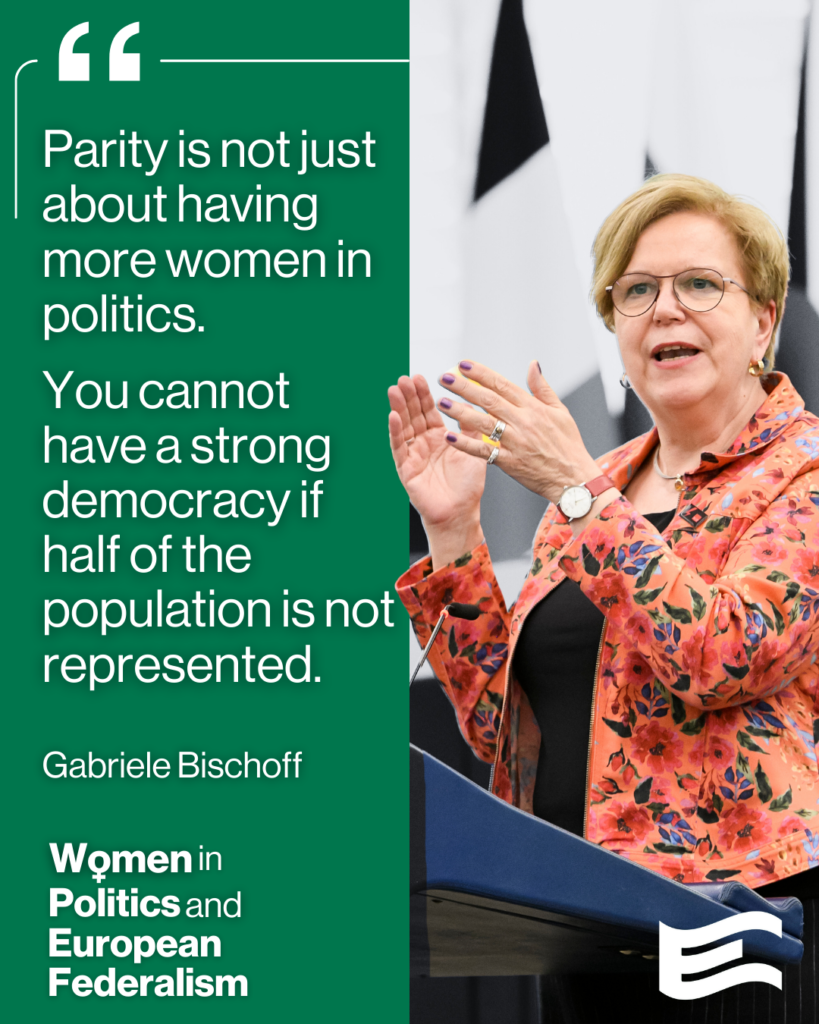
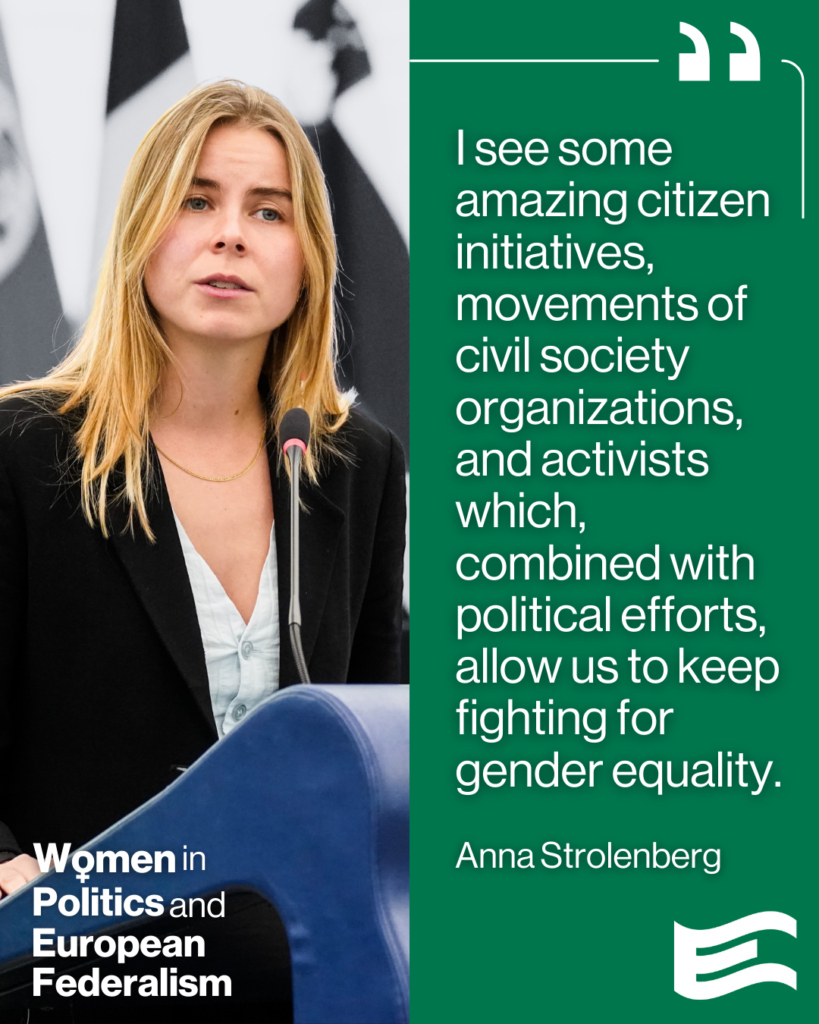
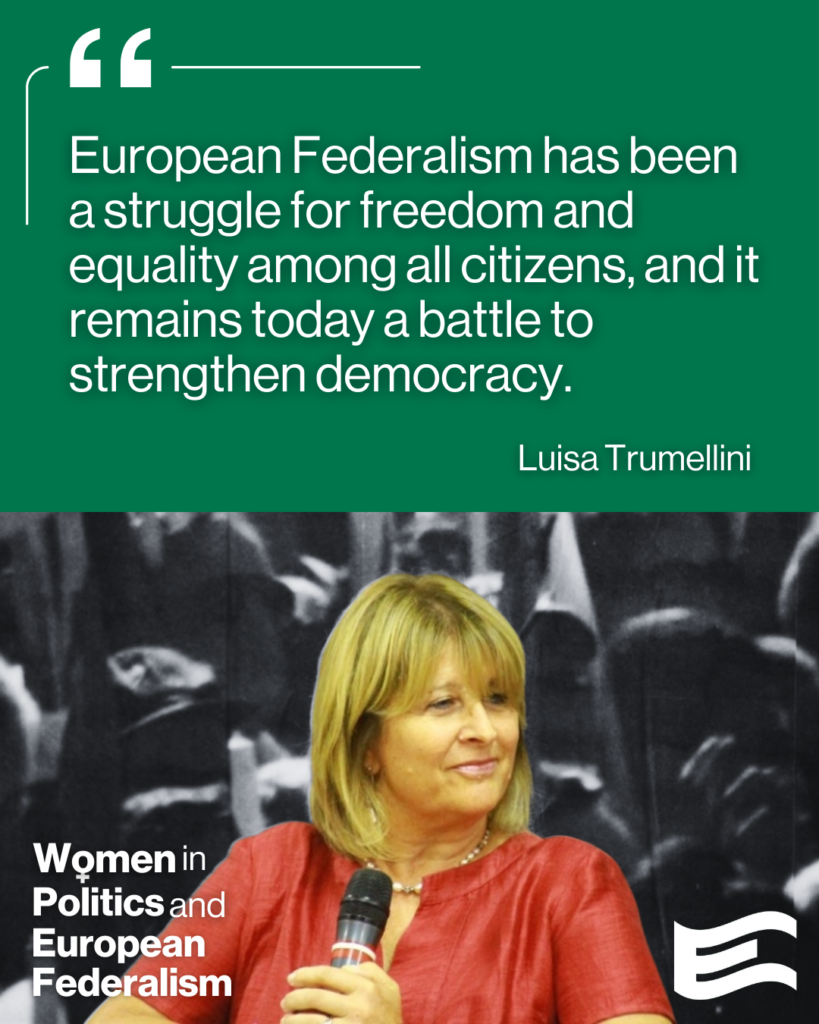
Rewatch here the event in original languages (english and german).
🟦 Report: Sandro Gozi (Renew Europe)
Main theme: Institutional efficiency and the political necessity of treaty reform
Sandro Gozi made a strong case for the urgent need to reform the European Union’s institutional framework. His argument centered on three core issues that, in his view, can no longer be ignored if the EU is to function effectively and remain politically viable.
First, he pointed to the persistent inefficiency of the current governance model. The unanimity rule, he argued, severely limits the EU's ability to respond decisively to global challenges. Using the example of sanctions against Russia, he described how one Member State—notably Hungary—was able to stall the process repeatedly. This, he stressed, is unacceptable in matters of such urgency and importance. Similar delays, he noted, have occurred with Article 7 proceedings and in taxation policy, where unanimity is also required.
Second, Gozi raised the issue of EU enlargement, particularly the planned accession of Ukraine and the Western Balkan countries. Without institutional reform, he warned, the Union will become increasingly paralyzed. "If we are already inefficient with 27 Member States," he asked rhetorically, "how can we possibly expect to function effectively with 34 or more?" He emphasized that reform is not optional, but a prerequisite for a successful and sustainable enlargement.
Third, Gozi invoked historical precedent, noting that every previous enlargement has either been preceded or followed by significant treaty reform. He cited the 1985 Milan Summit as a prime example, where despite initial resistance from Margaret Thatcher, a majority decision to revise the treaties led to the Single European Act and the completion of the single market. This, he argued, demonstrates that bold political leadership and majority-based processes can yield transformative results.
Gozi concluded by calling for a new form of integration based on "a Europe of political will". He proposed allowing willing Member States to proceed with deeper integration without being held back by those who prefer to stand still. According to Gozi, reform is not only possible but necessary, and Europe must act decisively to seize the moment.
🟩 Report: Daniel Freund (Greens/EFA)
Main theme: Structural reform for effective defence and democratic governance
Daniel Freund focused his intervention on the need for profound institutional reform, especially in the realm of European defence and foreign policy. According to Freund, the EU finds itself in a dramatically altered geopolitical landscape, where traditional security guarantees, particularly those provided by the United States, are increasingly unreliable.
This, he argued, demands a paradigm shift. Freund advocated for the creation of a European army, equipped with a unified command structure and joint procurement processes. He acknowledged that such a transformation would require sweeping treaty changes, particularly to eliminate the unanimity rule in foreign policy decisions.
Freund lamented that despite widespread acknowledgment of the need for a united European voice in global affairs, national leaders continue to avoid treaty reform. He noted how each crisis—from the Eurozone and migration crises to Brexit and COVID-19—has been used as an excuse to delay the conversation. "We will never have a 'perfect' moment to reform," he said, "but if we wait, we will simply move from one crisis to the next, always unprepared."
To break the deadlock, Freund outlined a three-part strategy. First, he called for bundling reforms into a comprehensive package to facilitate political trade-offs. Second, he proposed tying treaty reform to the upcoming Multiannual Financial Framework (MFF) discussions, ensuring that financial priorities align with institutional capabilities. Third, he encouraged the use of enhanced cooperation mechanisms to allow a core group of countries to lead the way, creating a "fear of missing out" effect that could motivate others to join.
Finally, Freund passionately defended the role of the European Parliament. He argued that democratic legitimacy and superior policy outcomes can only come from an empowered, elected assembly, rather than backroom deals among heads of state. For Freund, institutional reform is not just about efficiency—it's about democracy.
🟥 Report: Klara Dobrev (S&D)
Main theme: A new European Constitution as a political and democratic act
Klara Dobrev delivered one of the most passionate appeals of the event, framing the current moment as a historic turning point akin to the post-World War II era. Drawing parallels with the Schuman Declaration, she urged fellow leaders to demonstrate the same level of courage and vision shown by the EU’s founders.
Dobrev's central thesis was that Europe needs not just a treaty change, but a new European Constitution. This, she argued, would restore democratic legitimacy, clarify institutional responsibilities, and offer citizens a renewed sense of ownership over the European project. Importantly, she proposed that such a constitution be ratified through a pan-European referendum, thereby directly involving citizens in the future of the Union.
She highlighted three strategic priorities that must be addressed:
- Establishing a single European voice in global affairs.
- Enhancing democratic legitimacy, especially by increasing transparency in Council decision-making.
- Ensuring European security, not only in military terms but also in terms of social cohesion and economic stability.
Dobrev stressed that the debate on the future of Europe will inevitably be politicized, whether leaders like it or not. She pointed to growing disinformation campaigns, external interference from Russia and China, and domestic populism as existential threats to European unity. "If we do not lead this debate," she warned, "our adversaries will."
She concluded by arguing that the window of opportunity is limited. With citizens feeling increasingly insecure and skeptical, now is the time to act boldly and offer a compelling, united vision for Europe's future. For Dobrev, a new constitution is not a luxury—it is a necessity.
🟨 Report: Sven Simon (EPP)
Main theme: Pragmatism, leadership, and flexible integration
Sven Simon took a more cautious yet constructive stance, emphasizing the need for realistic, incremental progress. He opened by identifying a lack of political leadership, even among governments that claim to support a federal Europe. As an example, he criticized the previous German coalition for failing to back up its pro-European rhetoric with tangible proposals.
Simon acknowledged that around 80% of EU legislation is already decided by majority vote, arguing that advocates of reform should avoid focusing too narrowly on politically sensitive areas like foreign policy. He warned that pushing treaty reform in these domains could deepen divisions rather than foster unity.
Instead, he called for a focus on practical, sectoral reforms where consensus is more likely—for example, in innovation, energy policy, and digital infrastructure. He cited the Schengen Area and the Euro as successful models of differentiated integration that could inspire future initiatives.
Simon also drew attention to the fragmentation of European defence efforts, citing inefficiencies in procurement and distrust among Member States. He noted that despite billions spent on defence, much of it still goes to non-European suppliers due to the lack of coordination and strategic trust. While supportive of a stronger European Defence Fund, he cautioned against over-ambitious plans without first solving basic issues of interoperability and industrial alignment.
On the budget, Simon argued for a rebalancing of EU spending priorities, suggesting that the current focus on agriculture and cohesion is outdated. He advocated for greater investment in forward-looking sectors like artificial intelligence, clean technology, and science.
His core message was clear: "Let’s not aim for a grand constitutional leap. Let’s move forward step by step, showing citizens the tangible benefits of European cooperation." For Simon, a more federal Europe is built not in one leap, but in steady, deliberate steps grounded in shared interests.
This article was written by Domènec Ruiz Devesa, President of the Union of European Federalists and Former MEP; and Emiliano Alessandri a scholar and practitioner of European and transatlantic security published on the 24 March 2025 in the Royal Institute elcano, about the need for the United States of Europe and a European Defence.
Europe is arguably going through its most challenging geopolitical inflection point in decades. First, Russia’s aggression against Ukraine and now US President Donald Trump’s controversial approach to settling the conflict have upended the already fragile European security order that has kept the continent largely at peace for the past 80 years. In this fast-shifting geopolitical context, a disoriented Europe feels vulnerable as perhaps never before.
This paper argues that faced with a White House whose request is no longer that Europe just ‘steps up’ but also that it steps aside on existential issues such as Ukraine’s future, European countries need to increasingly take security and defence into their own hands. While there is nothing to cheer about the decline of NATO, European leaders should work towards immediately reinforcing the European pillar of the Atlantic Alliance but also adopt measures that would protect their security should a post-NATO security order emerge because of the ongoing geopolitical reshuffling.
Although not immediately within reach, the vision of a future European Defence Union should animate and underpin ongoing deliberations among EU countries and their partners. This paper outlines an agenda for Europe in this respect. Meanwhile, all efforts should be put towards supporting Kyiv at this most decisive juncture. How the war ends will determine the security context in which Europe will operate in the years to come.
Read the article here: LINK.
PC 1 Chair Luca Lionello, professor of European Law at the Università Cattolica del Sacro Cuore, participated in an interview togheter Maria Tadeo, The Grand Continent, regarding the European Defence future on SKY ITALY TG24.
The interview focused on the topic of European rearmament of individual countries and how a ‘European defence’ in the sense of greater integration of individual countries' defences within a Structured and Permanent Cooperation can be developed with non-EU countries.
Lionello's answer was: ‘PESCO allows us to do many things but the problem is the decision-making system, which unfortunately is still unanimous in foreign and defence policy. So you can do something now but in perspective you have to reform the Treaties.’
‘But what is the difference with the cooperation achieved to make the Euro?’ the journalist continued. Luca replied, ‘The Euro was made a unanimous treaty with exceptions made to some countries. By contrast, foreign policy and defence can be done but it will only be done between willing countries in contrast to countries that are against it. We have to wait for the new German chancellor to see what proposals he will make together with Macron.'
‘But wouldn't it be possible to reuse the old CED Treaty that was not approved in the 1950s to speed up the construction of a European defence?’ ‘It is a fascinating hypothesis but difficult to resurrect because it was written in another historical context and only between 6 countries but it can serve as a model. However, making European defence does not mean having an army of men in European uniforms and with a European flag. It is much more complex than that: It is much more complex than that: what is a priority is a common foreign policy because having a collective but unanimously decided instrument of 27 would not be possible. Defence policy needs strategy, vision, industrial structure. As long as a country like Hungary stops everything doesn't work. The question in the coming months is how to overcome the intergovernmental dimension and give a voice to the European Parliament, which has no voice.’’
It is much more complex than that: what is a priority is a common foreign policy because having a collective but unanimously decided instrument of 27 would not be possible. Defence policy needs strategy, vision, industrial structure. As long as a country like Hungary stops everything doesn't work. The question in the coming months is how to overcome the intergovernmental dimension and give a voice to the European Parliament, which has no voice.’
Towards the end of the conversation, the question was asked: ‘Is there a way to kick someone out of the European Union?’ No because the EU is a unique international organisation, an association of states but also of citizens, so you cannot kick out one of its members as you would in any other international organisation. The solution is not to kick someone out but to advance the integration project in order to confront Orban and his loyalists with the contradiction of staying out of a stronger and more cohesive Europe.’
To watch the video in Italian: LINK.
We'd like to draw your attention to the article by the President of European Movement International and Former MEP Guy Verhofstadt, the President of the Union of European Federalists and Former MEP Domenec Ruiz Devesa, and the Former MEP Cyrus Engerer, published in Times of Malta in English, with the title Europe's moment: a stronger, united future
Europe’s moment: a stronger, united future
Europe can no longer rely solely on external security guarantees – it is time to take charge of its own destiny
A month into the new US administration, one thing has become clear: Europe must take charge of its own destiny. While past transatlantic ties have been strong, the shifting geopolitical landscape requires us to stand firmly on our own two feet.
We can no longer rely solely on external security guarantees – we must build a stronger, more independent Europe that is prepared to defend its values, interests and future.
The events of recent weeks have highlighted the need for a united and forward-looking approach.
Europe has always been a champion of democracy, multilateralism and international law, and it is now our responsibility to uphold these principles.
When it comes to Ukraine, we must remain steadfast in supporting its security and sovereignty, ensuring a just and lasting peace that guarantees stability for both Ukraine and the entire continent.
This is not a challenge – it is an opportunity to reinforce Europe’s leadership on the world stage.
A bold step forward
As we approach today’s European Council meeting, we must embrace a new mindset – one that acknowledges Europe’s strength and potential. The European Union has already demonstrated its capacity to act decisively in times of crisis, from responding to the COVID-19 pandemic to addressing economic and security challenges. Now, it is time to take the next step: strengthening our competitiveness, ensuring our security and becoming a true global power.
Integrating Ukraine into the EU economy – while leaving out agriculture for the time being – will strengthen both Europe and Ukraine. A rare-earths mining agreement through the European Investment Bank will secure essential resources for our industries, while increased financial and military support will ensure long-term stability.
European aid to Ukraine has already surpassed that of the United States, proving that we have the means and the determination to lead.
With over €200 billion in frozen Russian assets, we have the resources to both equip Ukraine and support its reconstruction. By reinforcing our economic resilience, deepening sanctions and closing loopholes that allow circumvention of restrictions, we can ensure a stronger, more secure Europe.
A European defence community for a safer future
Security is the foundation of a prosperous Europe. To safeguard our collective future, we must move beyond fragmented defence strategies and establish a European Defence Community (EDC), with Ukraine as a key partner.
This initiative could serve as a European pillar, close to or within NATO for those member states that do not have a neutrality clause in their constitutions, ensuring that we can act independently when needed, while maintaining strong alliances.
The Lisbon Treaty provides the legal foundation for this, and, if necessary, we must be prepared to move forward with an interim treaty among those willing, that can later be integrated into the EU framework.
Furthermore, a stronger Europe means strengthening its deterrence capabilities. Currently, nuclear deterrence protecting all EU member states comes from the storing of American nuclear weapons in Belgium, Germany, the Netherlands, Italy and Turkey.
With the United States’ intention to remove these security guarantees from
Europe, the European Union’s coalition of the willing could contribute to France’s arsenal; we can ensure a credible and united security posture.
This is not about confrontation – it is about peace through strength, ensuring that Europe remains a safe and stable region for generations to come.
Deepening European unity
A more secure Europe also requires a more effective political system. We must complete our political union by removing national vetoes, currently hindering an effective and efficient European Union on foreign and defence issues.
At the same time, we should strengthen the European Parliament. The reform of the treaties, as proposed in 2023, provides a clear pathway toward a more democratic and responsive European Union.
By empowering our institutions, we ensure that Europe can act swiftly and decisively in the face of global challenges.
The time is now
Europe stands at a crossroads – not one of crisis but of opportunity. The question is not whether we can rise to the challenge but how boldly we are willing to move forward. By deepening our unity, strengthening our economy and ensuring our security, we can shape a future where Europe is not just a global player but a true leader.

We'd like to draw your attention to the article by the President of European Movement International and Former MEP Guy Verhofstadt, the President of the Union of European Federalists and Former MEP Domenec Ruiz Devesa, and Director of the Association Jean Monnet Olivier Védrine published in La Tribune de Geneve in French, with the title C'est la soumission ou les États-Unis d'Europe!
Une réflexion sur l’avenir de l’Europe par Olivier Védrine, Guy Verhofstadt et Domènec Ruiz Devesa.
Après un mois de présidence Trump, il est clair que les États-Unis ne sont plus nos alliés. Ses déclarations impérialistes sur le canal de Panama, le Canada ou le Groenland, ses menaces de guerres commerciales, son dialogue avec un dictateur responsable de la plus grave guerre d’agression en Europe depuis 1945, le prouvent.
Un axe Trump-Poutine
Après la tentative d’humiliation médiatique de Zelensky, les attaques contre la démocratie européenne et la présence des forces américaines sur notre continent, la fin de l’alliance transatlantique conclue par Churchill et Roosevelt face à la menace nazie est proche. Nous assistons à l’émergence d’un Axe Trump-Poutine hostile au droit international, au multilatéralisme et à la démocratie. Nous refusons la collusion avec Poutine pour imposer une solution qui légitime l’agression et ne garantit pas notre sécurité.
Ukraine, Russie
Que faire? D’abord, nous devons prendre conscience de la nouvelle réalité. Jusqu’à récemment, certains dirigeants de l’UE étaient dans le déni en se réfugiant dans le mantra atlantiste. L’Europe est seule, comme la Grande-Bretagne en 1940. Elle doit prendre ses responsabilités pour prendre en main son destin.
Nous devons intégrer l’Ukraine dans l’économie de l’UE, sauf dans l’agriculture, conclure un accord d’exploitation des terres rares et renforcer notre soutien. L’aide américaine, inférieure à celle de l’Europe qui est l’une des économies les plus fortes du monde, n’est pas irremplaçable. L’Allemagne doit livrer les missiles à longue portée Taurus. Nous devons supprimer toute restriction contre des cibles militaires russes conventionnelles, renforcer les sanctions contre la flotte pétrolière fantôme russe et utiliser les 200 milliards d’euros d’actifs financiers gelés de l’État agresseur.
Face à la menace, nous devons lancer un plan industriel européen financé par la dette commune et des ressources propres. Il s’agit de combler le déficit technologique, d’investissement et de compétitivité identifié dans le rapport Draghi, tout en renforçant notre industrie de défense, notamment par la création d’une banque européenne d’armement.
Mais face à ce défi existentiel, la production conjointe d’armements ne suffira pas. Nous devons créer une communauté européenne de défense avec la participation de l’Ukraine. Elle garantira notre défense territoriale, en tant que pilier européen de l’OTAN mobilisable indépendamment de Washington.
L’Europe au premier plan
Cela est possible avec les dispositions du Traité de Lisbonne sur la défense commune européenne et la coopération structurée permanente. Si les alliés de Trump au Conseil européen bloquaient cette proposition, un traité séparé intérimaire devra être conclu. Nous proposons par ailleurs de faire bénéficier de la dissuasion nucléaire tous les États membres volontaires pour participer au financement de l’arsenal français.
Parallèlement, nous devons renforcer notre union politique et démocratique, supprimer les veto nationaux et donner plus de pouvoirs au Parlement européen, grâce à une réforme fédérale des traités.
Que faut-il encore pour qu’une réaction se produise? L’arrivée de soldats russes à Varsovie? C’est soit les États-Unis d’Europe, soit la soumission.
On the 12th of March 2025 the European Parliament, echoing the “Memorandum on a European Defence Union”[1] issued by the reconstituted Monnet Action Committee for the United States of Europe, called the European Council to activate the different provisions of article 42 of the Lisbon Treaty to setting up a European Common Defence.
This will pave the way for the creation of an autonomous European Defence System (EDS), endowed with its chain of command and in charge of territorial defence. Such and EDS will not be dependent on the will of the current US President, and it will operationalize the mutual assistance clause foreseen article 42.7 of the Treaty.
Therefore, we fully support this urgent call for action by the European Parliament in view of the meeting of the European Council of 20th March 2025. We ask President Costa and the High Representative to propose to the Member States the activation of article 42.2 TEU for the establishment of the said Common Defence. If unanimity is not reached, we call for a large group of Member States to establish the proposed EDS on the basis of the Permanent Structured Cooperation (PESCO), foreseen in article 46 TEU. This institutional PESCO shall remain open to all Member States willing to join.
We must remind Member States that a European defence cannot be reduced to the different rearmament proposals, something that could also result in waste and inefficiencies if not properly coordinated at the EU level. There will not be a proper European Defence Union without the required political, strategic, and operational dimensions.
We also must emphasize that any viable European Defence Union also requires overcoming the national vetoes and the intergovernmental approach, thereby ensuring the proper parliamentary and democratic control of the EDS. Therefore, we remind the European Council of its legal obligation to follow up on Parliament´s proposal to reform the Lisbon Treaty in a federal direction, and call to President Costa to urgently address the matter with the Member States.
The massive citizen´s demonstrations of 15th March that have taken place in several European cities, from Rome to Tbilisi, confirm that there is a strong popular sentiment in support of freedom, democracy, European integration, and Ukraine´s resistance, and against Putin´s and Trump´s imperialism, and their allies in Europe. We call on the European peoples to sway their national leaders and choose to unite in a federation, and we ask on the European Council to hear these strong voices.
Finally, we commit ourselves to foster the popular mobilization for a more united Europe in the run up to the 80th anniversary of the end of the Second World War and the 75th anniversary of the Schuman Declaration.
Related news:
Deadline: 18th April 2025
The Union of European Federalists (UEF) is recruiting a Finance and Administration Officer to work in the Brussels based Secretariat.
Main Tasks:
- Managing all finance matters of UEF and related issues.
- Daily follow-up of invoices, expenses, income of the organisation.
- Management of purchases of goods, services for running the office and events.
- Support general budgeting and budget proposals (with Treasurer, Secretary General and Grant Management Officer); Support during audits.
- Supervise budget execution.
- Manage the collection of membership fees.
- Management of fund-raising activities, Identify new fundraising opportunities; build a network of dedicated donors and volunteers.
- Foster strong relationships with major donors to enhance their engagement and positive perception of the organisation.
- Liaising with Belgian administrations and agencies (Partena Professional, Insurances, Banks, Banque Carrefour des Entreprises etc), updating UEF information in case of changes (e.g. payroll, addresses, new employees…), and drafting documents to communicate them when needed.
- Supporting HR related activities (updating internal work regulations, help with keeping track of staff holidays and time off requests, etc.).
- Contribution to UEF activities, supporting projects and events.
- Plan initiatives to achieve financial objectives.
- Establish strong relationships with external stakeholders.
- Close cooperation with the Treasurer, Secretary General and Grant management Officer.
Essential qualifications and qualities:
- Master’s degree is an asset but can be compensated with relevant working experience adequate for the position.
- Excellent command of English (C1).
- Relevant experience in financial management.
- Command of French at native or appropriate level, to liaise with various administrations and service providers in Belgium.
- Knowledge about Belgian administrations applicable to Brussels-based NGO or fast-learner with administrative procedures.
- An activist mindset and strong commitment to social change and the values and vision of UEF.
- Being passionate about membership-based political organisations and volunteering.
- Proactive and problem-solving mindset, with strong organisational and time management skills.
- Flexibility and willingness to learn and adjust to new situations quickly on the job.
- Team player and comfortable in an international environment.
- Organised and precise approach to work.
- Good knowledge of Microsoft Office, collaborative tools and videoconferencing tools.
Desirable:
- Knowledge of UEF, its network, values, structure, mission, activities.
- Previous experience in civil society organisations, especially in back office positions.
- Previous experience in membership-based and/or political organisations (volunteer experience included).
Contract conditions and remuneration:
- 12-month fixed-term contract under Belgian law, with the possibility of extension until 24 months;
- Full-time, 38 hours/week;
- Monthly gross salary € 2,100 (junior position) or € 2,500 (at least 2 years of experience) plus additional benefits (€50 for public transportation, food vouchers, holiday pay) – equalling approx. to € 2,150-2,250 net remuneration per month;
- Work during weekends and/or evenings several times a year, with time off in lieu as compensation. The position requires some travels in Europe several times during the year and all travel-related expenses will be covered or reimbursed by UEF.
Application procedure and agenda:
- Send (i) a CV and (ii) a motivational letter by 18 April 2025, 23:59 CET to secretariat@federalists.eu.
- All applicants should have the right to live and work in Belgium.
- Successful candidates will be invited for a face-to-face or online interview from the 22nd to the 26th April 2025.
- The selected candidate would ideally start working from early May 2025.
- For all questions, please contact us at secretariat@federalists.eu.
This article was written by Giuliano Torlontano citing the MFE President Stefano Castagnoli, former UEF President Sandro Gozi and the Spinelli Group board member Brando Benifei and published on the 14 March 2025 in the weekly magazine L'Espresso, about the need for the United States of Europe to stop the TrumPutin axis.