

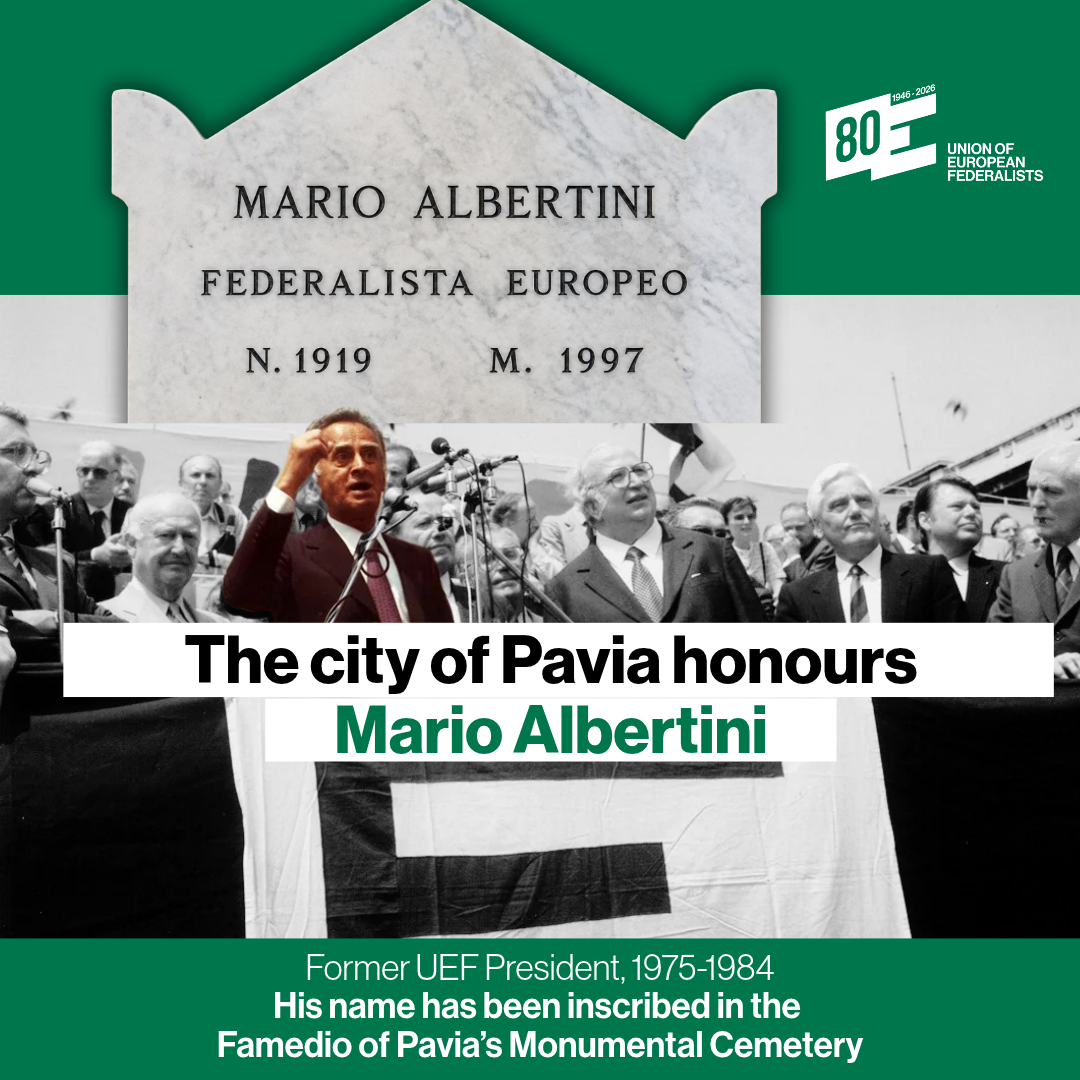
The city of Pavia honours Mario Albertini, a leading figure of European federalism
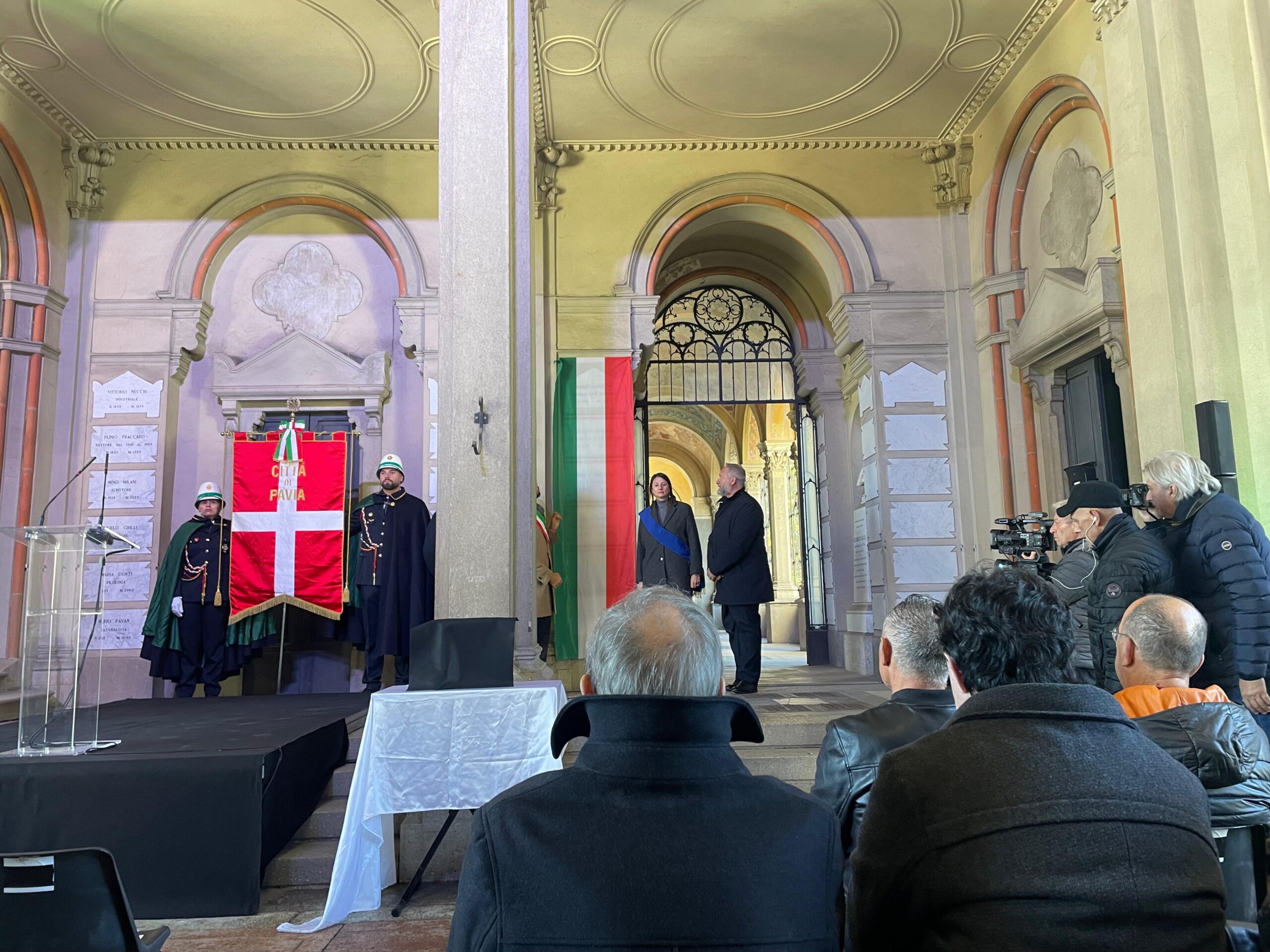
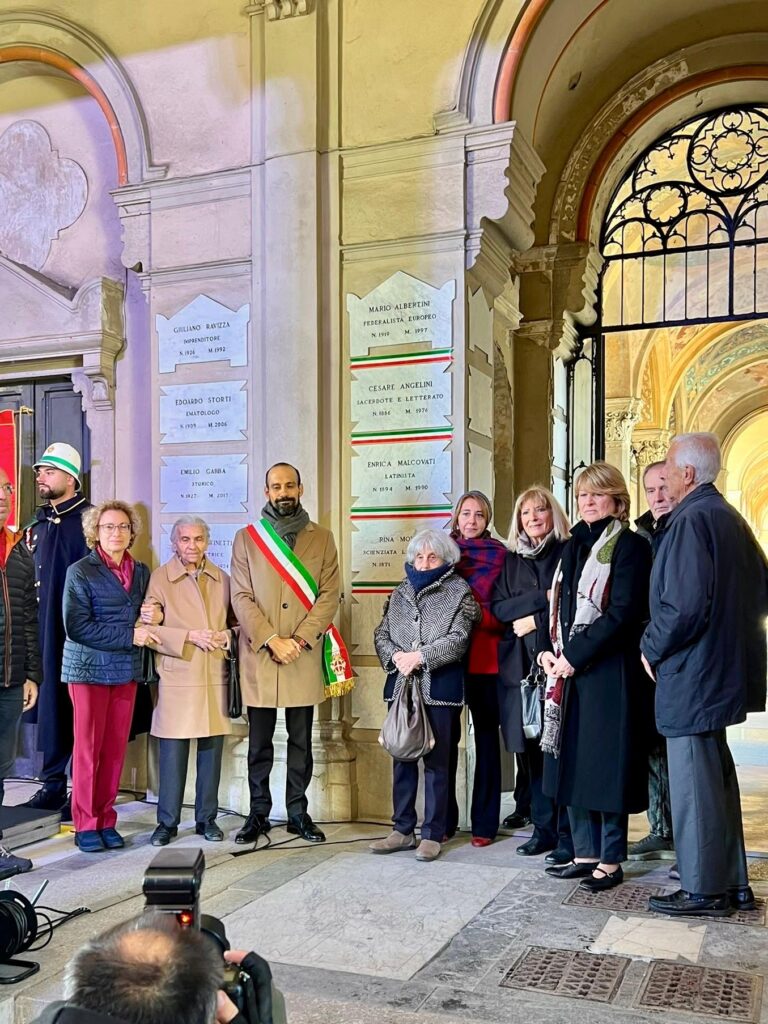
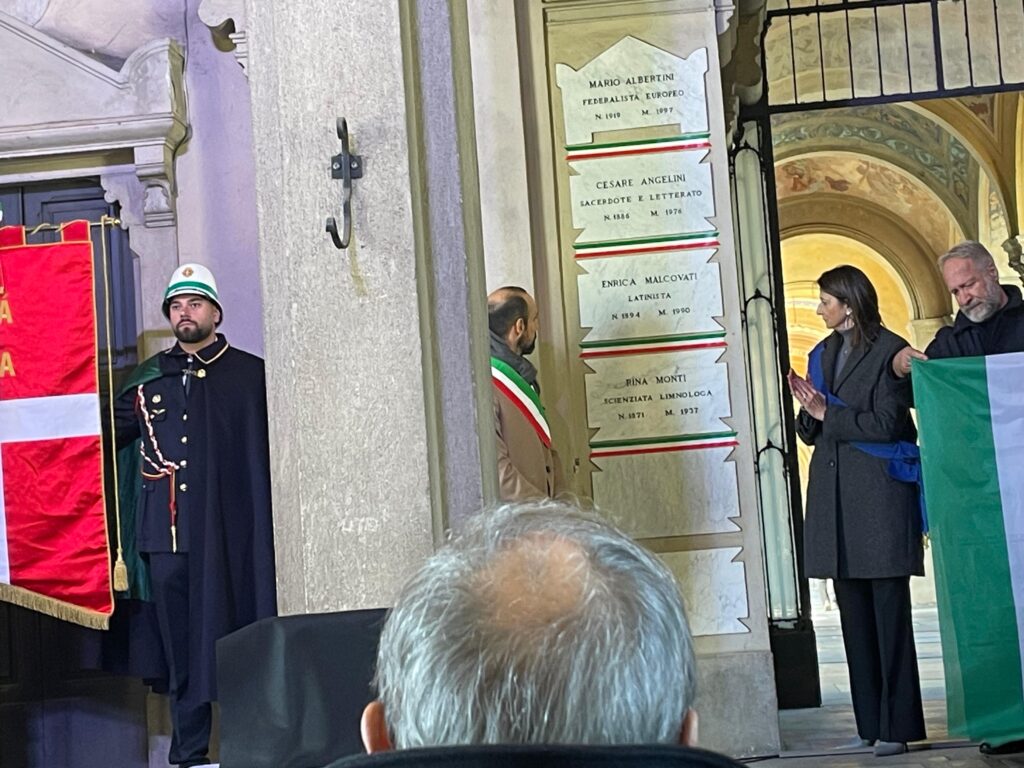
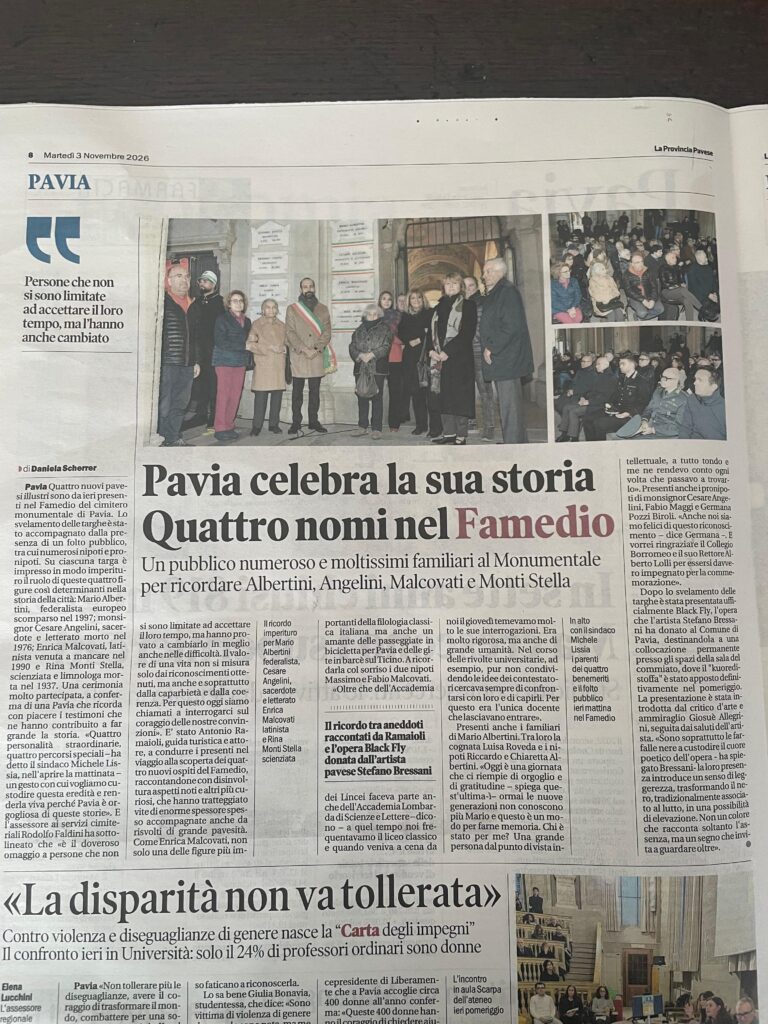
On 2 November 2026, the City of Pavia unveiled a plaque honouring Mario Albertini (1919–1997), President of the Union of European Federalists (UEF) from 1975 to 1984. His name was inscribed in the Famedio of Pavia’s Monumental Cemetery, a civic memorial dedicated to people who made a lasting contribution to the city.
The plaque remembers him in two words: Federalista europeo — European federalist.
For the UEF, this tribute is an opportunity to introduce a new generation to a thinker and activist who helped turn the idea of a European federation into a practical political programme.
From Pavia to the leadership of the UEF
Born in Pavia in 1919, Albertini took part in the Italian Resistance and joined the Movimento Federalista Europeo (MFE) in 1945. He graduated in philosophy and went on to teach political philosophy and political science at the University of Pavia. He began working closely with Altiero Spinelli in the 1950s, founded the political review Il Federalista in 1959 and took the helm of the Italian federalist movement in 1966. In 1975, following the reunification of the European federalist movements, he was elected President of the UEF.
His contribution to European federalism
Albertini placed peace at the heart of federalist thought. He argued that a lasting peace required common institutions through which peoples could settle disputes and exercise power together. His critique of nationalism and of the limits of the sovereign nation-state shaped his case for a democratic European federation.
He also developed a strategy he called constitutional gradualism. He saw concrete political campaigns as opportunities to build democratic power at European level. The campaign for the direct election of the European Parliament was a defining example. The first direct elections in 1979 gave citizens a vote in choosing their European representatives. Albertini also championed a single European currency, seeing monetary union as a step that would make the case for a European government more pressing.
For Albertini, European unity had a wider purpose. He saw a European federation as a step towards a world in which peoples could govern their common affairs through shared institutions. His essay Uniting Europe to Unite the World captures that ambition.
Read Mario Albertini’s work
- Nationalism, Federalism and European Integration — a selection of Albertini’s essays in English
- Tutti gli scritti di Mario Albertini — the nine-volume collection of his writings, available online in Italian
- The Federalist — A Political Review — the journal Albertini founded in 1959, published in Italian and English