

The Conference of the Parties (COP) on climate change met in Belém (Brazil) for its 30th session — ten years after the Paris Agreement, which opened a global path to limiting and adapting to climate change, and at a moment when 2024 has been confirmed as the warmest year ever recorded, exceeding 1.5°C above pre-industrial levels.
This COP took place at a time when climate-mitigation efforts are being scaled back in many countries and regions — beginning with the European Union after the 2024 parliamentary elections, and followed by the United States.
The Union of European Federalists (UEF) wishes to thank President Lula and the Brazilian government for hosting this COP and for maintaining high expectations with the launch of the Tropical Forest Forever fund, the guiding principle of muritão (shared effort), and the roadmap for phasing out fossil fuels.
Together with many other NGOs, we observe increasing fatigue with a COP system that relies on unanimity. In the early years — and this was key to achieving the Paris Agreement ten years ago — all parties were eager to participate and build consensus. Today, some countries disengage while others openly block discussions. As a result, reaching agreements within this UN framework has become extremely difficult, and the level of ambition remains insufficient to meet the goal of limiting global warming to 1.5°C above pre-industrial levels.
In Europe, the notion of a “coalition of the willing” is gaining traction. Perhaps it is time to rethink the negotiation format to allow groups of states to agree on more impactful and binding climate-mitigation policies.
Domenec Devesa, President of UEF, recalls that “we need a more democratic decision-making system at the global level. The fight against climate change is a clear example. We participated in the Earth Summit in Rio in 1992, along with the rest of civil society, and even then the questions of decision-making and binding rules were already on the table. In a few years, it will be too late to establish effective global cooperation.”
Environmental protection: a clear example of the need for a federal Europe
• Lack of unified representation to speak with one voice.
The European Union agreed on its nationally determined contribution only the day before the start of the Conference in Belém — preserving appearances while reducing ambition. Unlike in the World Trade Organization, both the EU and its Member States are individually represented at COP negotiations, creating institutional confusion over who decides and who is accountable.
• Dependence on foreign imports and lack of energy security.
While the Commission, Parliament and Council debate simplification, deregulation or postponement of climate decisions, China continues its decarbonisation and leads the renewable-energy sector. The EU remains dependent on external energy sources (including LNG from Russia and the US, and still oil), raw materials, and key technologies.
• Lack of diplomatic capacity to build alternative partnerships.
Without an autonomous EU diplomacy, Europe struggles to forge new alliances based on win-win cooperation, integrating development, trade, innovation and climate policies into a coherent strategic approach.
• Lack of own resources to ensure social justice.
The ecological transition requires massive investment to support people throughout this transformation. Without genuine own resources, the EU lacks the capacity to act as an investment power. As discussions on the next Multiannual Financial Framework take place, this issue must be addressed.
All these factors prevent the EU from being a true leader on environmental issues — despite its ambitious European Green Deal. A federal approach is still needed for a sovereign, capable European Union with a global vision for this cross-sector policy area: the protection of the environment.
The Trump’s administration 28 points for peace between Ukraine and Russia, negotiated secretly with Russia without Ukraine and the EU, seem to have been dictated by Putin and resemble more a capitulation project rather than a peace project.
This is the darkest hour for Ukraine and for the EU. Our destinies, our freedom and dignity are intertwined, we will defend them together, or we will lose them together.
President Zelensky recalled his engagement for Ukraine’s sovereignty and independence and that dignity and freedom of the Ukrainians cannot be neglected.
Kaja Kallas, the High Representative of the EU and several heads of States and Governments of the EU asked that any solution shall be taken together with Ukraine and the EU. On November 22nd, several Heads of State and Government, the president of the European Council and the President of the European Commission issued a statement on Ukraine that welcomes in very diplomatic terms the US plan and restate their support for Ukraine. The time for cowardice is over, and courage and determination are needed to avoid being overwhelmed.
Ukraine and the EU countries must reject the reduction of Ukraine and the EU to puppets. Our governments must react together, to take back control of our destiny and defend our freedom, our democracy, and our values.
The EU should fully support Ukraine and Ukrainians to protect their sovereignty; maintain the sanctions towards Russia and make them more effective, as long as the war of aggression continues; require a ceasefire to start any further negotiation. Especially, the EU should immediately use the frozen Russian assets to support Ukraine, and member states should be jointly liable together with Belgium in case of legal challenges.
With the return of Great Power Politics the EU cannot survive if it remains divided. If we do not overcome it, we cannot bring effective political support to Ukraine either. Only by strengthening European sovereignty and uniting in a true federation we can be free and secure in Europe.
Ukraine’s struggle for freedom constitutes an essential element for the maintenance of security and freedom in Europe. Ukraine and the EU shall come up with an alternative proposal to the 28 points plan of the US administration, based on the respect of International Law, including the recognition of Ukrainian sovereignty and its legitimate borders, its rights to defend itself and to decide on its own army, and a plan to finance its reconstruction. Building peace requires democracy, respect of the Rule of Law and institutions that guarantee peace.
We must face together the powerful enemies who seek to destroy us. In the darkest hour, it is time to relaunch the path towards federation. It is time to create the United States of Europe.
Greece hosts, for the first time, the meeting of the Union of European Federalists, with a landmark event in the Hellenic Parliament that underscores its upgraded role in shaping the new European agenda
With a historic and high-profile event in the Hellenic Parliament, the Union of European Federalists (UEF) officially launched the proceedings of its Federal Committee in the emblematic and fully attended Senate Chamber on Friday, 21 November. European political figures, Greek and foreign Members of Parliament, Members of the European Parliament, and prominent personalities shaping the public debate participated in a substantial discussion on deepening and accelerating European integration.
Under the central theme “For a stronger, more democratic, and inclusive European Union – towards a European federation,” the event highlighted the need for bold institutional reforms and for a renewed European vision capable of responding to the challenges of our time.
Ahead of Greece’s Presidency of the Council of the European Union in 2027, the country is emerging as a decisive actor in shaping the new European agenda. Hosting the UEF’s proceedings in Athens confirms Greece’s leading role within the European landscape.
In parallel, a structured dialogue is underway with Greek Members of Parliament for the creation of a Federalist Group in the Hellenic Parliament. This initiative is of particular importance for strengthening institutional dialogue and aims to: support reforms for a more effective and democratic EU, enhance the role of the Hellenic Parliament in European affairs, and promote Greece as a driving force in European integration.
The event was organized by the UEF, the Spinelli Group, and the UEF Greece (EEEnOE), marking a key moment for the European debate on the future of the Union and the transition towards a stronger, more democratic, and inclusive European Federation.
The program included an official guided tour of the Parliament—a symbolic reminder of the parliamentary dimension of European democracy—as well as high-level opening remarks by:
• Ioannis Plakiotakis, First Vice-President of the Hellenic Parliament
• Domenec Devesa, President of the UEF
• Gabriele Bischoff, President of the Spinelli Group, Member of the European Parliament
• Daphne Gogu, President of UEF Greece
A special highlight of the event were the video messages delivered by Sandro Gozi, Member of the European Parliament and Honorary President of the UEF, and Josep Borrell, former High Representative of the EU and former President of the European Parliament, both of whom emphasized the historic significance of European integration and the need for political courage to complete it.
The event also featured the presentation of the questionnaire results concerning the upcoming Cypriot Presidency of the EU, with remarks by Christos Stylianides, Member of Parliament and former Commissioner of the Republic of Cyprus.
Two high-level thematic panels followed:
The first panel, moderated by journalist and political analyst Angelos Athanasopoulos, brought together leading figures of the European political scene, including UEF President Domenec Devesa, Members of the European Parliament Dimitrios Tsiodras and Daniel Freund, as well as Dimitris Mantzos, Member of Parliament for PASOK – Movement for Change. The discussion underscored the need for a unified and effective European voice on the international stage, with a focus on defence, energy, enlargement, and the EU’s strategic autonomy.
The second panel, moderated by author and economic analyst Giannis Papageorgiou, highlighted the importance of completing the Single Market and strengthening competitiveness, as well as the critical role of negotiations on the Multiannual Financial Framework. Participants included Gabriele Bischoff, President of the Spinelli Group, Dimitris Kairidis, MP for New Democracy, Nadia Giannakopoulou, MP for PASOK, former MEP Petros Kokkalis, MEP Raquel Garcia Hermida Van der Walle (online), and Giannis Bournous, Vice-President of the Party of the European Left. The contributions also addressed key issues related to technology, migration, and the climate crisis, confirming that completing European integration requires political synthesis and a shared strategic direction.
Speakers stressed that Europe stands at a pivotal moment: geopolitical instability, hybrid threats, the rise of populism and disinformation, energy challenges, the need for green and technological transition, and the forthcoming enlargement all demand deeper institutional integration and stronger democratic legitimacy for European decision-making.
As Greece prepares for its Presidency of the Council of the EU in 2027, it is emerging as a key actor in shaping the new European agenda, hosting the heart of the European federalist movement in Athens.
The Federal Committee proceedings continued on 22 and 23 November in Piraeus, at the building housing the Historic Library of the Aikaterini Laskaridis Foundation. The sessions focused on developing concrete proposals and initiatives in preparation for the organization’s future strategy, ahead of the pan-European Congress to be held in early 2026 in Spain.
The meetings in Athens and Piraeus were institutionally supported by the Municipality of Piraeus, represented by Deputy Mayors Mr. Dimitris Karydis and Ms. Andriana Zarakeli, acting on behalf and with the continuous support of the Mayor of Piraeus. The active involvement of the municipal authority underscored the importance the Municipality places on hosting international institutional processes and on strengthening Piraeus’ role as a hub for dialogue and cooperation at the European level.
For more information click HERE
UEF Greece (EEEnOE)
For the questionnaire regarding the Cypriot Presidency during the first half of 2026 click HERE

©Copyright: Hellenic Parliament-Photographer: Aliki Eleftheriou
Athens-Greece

©Copyright: Hellenic Parliament-Photographer: Aliki Eleftheriou
Athens-Greece

©Copyright: Hellenic Parliament-Photographer: Aliki Eleftheriou
Athens-Greece

©Copyright: Hellenic Parliament-Photographer: Aliki Eleftheriou
Athens-Greece

©Copyright: Hellenic Parliament-Photographer: Aliki Eleftheriou
Athens-Greece

©Copyright: Hellenic Parliament-Photographer: Aliki Eleftheriou
Athens-Greece

©Copyright: Hellenic Parliament-Photographer: Aliki Eleftheriou
Athens-Greece

©Copyright: Hellenic Parliament-Photographer: Aliki Eleftheriou
Athens-Greece

©Copyright: Hellenic Parliament-Photographer: Aliki Eleftheriou
Athens-Greece

©Copyright: Hellenic Parliament-Photographer: Aliki Eleftheriou
Athens-Greece
Media Contact
Press Office – UEF Greece
📩 info@uef-greece.gr
🌐 www.uef-greece.gr
On 11 November, the Movimento Federalista Europeo (MFE - UEF Italy) awarded President Mario Draghi an honorary membership card at a conference in memory of Prof. Raimondo Cagiano de Azevedo, entitled 'Federalism for peace, democracy and equality', held in Rome at the Primoli Foundation.
The conference, organised by the Primoli Foundation together with the European Federalist Movement, was also an opportunity for President Draghi to remember a friend from their days together at the Massimiliano Massimo Institute and to receive from the MFE - of which Prof. Raimondo Cagiano had been an active member and influential leader since the 1960s - in recognition of his decisive contribution at particularly significant moments in national and European political life.
The Movimento Federalista Europeo (MFE), in thanking President Draghi for accepting the honorary membership card of the MFE, recalls here the reasons that accompanied the award:
For having determined, with courage and utmost responsibility, the rescue of the euro in the management of the most dramatic crisis of our single currency, preventing its degeneration and thus saving the European Union from the real risk of disintegration;
For accepting the responsibility of taking charge of Italy's fate at a difficult and dramatic moment, succeeding in affirming the centrality of our country's European destiny and placing it with determination at the forefront, in Europe and in relations with the American administration, of the choice of sides at the time of Russia's aggression against Ukraine;
For the inestimable value of the EU Competitiveness Report he edited, which has become the benchmark for reflection on the future of our continent; a report that captures the ills brought to the European Union by its political fragmentation and that concretely calls for the urgent need to overcome the current European structure in order to make Europe capable of facing the challenges of our time, halting the decline to which division condemns it;
For the lucid determination with which he reminds governments that Europe must urgently act as a state and that, to this end, it must 'become a state'; and with which he urges them towards federalism, highlighting the concrete steps they could (and should) take if only they could muster the necessary political will, thus proving themselves equal to the responsibilities that the times demand of them towards their citizens;
For his ability to always place at the centre of his interventions, at a time when the founding values of our civilisation are being challenged and risk being erased, the call for Europeans to equip themselves with the appropriate tools to safeguard the freedom, democratic life and social cohesion of our continent,
the Movimento Federalista Europeo, with gratitude,
awards President Mario Draghi honorary membership.
Pavia, 13 November 2025
EP calls for the second time in three years for institutional reforms in view of the enlargement. It also reminds the European Council of its pending proposal approved in 2023 of Treaty amendments.
Brussels, 23 October 2025
The Union of European Federalists (UEF) and the Spinelli Group welcome the approval by the European Parliament of the resolution on the institutional consequences of the EU enlargement negotiations, reported by Sandro Gozi MEP, former Chair of the Spinelli Group and Honorary President of the UEF.
“This report starts from a simple conviction: the real question today is not whether the European Union should enlarge, but how to ensure that enlargement strengthens our Union. The cost of inaction would be too high. Institutional reform is no longer a choice; it is a necessity. Continental unification and reform must go hand in hand. We must reform the Union to unify Europe.” stated Sandro Gozi.
This landmark resolution sends a clear message to the European Council: Europe cannot enlarge without reforming itself. It outlines concrete steps to make the Union fit for future enlargements and for global challenges that demand a stronger, more democratic, and effective European Union.
“Enlargement and deepening go hand in hand. The candidate countries must make enormous efforts to become eligible for accession. The same applies to the EU. It must reform itself in order to become bigger and stronger and to strengthen its own capacity to act.” Added Gabriele Bischoff, MEP, Chair of the Spinelli Group and Vice-President of Europa Union Deutschland.
In essence, the European Parliament is calling for a more representative and empowered EU Parliament, a streamlined and balanced Commission and a Council freed from the unanimity trap through available flexibility in the Lisbon Treaty and Treaty reforms.
Many of those points recall the resolution approved on 22 November 2023. The European Parliament reminded that it had already submitted a proposal to amend the treaties in accordance with Article 48.
Among the most significant proposals supported by the UEF and the Spinelli Group are:
- The Parliament’s composition must be reformed before enlargement to maintain democratic representativeness while ensuring an efficient size. Reinforce the democratic legitimacy of EU decision-making by strengthening Parliament’s rights of scrutiny and inquiry. Empower Parliament by placing it on an equal footing with the Council and granting it the full right of legislative initiative — the power to propose, amend, or repeal Union laws.This would complete the transition toward a true bicameral legislative system at the EU level.
- The Council’s voting system must be redefined for an enlarged Union. Propose Treaty amendments to expand QMV and reduce unanimity. Reform Article 7 TEU procedure (rule of law mechanism)
- The Multiannual Financial Framework (MFF) has to be reformed to grant Parliament full co-decision powers on the expenditure side, including the adoption of the Multiannual Financial Framework and to move beyond the historical limit of 1% of the EU’s GDP and introduce new own resources to finance competitiveness, the green transition, and common defence.
- But how to Implement Institutional Reforms Before Enlargement? Some reforms can be achieved without waiting for a full Treaty revision. Differentiated integration must always remain within the Treaty framework, preserving institutional unity and avoiding parallel or alternative structures that would undermine the principles of EU law.
- In the field of defence, the current Treaties already allow for progress towards a European Common Defence: the Parliament therefore calls on the Commission and willing Member States to activate PESCO provisions without delay to advance towards a permanent European Defence System if there is no unanimity in the European Council.
“The Gozi Report confirms that the Treaties already provide the legalto establish a Common Defence. As highlighted in the resolution, a qualified majority decision under Article 42(6) TEU and Protocol No.10 could enable the creation of a European Defence System among willing Member States—just as the Economic and Monetary Union began with a smaller group.” underlined Domènec Ruiz Devesa, former MEP and President of the Union of European Federalists “This approach is fully in line with the political proposals advanced by the Union of European Federalists and the Action Committee for the United States of Europe since February 2025: to make Europe capable of defending itself, acting as one, and building a true European sovereignty.”
The UEF and the Spinelli Group call on the European Council, the Commission, and all pro-European forces to translate the European Parliament’s proposals into a roadmap for the establishment of a federal and democratic Union—strong enough to enlarge and to lead.
- Read here the text of the European Parliament resolution of 22 October 2025 on the institutional consequences of the EU enlargement negotiations (2025/2041(INI)) LINK
- Read here the discussion about this resolution LINK
Brussels, 22 October 2025
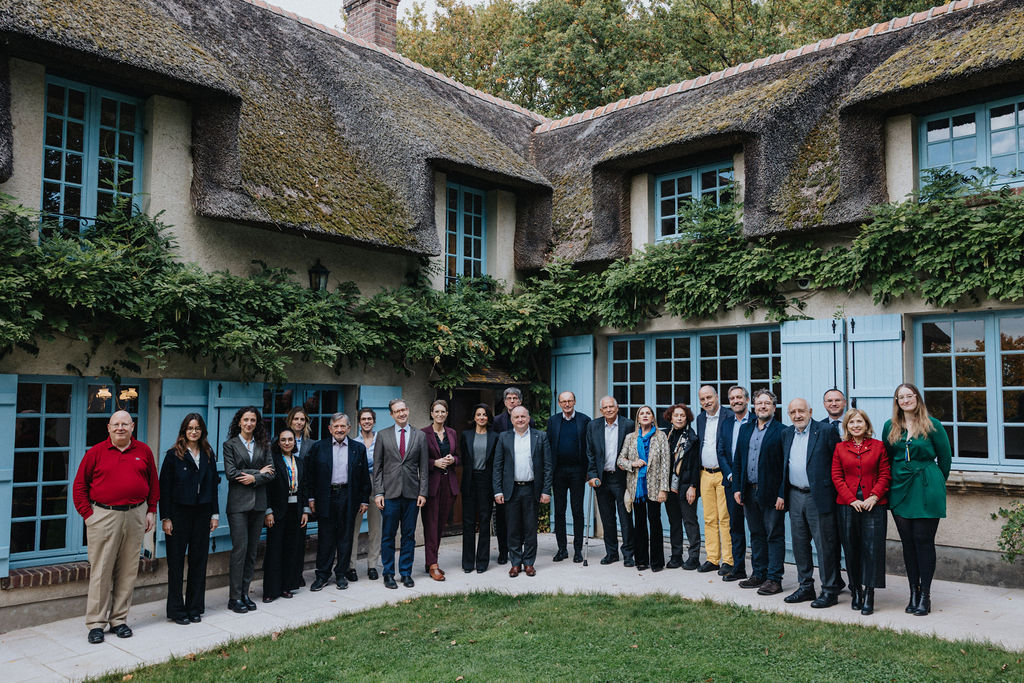
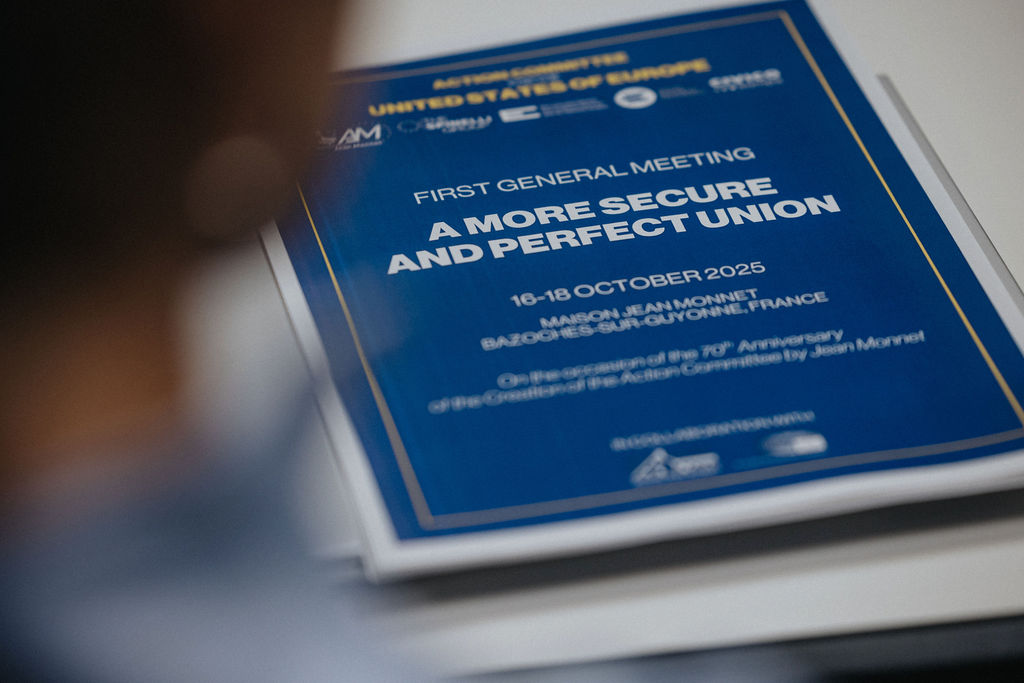
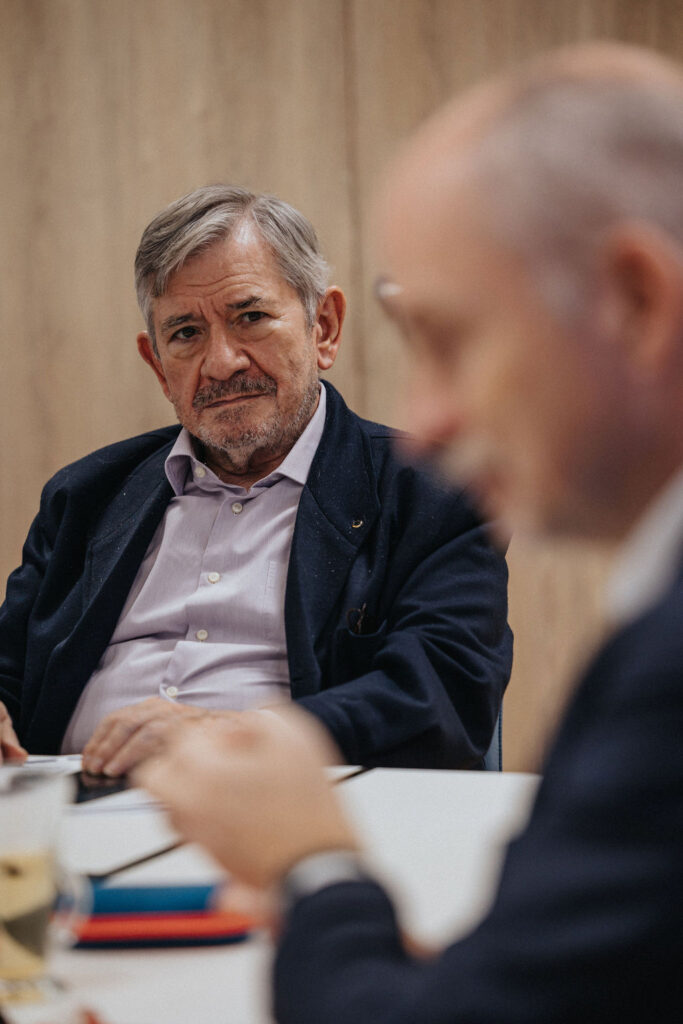
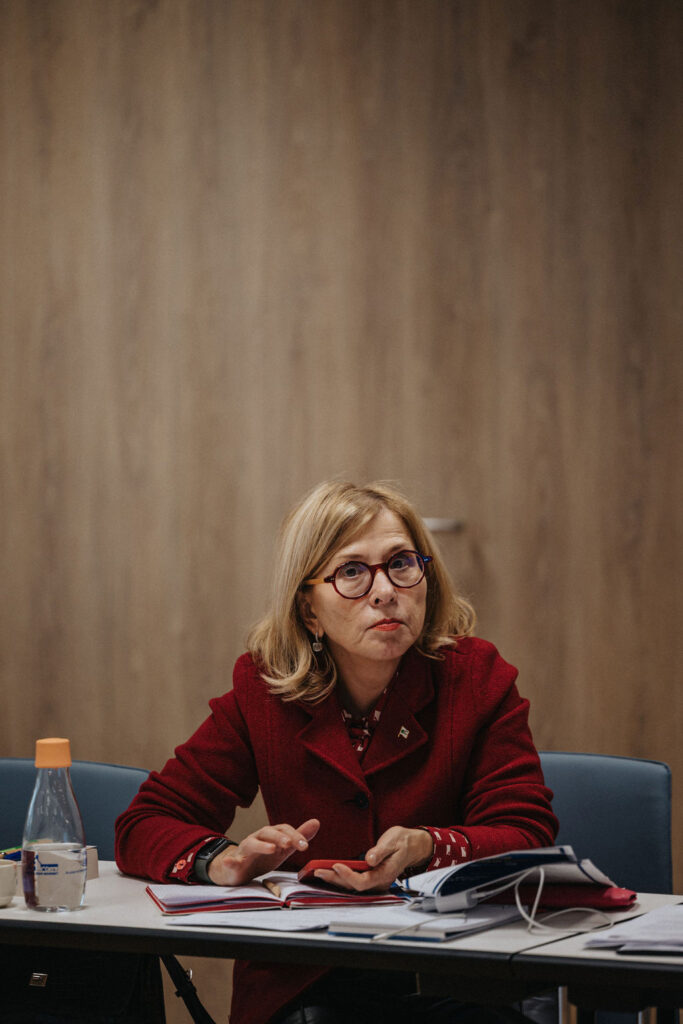
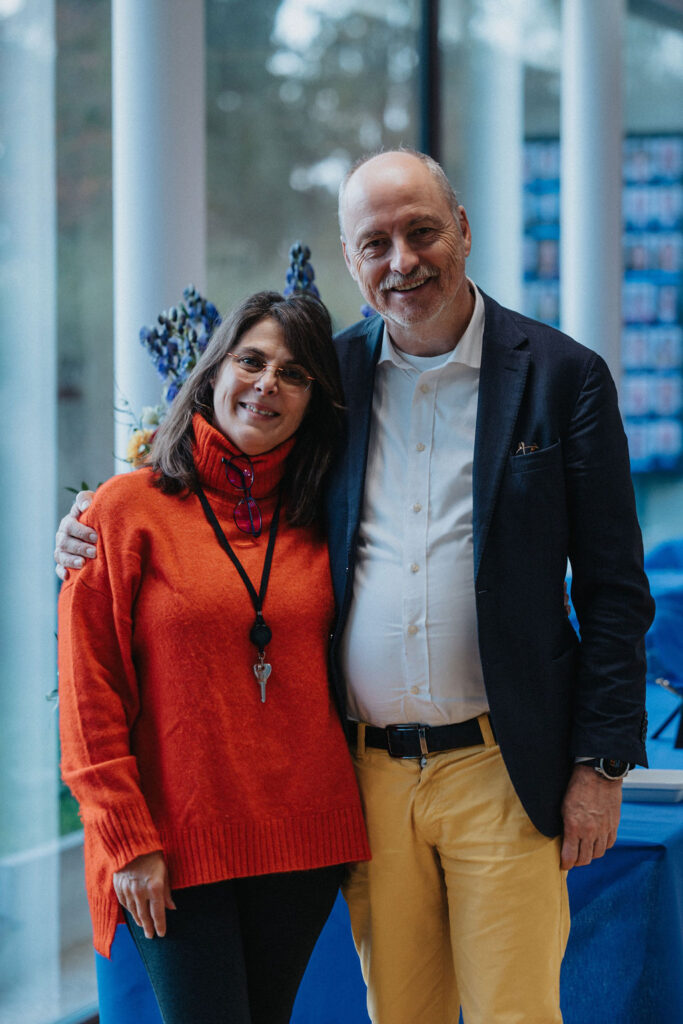
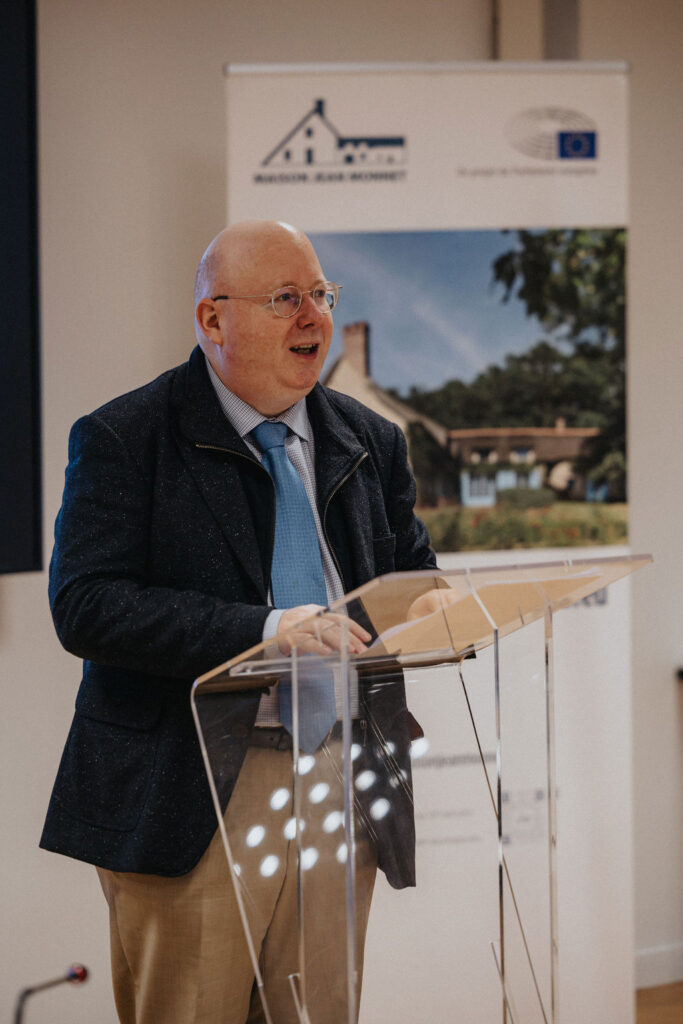
Seventy years ago, in 1955, Jean Monnet founded the Action Committee for the United States of Europe, a transnational political initiative that brought together leaders from national parties and trade unions to accelerate European integration. The Committee played a decisive role at the moment of the adoption of theTreaties of Rome, the accession of Britain to the European Communities, and the direct election of the European Parliament.
In the 1980s, the Committee was revived under the impulse of Max Kohnstamm , Monnet’s direct collaborator in the first Committee. That second incarnation working closely with Jacques Delors contributed the Single European Act and the Maastricht Treaty, reaffirming the vision of a political Europe.
The new Action Committee for the United States of Europe operates through the partnership established by the Union of European Federalists (UEF), the Association Jean Monnet, the Spinelli Group of the European Parliament, the Young European Federalists (JEF),and Civico Europa Network.
In 2024, the Action Committee was relaunched with a new generation of European leaders and thinkers committed to completing the Union, starting with the Declaration of 7 May 2024, followed by the Ventotene Declaration of 1 September 2024, the Memorandum on European Defence of 5 March 2025, and the Second Schuman Plan on 9 May 2025. Together, these texts set out a roadmap for a stronger, more sovereign, and more democratic Europe, rooted in the values and methods that guided the original Committee.
The Final Declaration on a Roadmap to European Sovereignty adopted on 18 October calls among other things for the full implementation of the Letta and Draghi reports, the establishment of a European Common Defence, the abolition of unanimity In decision-making, and the organisation of an interparliamentary assembly to reinvigorate the integration process.
Some quotes from the participants:
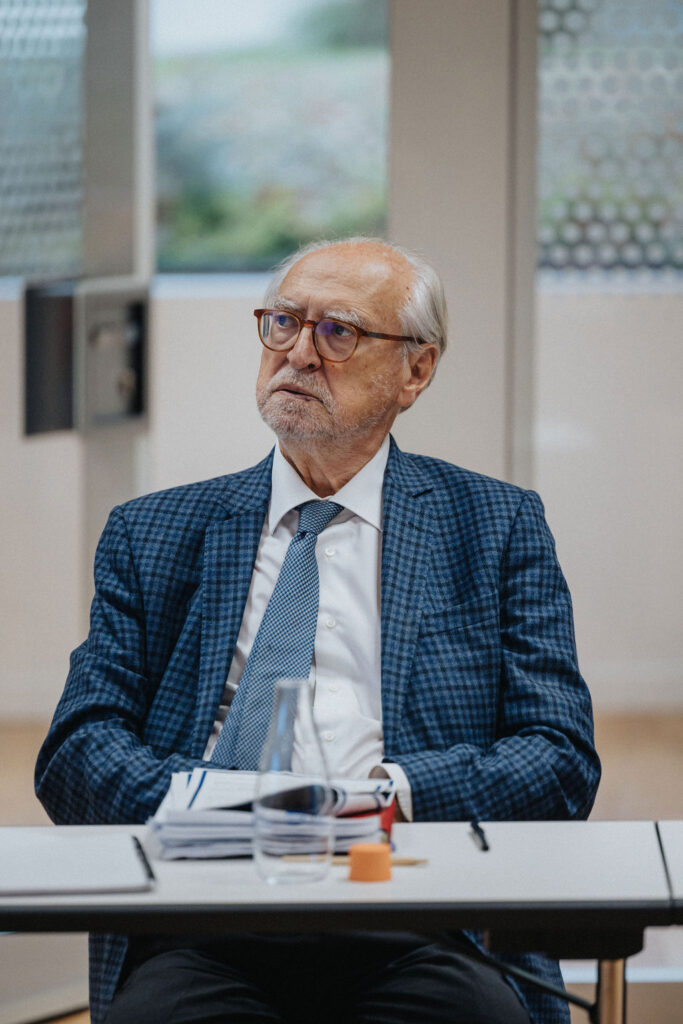
“The third Action Committee is aiming at developing a ‘collective Monnet’, composed pro-European personalities to foster a common vision for a stronger and federal Union” - Domenec Ruiz Devesa, Former MEP 2019-2024 and President of UEF
“We should not take for granted the European project and be aware of the challenges we need to overcome. All pro-European forces need to fight together, starting by implementing the necessary institutional challenges to tackle the EU's challenges.” Fernando Mariano Sampedro Marcos, Spanish State Secretary for the European Union
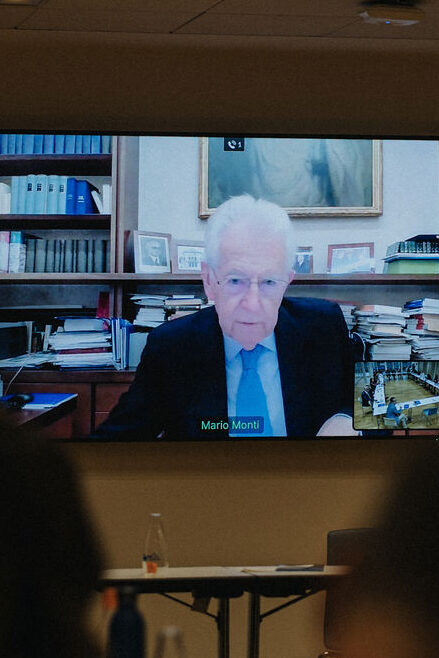
“European federalism is the most ambitious political project in mankind” — Mario Monti, Professor at University Bocconi, former Prime Minister of Italy, former European Commissioner and Member of the Senate of the Italian Republic.
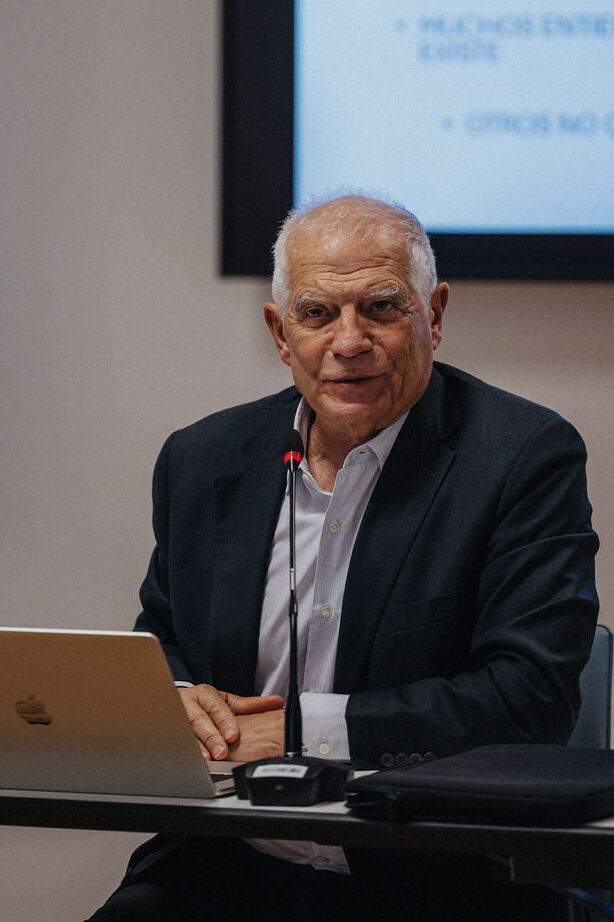
“The West as we knew it doesn’t exist anymore. As Europeans, we need to overcome our internal institutional competition, clarify and use the tools that we already have on the table to finally build our strategic autonomy.” — Josep Borrell, former EU High Representative for Foreign Affairs and Security Policy and former President of the European Parliament
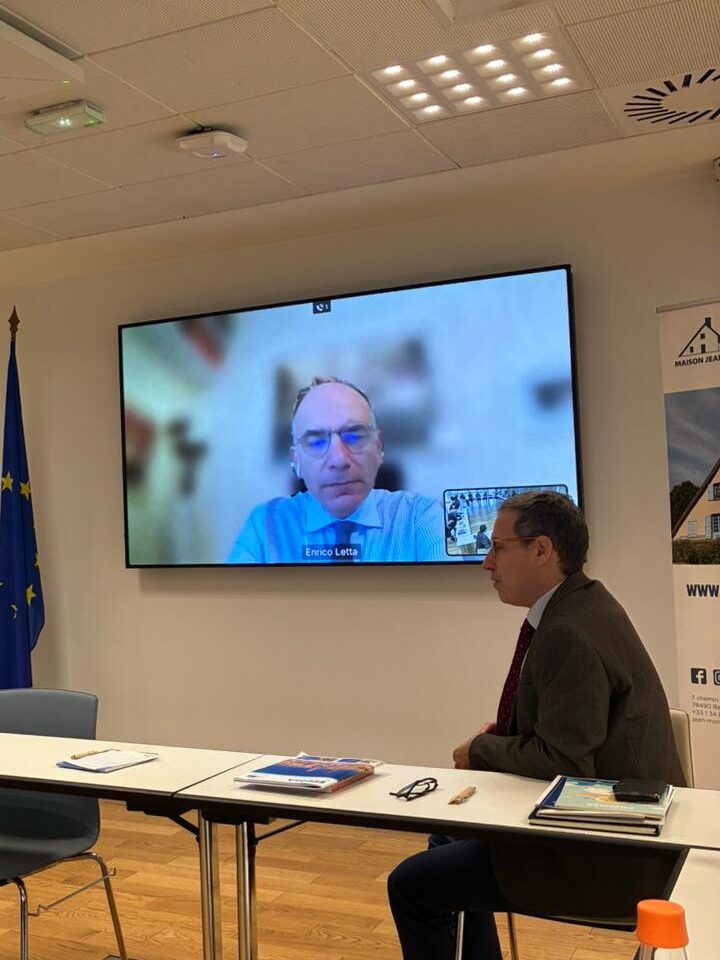
“We can criticise the functioning of the EU institutions, but we can not make the big mistake of delegitimising them. We should build the future together, constructively” — Enrico Letta, President of the Jacques Delors Institute and former Prime Minister of Italy
“If we want a peaceful future, it must be federal” — Enrique Baron Crespo, former President of the European Parliament and President of UEF Spain
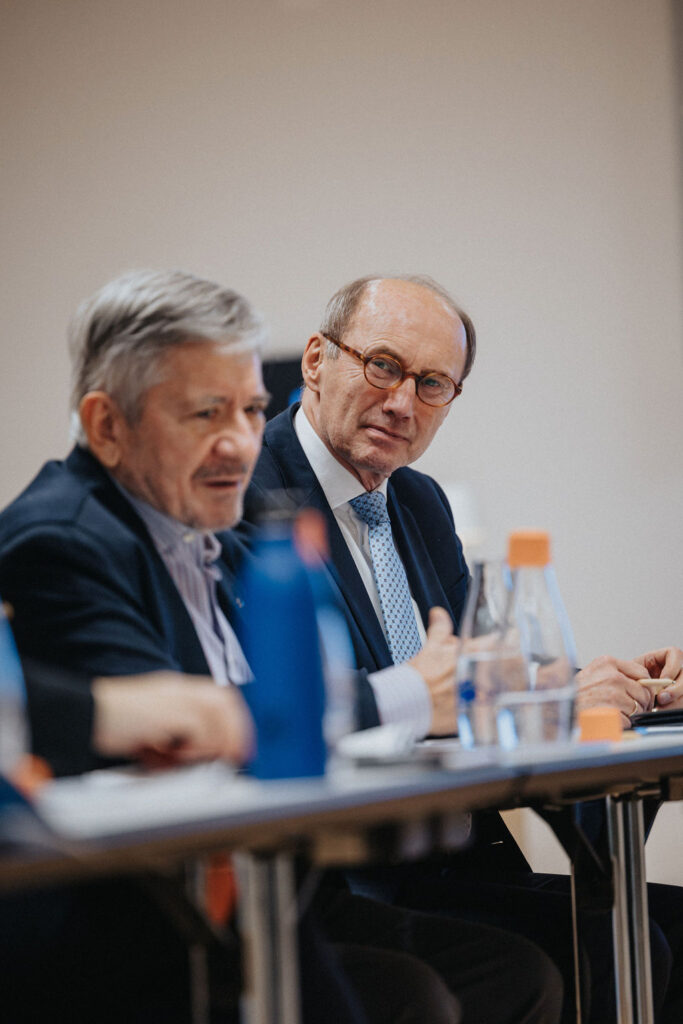
“Uniting the pro-European forces of Europe is a start. But thinking of the states alone without the citizens won’t work” — Othmar Karas, Former First Vice President of the European Parliament
“The call to relaunch the Action Committee for the United States of Europe reminds us of our founding purpose: to secure peace, freedom, and democracy through unity. A federal Europe is not a dream of the past — it is the condition for our shared future. Now is the time for courage, trust, and joint responsibility, so that Europe can stand tall and speak with one voice in a world of giants.” — Andrea Wechsler, MEP and President of Europa Union Deuschland (EUD-UEF Germany)
"Times of crisis - and the 2020s are certainly one of them - often lead citizens and politicians to caution, not to innovation or deep reform. But we, as federalists, are here to challenge them and push them to act. Because these reforms are exactly what we need in moments like this, to move forward and progress together." — Christell Savall, President of Young European Federalists (JEF Europe)
"We must be bold enough to acknowledge our failures: the threats we underestimated, the crises we allowed to grow. We must confront the nationalist and populist forces that seek to divide us and to put down what we have spent at least 70 years building. I do believe that hope, boldness, and courage must guide us to build a strong Europe with its citizens, for its citizens. I am confident this Action Committee will honour the legacy of those who came before us." — Mathilde Baudouin, Secretary General of the Union of European Federalists (UEF)
Declaration A Roadmap to European Sovereignty LINK
All statements, documents, and activities of the Committee can be consulted on the website of the Union of European Federalists. LINK
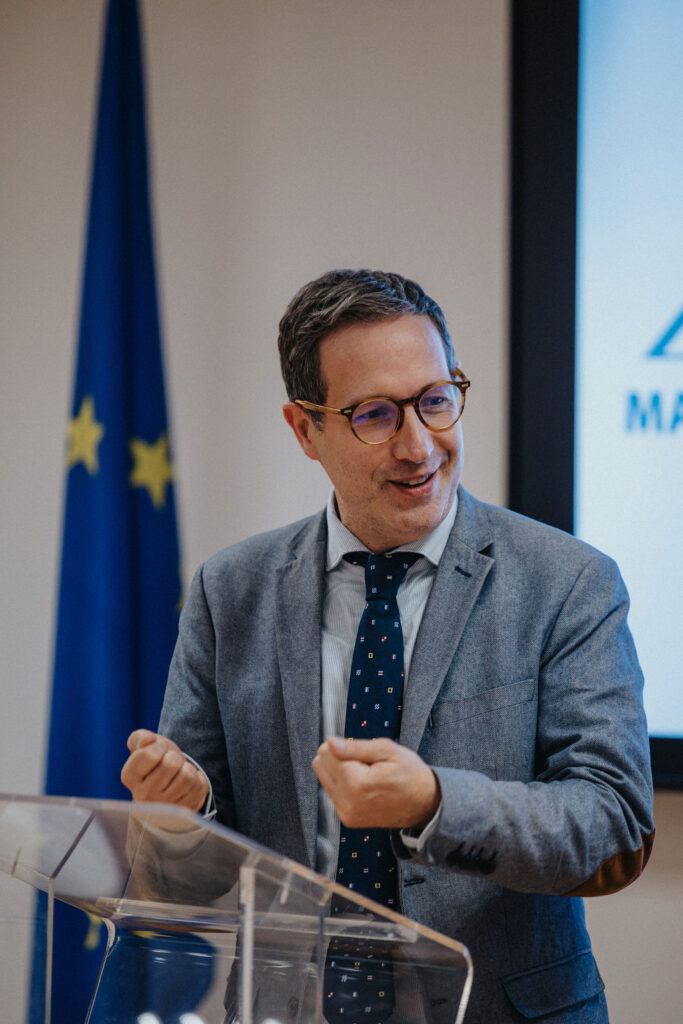
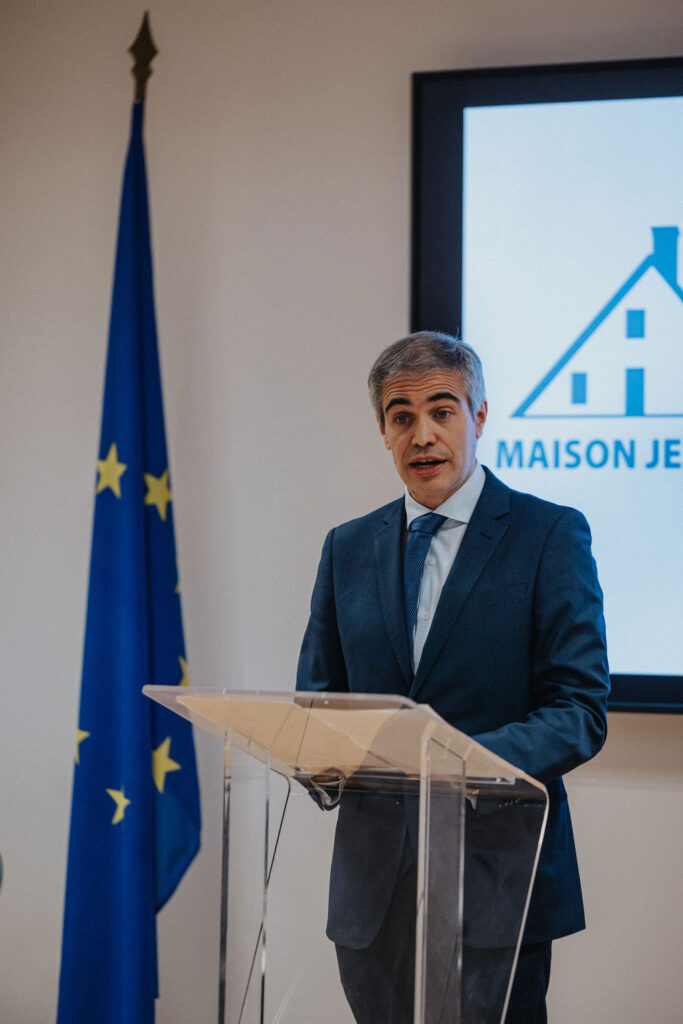
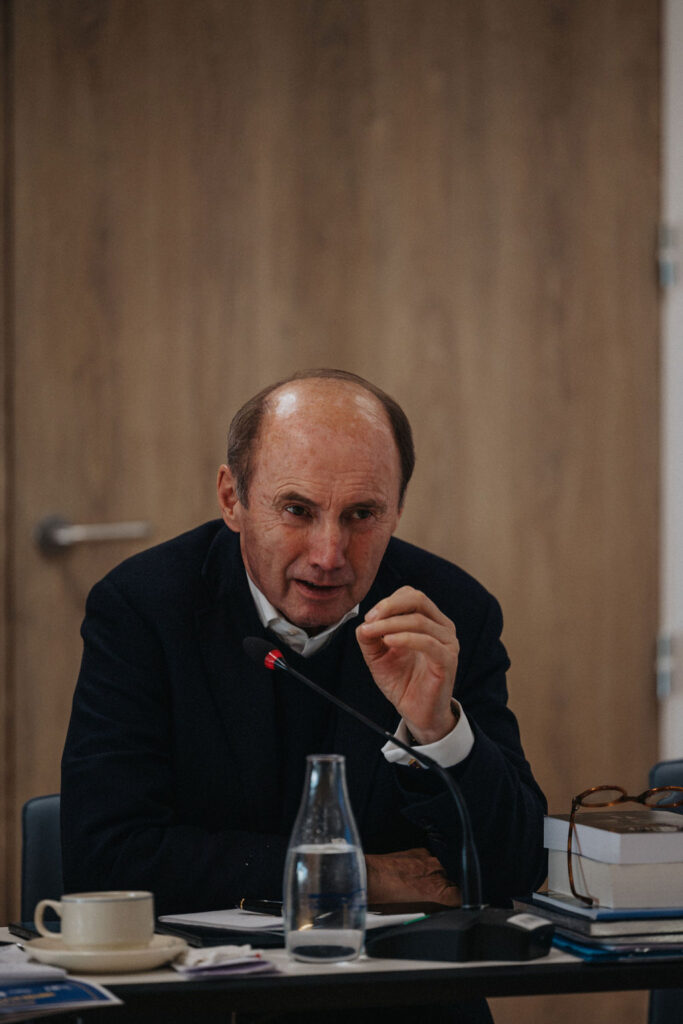
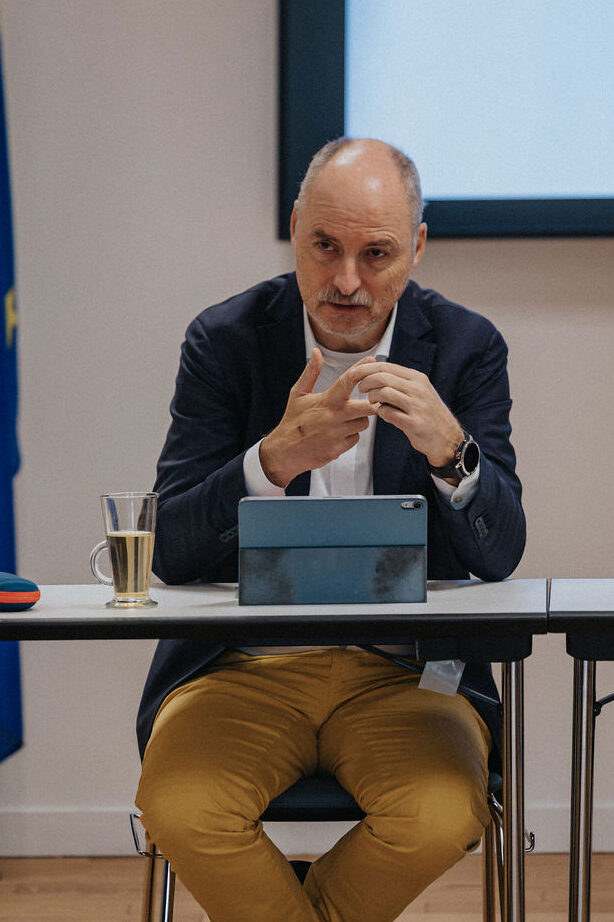
Pictures here by the photographer David Arous: Day 1 LINK, Day 2 LINK
Program, List of Participants and Background Paper LINK





Brussels, 10 October 2025
The Union of European Federalists (UEF) welcomes the adoption by the European Parliament of the joint resolution “on a united response to recent Russian violations of EU Member States’ airspace and critical infrastructure”[1], which marks a significant step forward towards the creation of a European Defence Union.
The resolution was approved with a broad cross-party majority of 469 votes in favour, 97 against and 38 abstentions, including support from several opposition parties beyond the current pro-European majority.
This wide consensus reflects a growing understanding across the political spectrum that Europe’s security must be guaranteed through shared institutions, capabilities, and solidarity.
For the first time, the European Parliament explicitly states that “MEPs insist on the urgent need to move towards a genuine European Defence Union, building on and going further than existing frameworks such as the White Paper for European Defence and Readiness 2030”, and calls for:
- the establishment of a European command-and-control structure complementing NATO;
- a common logistics and intelligence framework;
- and the activation of Article 42(7) TEU, the mutual assistance clause, to ensure collective European action in the face of external threats.
Domenec Ruiz Devesa, President of the Union of European Federalists, stated:
“This resolution sends a clear political message: Europe must be able to defend itself.
The European Parliament’s call for a genuine European Defence Union, for a common command and logistics structure, and for the activation of Article 42(7) are not only technical measures — they are in line with the UEF’s political demands, as outlined in our 2025 Policy Paper on a Common European Defence[2] and the Memorandum on a European Defence Union of the “Action committee of the United States of Europe”[3].
These are essential intermediate steps towards a true European Defence Union.
The UEF strongly supports this cross-party commitment and urges Member States and the European Council to turn these words into an institutional reality by establishing shared structures and taking a federal approach to European defence. The treaties should also be reformed to ensure that the European Parliament can exercise democratic control over the European defence system, and unanimity should be abolished across the board in the European Council, particularly with regard to foreign and security policy, taxation, and the Multiannual Financial Framework.”
The UEF considers this resolution a major political signal of consensus across pro-European and opposition forces that Europe’s defence can no longer remain fragmented among 27 national systems.
Only by pooling sovereignty and resources within a federal framework can the European Union guarantee the security of its citizens, complementing NATO and contributing to global stability.
The UEF calls on European leaders to use this momentum to move from coordination to federation, ensuring that the European Union gains the democratic and institutional tools to act as a true geopolitical power.
Mathilde Baudouin
Secretary General of the UEF
[1] PR of the EP Parliament https://www.europarl.europa.eu/news/en/press-room/20251003IPR30664/call-for-a-unified-eu-response-to-russian-violations-and-hybrid-warfare-threats
[2] Read here https://federalists.eu/federalist-library/proposal-on-a-common-european-defence/
[3] Read here https://federalists.eu/campaign/re-launching-of-the-action-committee-for-the-united-states-of-europe/memorandum-on-european-defence-union/
Brussels, 10 September 2025 — One year after President Ursula von der Leyen called for an “ambitious reform agenda” to improve the functioning and legitimacy of the European Union, the Spinelli Group and the Union of European Federalists (UEF) express deep concern that no meaningful steps have been taken to deliver on those promises. The time for speeches is over. The time for action is now.
“Democracy is under enormous threat, also in the EU. The European Commission has failed to present any substantial initiatives to strengthen European integration, especially in the fields of security, defence and foreign policy. We call to deliver now, before it is too late. Time is overdue for a targeted reform to increase the EU’s capacity to act and by doing this to deliver for its citizens and strengthen democracy.”
— Gabriele Bischoff, MEP (S&D), Chair of the Spinelli Group
In 2024, both the Spinelli Group and the UEF welcomed President von der Leyen’s call to work with the European Parliament on a roadmap for reform—acknowledging that enlargement made institutional reform not only necessary but urgent. However, despite growing geopolitical instability, the European Commission and Council have failed to act. Instead, the Union is now perceived as weaker and fragmented, unable to protect its sovereignty or make credible choices on the international stage.
“Trump is not our ally, and contracts seem to bind only the opposing party. Instead, Europe must unite politically and develop its own Common Defence and strategic independence. Neither Putin nor Trump should set Europe’s strategic horizon. Europe must lead the free world by its own agency.”
— Domenec Ruiz Devesa, former MEP and President of the UEF
The European Union has been cornered into one-sided concessions—particularly with the United States—while failing to assert its own strategic interests. As highlighted in the Draghi report, Europe is facing an existential challenge: it must renew its governance and act swiftly to remain competitive, protect its citizens, and secure peace and democracy.
The Spinelli Group and UEF urge the European Parliament to rise to the challenge and lead the Union out of institutional inertia. As the only directly elected EU institution, Parliament must be the engine of a federal transformation—starting now.
READ HERE THE DECLARATION ONLINE
DOWNLOAD PDF THE DECLARATION HERE
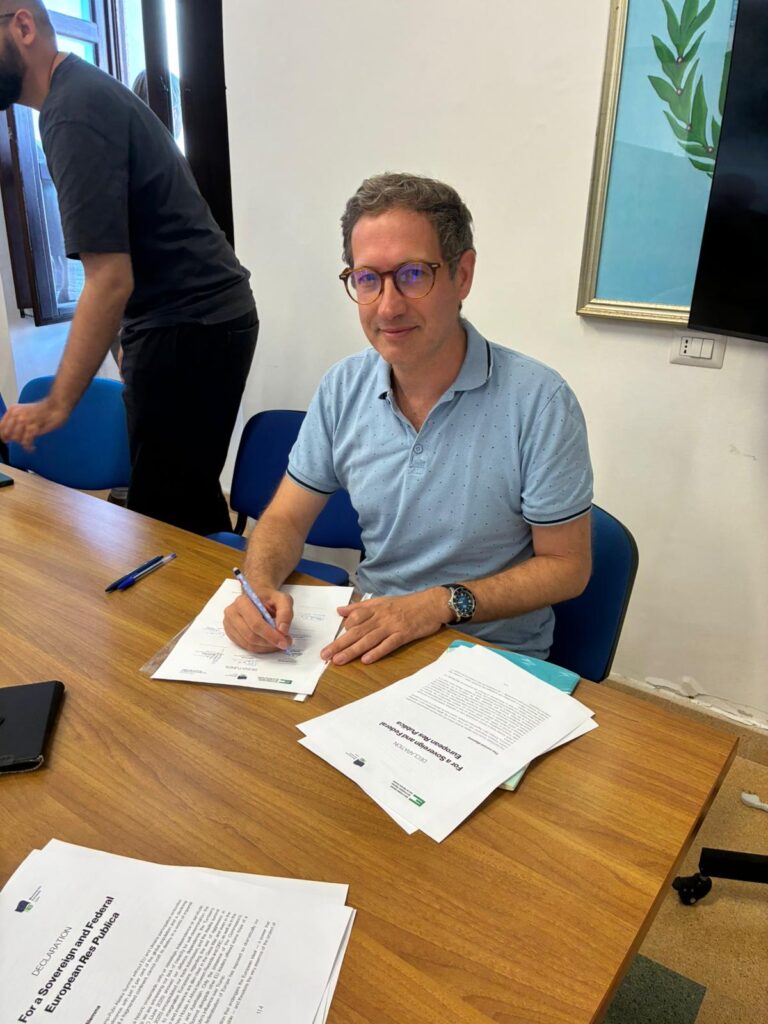
For a Sovereign and Federal European Res Publica
Declaration launched by UEF and CIME in Ventotene signed by Guy Verhofstadt and endorsed by Josep Borrell
The Trump-Putin Alaska Summit, without Europe or Ukraine, exposes a harsh truth: a fragmented Europe is sidelined in a world of empires. From NATO’s defence dependence to trade submission at Turnberry (August 2025), and from Ukraine’s marginalisation to peace deals brokered in the White House, Europe’s impotence is on full display.
The threats are clear: an unreliable, “caesarist” America imposes its will, while Russia and China exploit our divisions, undermining democracy and international law.
Trump’s capitulation to Putin on Ukraine demands a European response. Without our own defence, diplomacy, and intelligence, we risk surrendering our sovereignty. The time has come to replace “vetocracy” with a democratic, federal Europe: one strong enough to stand among the world’s powers.
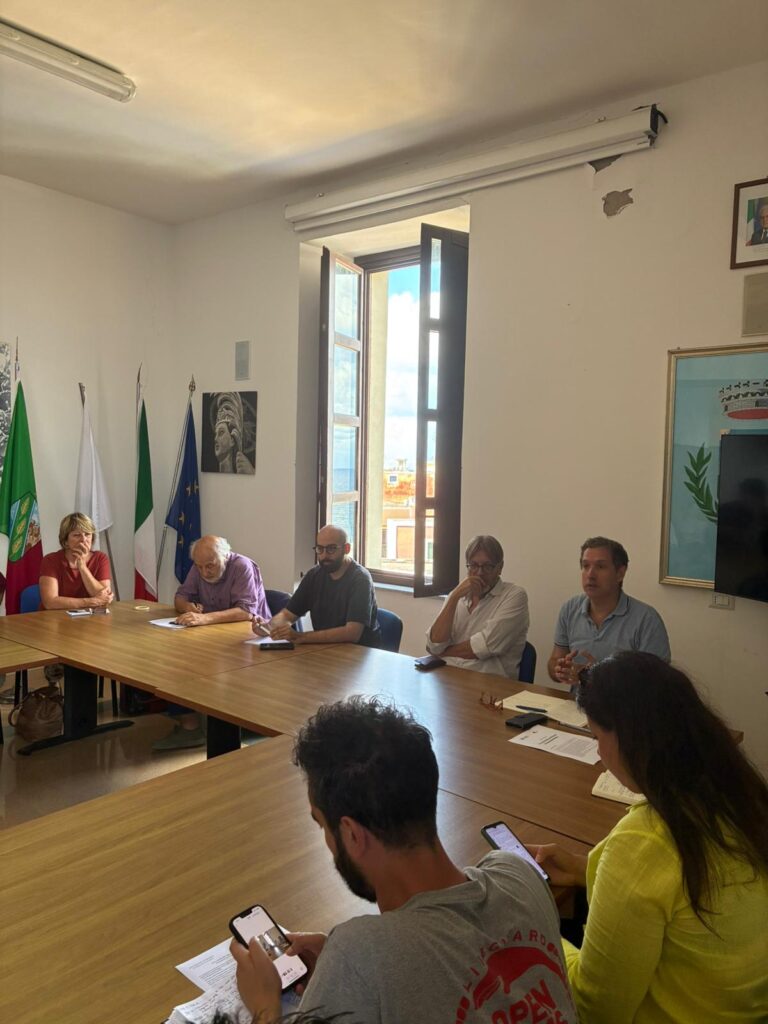
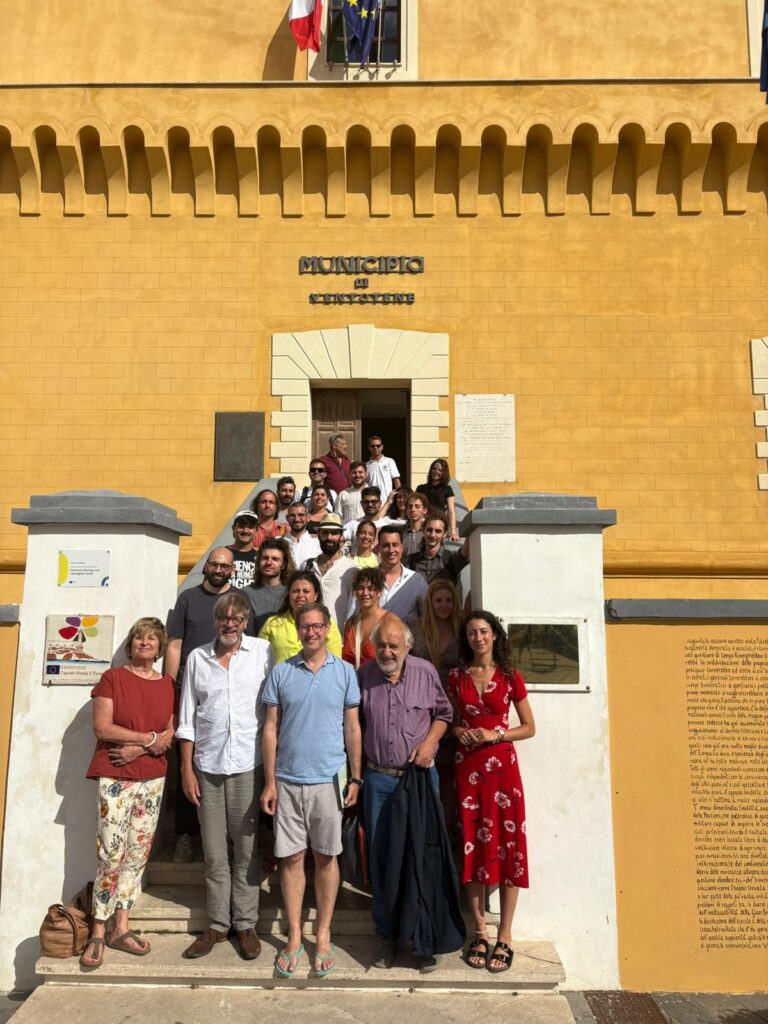
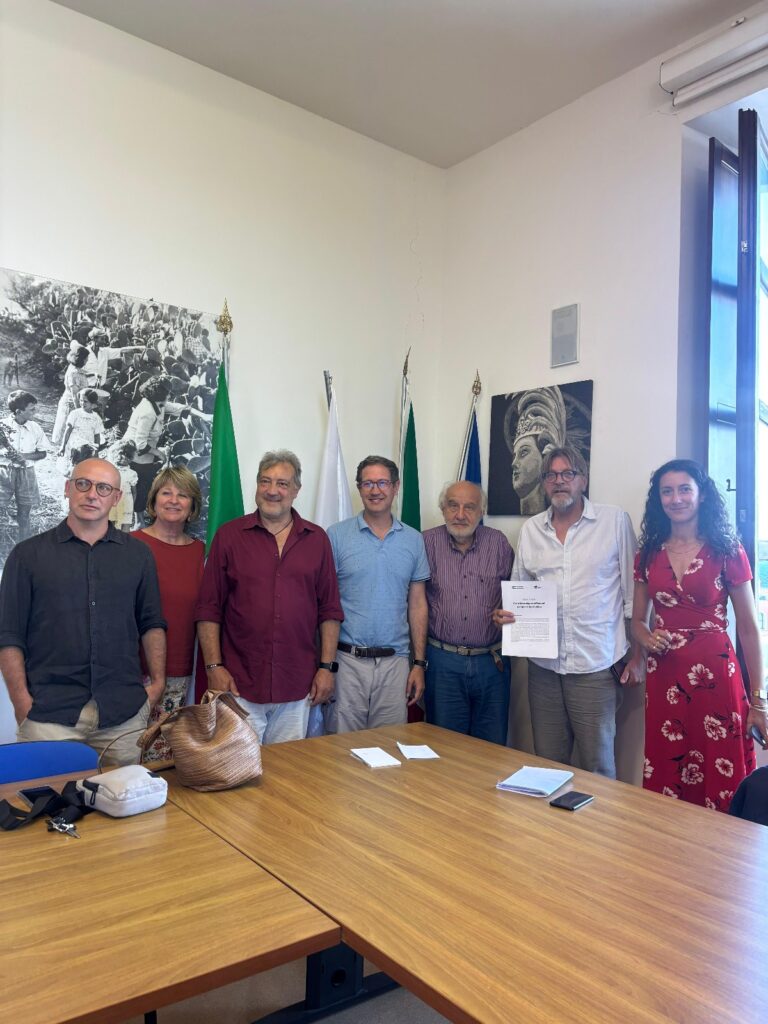
In this context the Union of European Federalists and Consiglio italiano del Movimento Europeo have launched the Declaration "For a Sovereign and Federal European Res Publica" in Ventotene Island on 30th August. The declaration is signed by Domenec Ruiz Devesa, President of the UEF and Former MEP, Virgilio Dastoli, President of the Consiglio Italiano del Movimento Europe, Guy Verhofstadt, Former Prime Minister of Belgium and Former MEP, Mathilde Baudouin, Secretary General of the UEF.
The Declaration is endorsed by Josep Borrell, Former EU High Representative for Foreign Affairs and Security Policy, Antonio Argenziano, Former President of JEF Europe, Luisa Trumellini, President of Movimento Federalista Europeo (MFE), Roberto Castaldi, Secretary General of MFE, Sandro Gozi, Member of European Parliament, Honorary President of the UEF. Witnesses during the signatory of Declaration have been Antonio Santilli, Responsable Culture Sector of Ventotene, Giuseppe Pepe, Vice Mayor of Ventotene e Mario Leone, Direttore Istituto Altiero Spinelli.
The Declaration calls for the revival of the European spirit, the strengthening of the European demos, and the recovery of the vision of a Europe that decides, acts and advances with sovereignty.
To read our strategic proposals and the full Declaration, you can go to this link: LINK HERE.
Original version of the Declaration: LINK HERE.
The importance of EU regions must be acknowledged, as the renationalization of programs is detrimental to citizens.
The UEF advocates for Treaty reform and progress toward establishing genuine federal fiscal power.
Brussels, 18/07/2025
The Union of European Federalists (UEF) notes the proposed increase to the 2028-2034 EU multiannual budget (Multiannual Financial Framework, MFF) from the current 1.08 per cent to 1.25 percent of the EU GNP. This is the largest ever proposed MFF both in relative and absolute terms (around 2 trillion euros), even if the real financial needs to deliver European and global public goods are even higher (around 2 per cent of EU GNP).
However, the UEF expresses deep concern regarding the proposed cuts to several programs, particularly cohesion policy, and the renationalizing of agricultural policy.
Furthermore, the proposed approach on own resources is insufficient to address the structural limitations of the EU’s current financial system and risks perpetuating a model of dependence on national budgets.
An insufficient budget with a renationalizing drive
The MFF proposal will need to finance the EU to cope with unprecedented challenges: a trade war with Donald Trump’s America; an actual war with Vladimir Putin’s Russia; intensified competition from China; conflict in the Middle East; climate change; international migration; and the rise of the far right, with its anti-EU political agenda.
The proposed Multiannual Financial Framework (MFF), around € 2 trillion (€ 285 billion each year) represents 1,26% of the Union’s GDP. But 0,11% is devoted to the repayment of the debt made during the pandemic to finance the Next Generation EU, which any other sovereign emitter would have simply rolled out. This means the real budget is just 1,15% of GDP, that is grossly insufficient to fund Europe’s strategic objectives. The Draghi Report (2023) underlines that the Union must mobilize at least additional € 800 billion annually, of which 20% in public investments, i.e. 160 billions, to ensure long-term competitiveness and technological sovereignty. Yet the current budgetary architecture remains unfit for that purpose.
Meanwhile, calls for more defence spending are made without increasing sufficiently the overall size of the EU budget, implying that funds must be cut from cohesion, green transition, and innovation. This is an unsustainable trade-off.
The Commission’s MFF proposal proposes a renationalisation of spending programmes, thereby shifting more responsibility to Member States to the detriment of regional governments. This retreat undermines the very rationale of a common EU budget and misses a historic opportunity to build a stronger Union.
Real own resources needed and the road to a true, federal fiscal power
The Commission proposes new own resources and adjustments to existing ones, generating EUR 58.5 billion per year from the EU Emissions Trading System (ETS), the Carbon border adjustment mechanism (CBAM), the own resource based on non-collected e-waste, the tobacco excise duty, a Corporate Resource for Europe (CORE).
This is a progress but these are not genuine EU taxes.
Contrary to the functioning of federal systems, the EU budget is not the expression of a genuine fiscal capacity. Over 70% of its revenues come from direct national contributions. The so-called “own resources” are not true EU taxes, but rather national taxes collected under EU-regulated sectors (e.g. customs duties, agricultural levies) that are subsequently transferred to the EU. These resources lack both fiscal independence and meaningful scale, the two essential characteristics of a genuine fiscal power.
As such:
- The EU budget remains dependent on the will of national governments, without the ability to raise revenue autonomously;
- It is structurally limited to funding internal market development, and does not fulfil core fiscal functions, such as providing European public goods or carrying out redistributive policies.
As noted in the Monti Report on EU Own Resources (2017), for these to become true European taxes:
- They must be based on political decisions made at the EU level, thus with co-decision involving the European Parliament;
- Revenues must flow directly to the EU budget, independently of national channels;
Only by achieving these conditions can the EU develop a genuine fiscal capacity. This transformation necessitates a new legal framework that is democratically legitimate and supranational. Essentially, it requires a fundamental reform of the Treaties to confer fiscal sovereignty at the European level.
The UEF proposes four steps toward a European fiscal capacity, beginning with:
- the continuation of the NGEU program with new scale and purpose (including defense, climate policies, etc.) as long as the overall EU budget remains too small;
- the adoption of the decision on own resources and the multiannual financial framework through the ordinary legislative procedure (allowed by a specific Passerelle clause article 312.2 TFEU), i.e. through co-decision between the European Parliament and the Council deciding by qualified majority voting to enable the Union to become the master of its own budget;
- Progressive introduction of genuine European resources managed by the EU and not Member States, including:
- A Digital Tax on non-resident Service Providers;
- A Financial Transactions Tax;
- The Emissions Trading System (ETS2) that cover the emission of road transport, buildings, and other sectors;
- the elimination of the ratification by the Member States: Article 311 provides not only for unanimity in the Council, but also for approval by the Member States in accordance with their respective constitutional rules;
The European Parliament must stop accepting the logic of intergovernmental scarcity and instead act as a constitutional actor. The Parliament must demand a larger budget following its mandate of five years and not seven, protect current programs and the regional focus, call for fiscal powers, and support Treaty reform, as it did in its resolution of 22 November 2023.
The current Treaties permit some alignment of national tax systems and the introduction of new revenue sources for the EU budget, or even a specific budget for the eurozone. However, they significantly restrict the development of a true European fiscal authority because of the need for unanimous agreement and ratification under Articles 311, 312, 113, and 352 TFEU, which makes substantial reform extremely difficult under the existing framework.
The EU must become the master of its own budget—capable of setting strategic priorities, ensuring solidarity, and delivering results that only a continental scale of governance can provide.
“We stand at the crossroads of unprecedented global challenges. In this context, the proposed Multiannual Financial Framework, which is supposed to represent a step forward for the coming years, falls short of what is truly needed, primarily due to insufficient funding. To secure Europe's future, we must transition to our own real resources that ensure stability, self-sufficiency, and political accountability. The renationalization of key programs undermines our collective strength and dilutes the very essence of European solidarity. It is imperative that we empower the EU with a genuine fiscal capacity, enabling us to meet our strategic objectives and uphold our commitment to all European citizens.” said Domènec Ruiz Devesa, President of the UEF.
The recurring deadlocks during MFF negotiations show the need for a properly functioning European federation focusing on essential duties, eliminating national contributions that make Brussels dependent on member states and removing Brussels' scrutiny over state budgets. Instead, it would involve fiscal transfers sufficient for the EU to achieve its political goals, as set by representatives of European citizens and member states. Without addressing the need for a federal political compact, Europe risks repeating the same mistake of ineffective and slow processes, missing the opportunity to enhance freedom, solidarity, and protection for the EU, its citizens, and member states.
Sources
- EU Commission Press Release
- UEF Manifesto 2023
- UEF Resolution 2024
- Paper used by UEF during the Conference on the Future of Europe: The financing of the European Union: a proposal for the Treaty Reform to give the EU true Fiscal Capacity
- The Future of European competitiveness | The Draghi Report 2023
- The Monti Report 2017 - Final report and recommendations of the High Level Group on Own Resource
PRESS CONTACT
Mathilde Baudouin
Secretary General of the Union of European Federalists
secretariat@federalists.eu