

Brussels, 13 April 2026
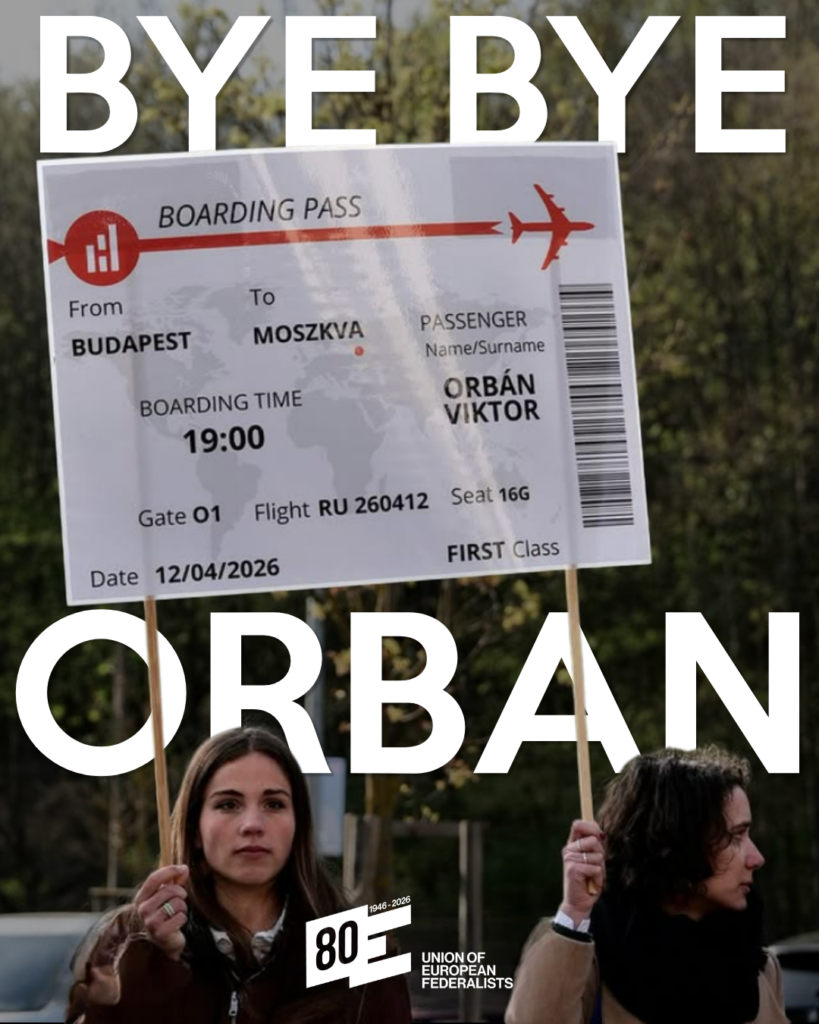
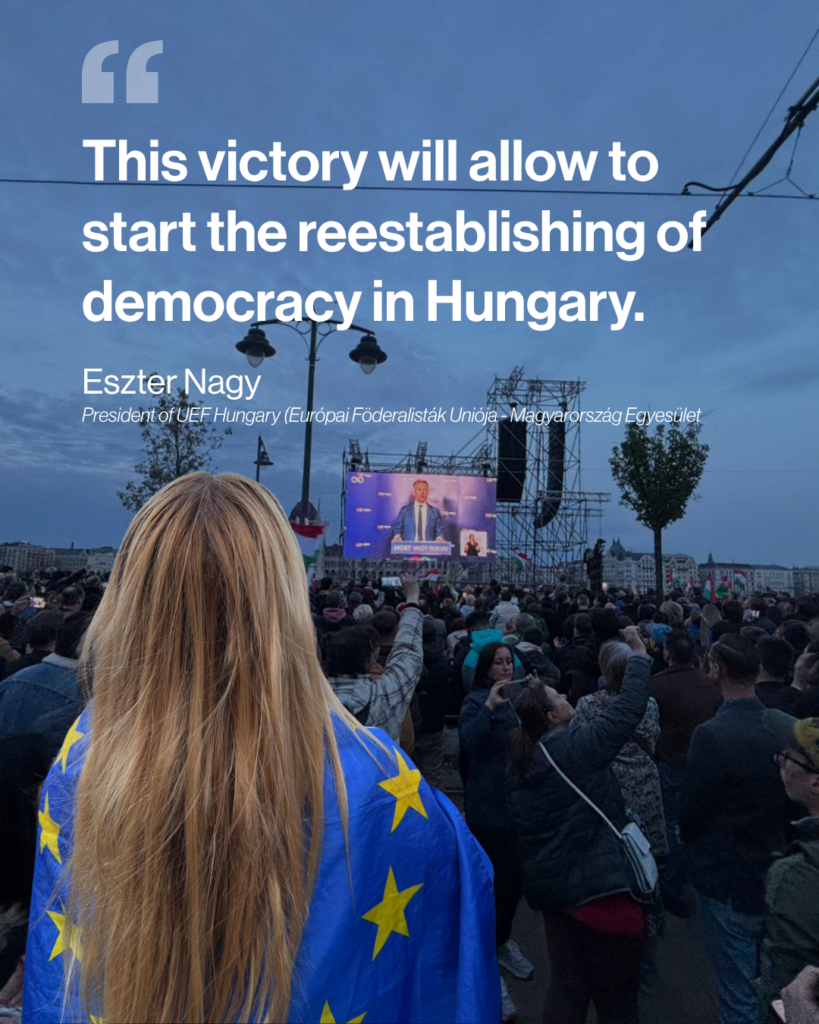
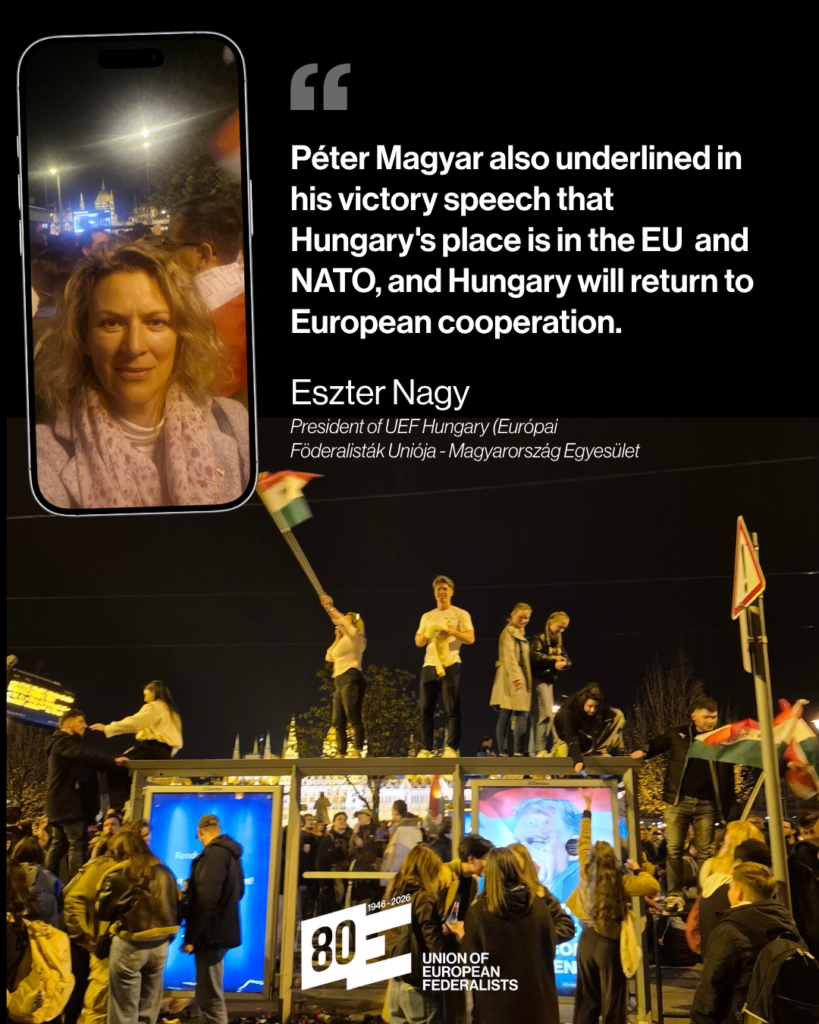
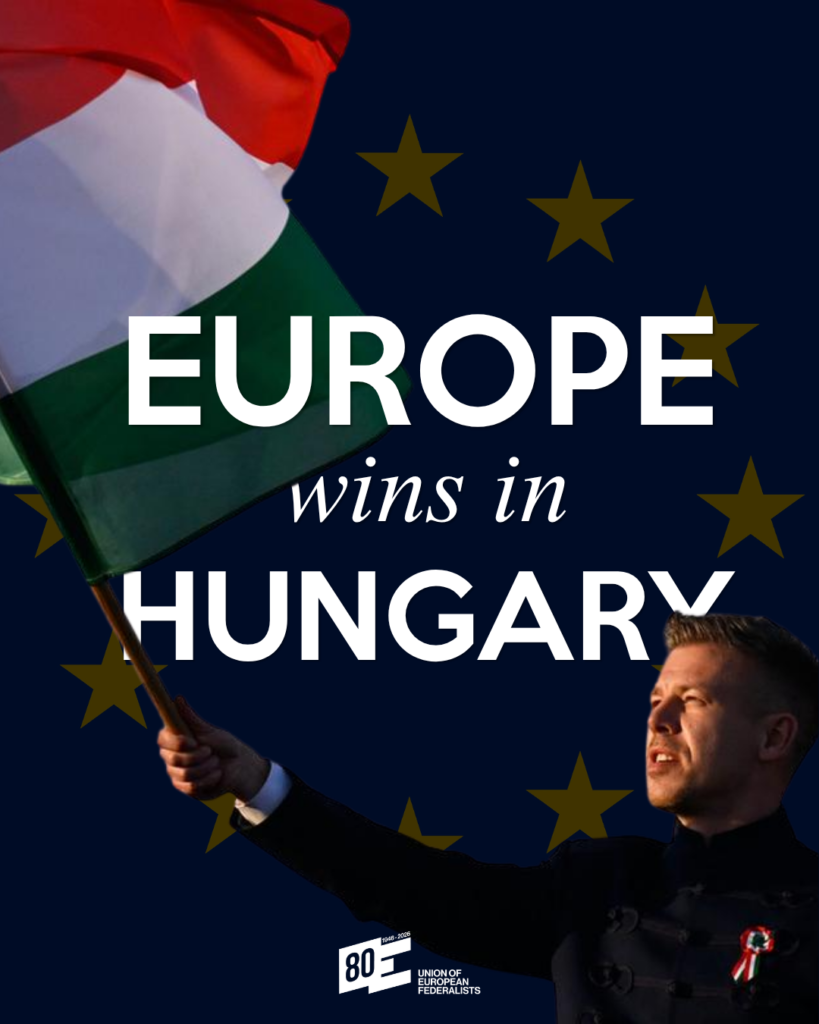
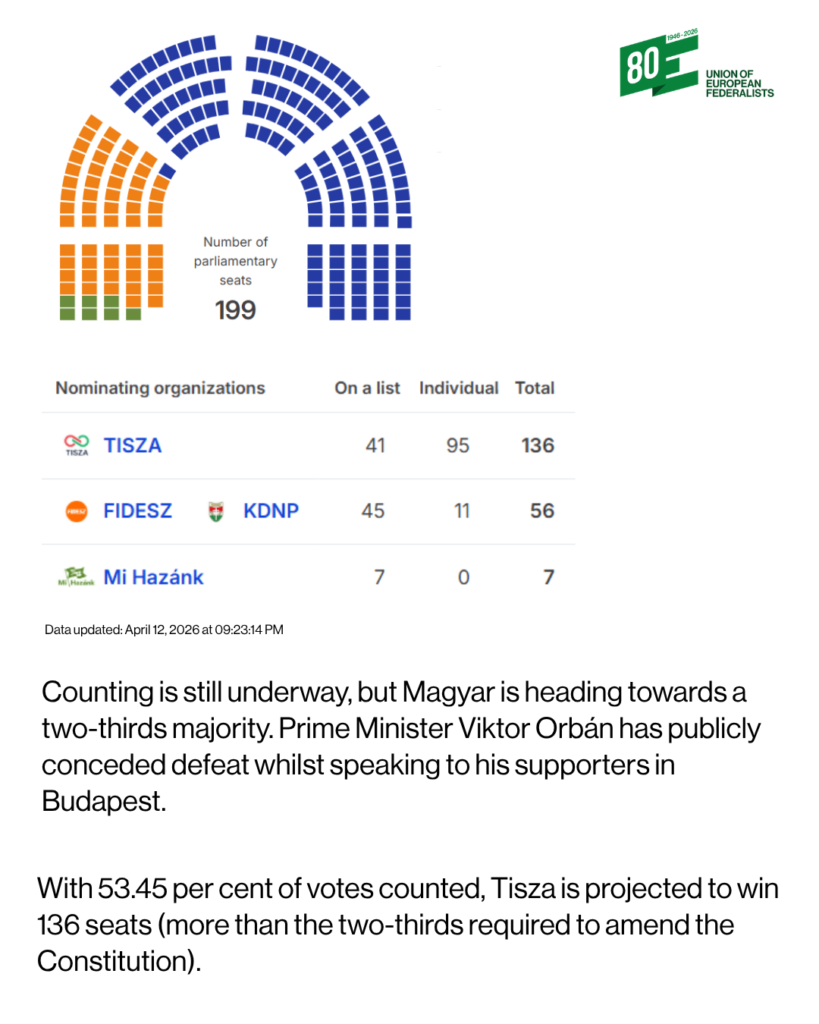
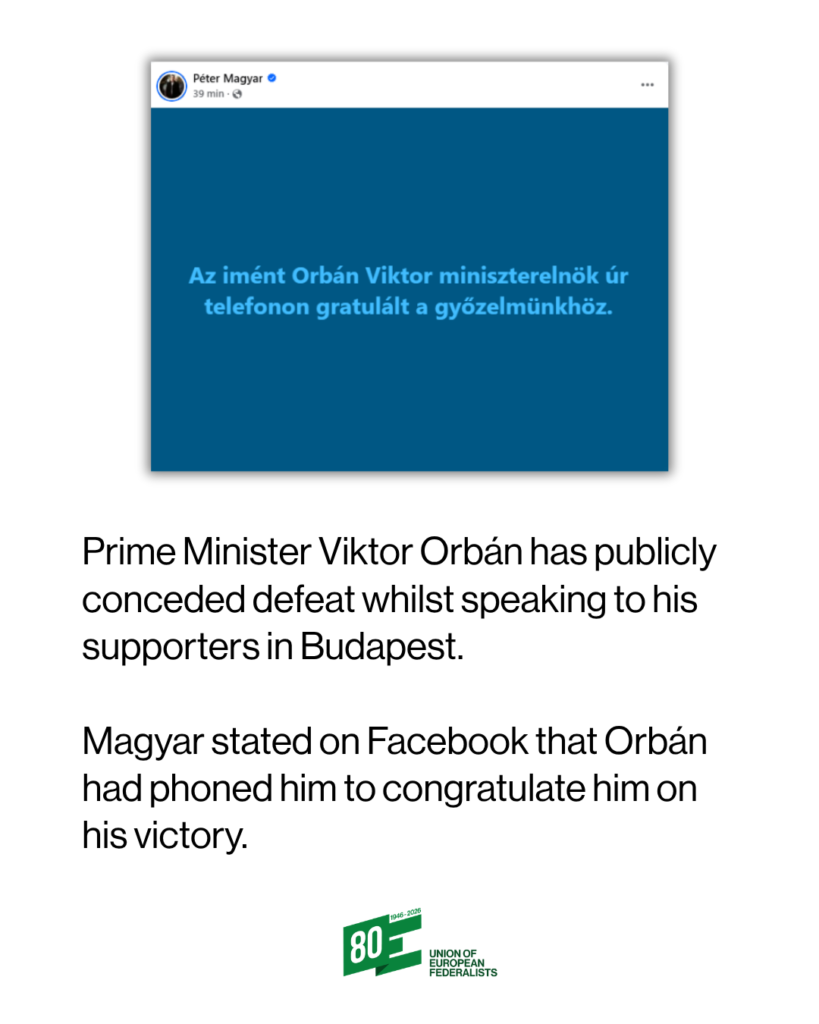
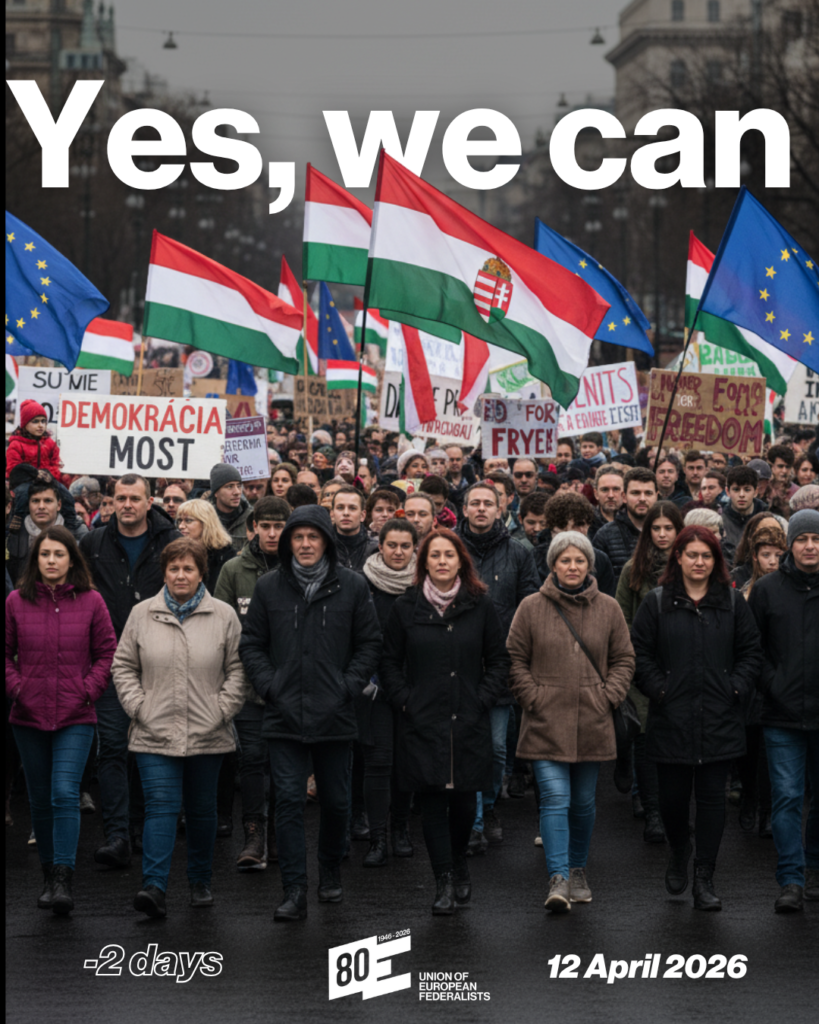
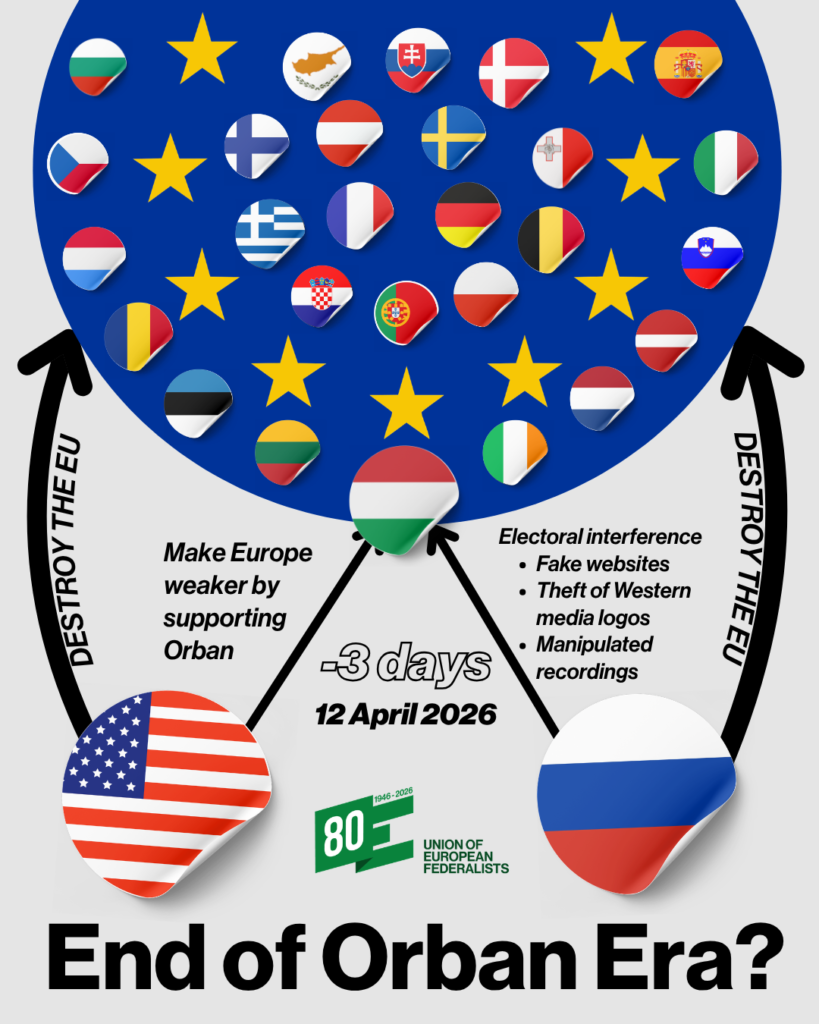
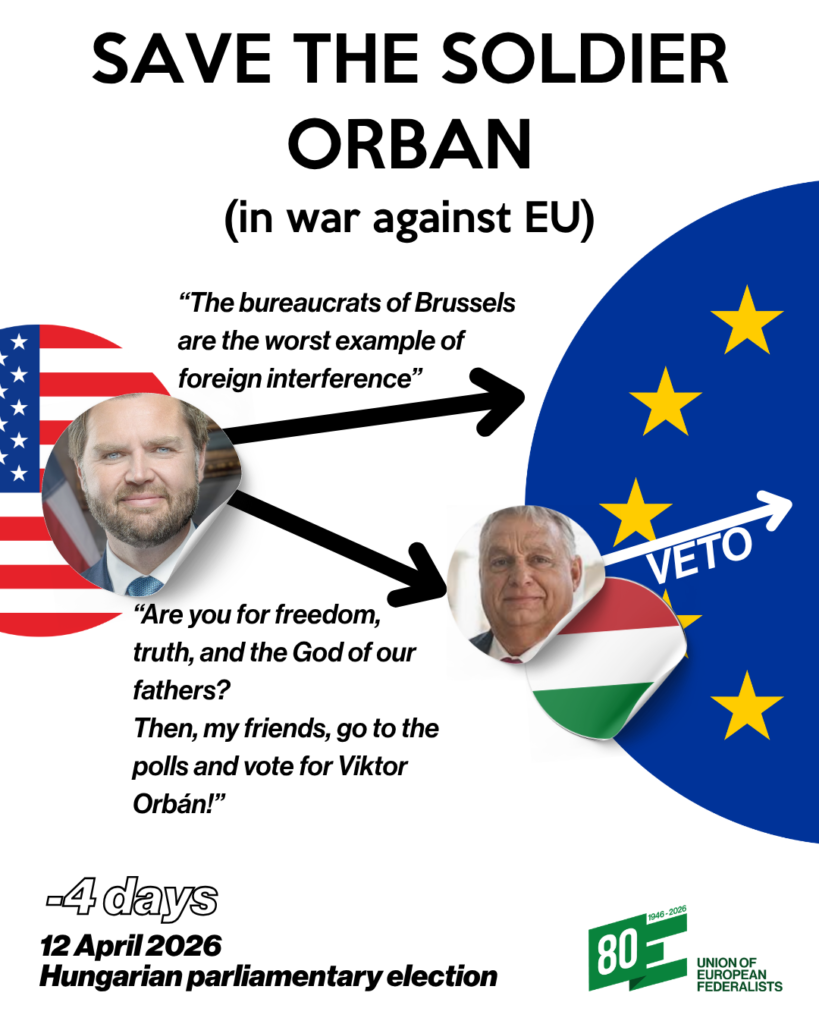
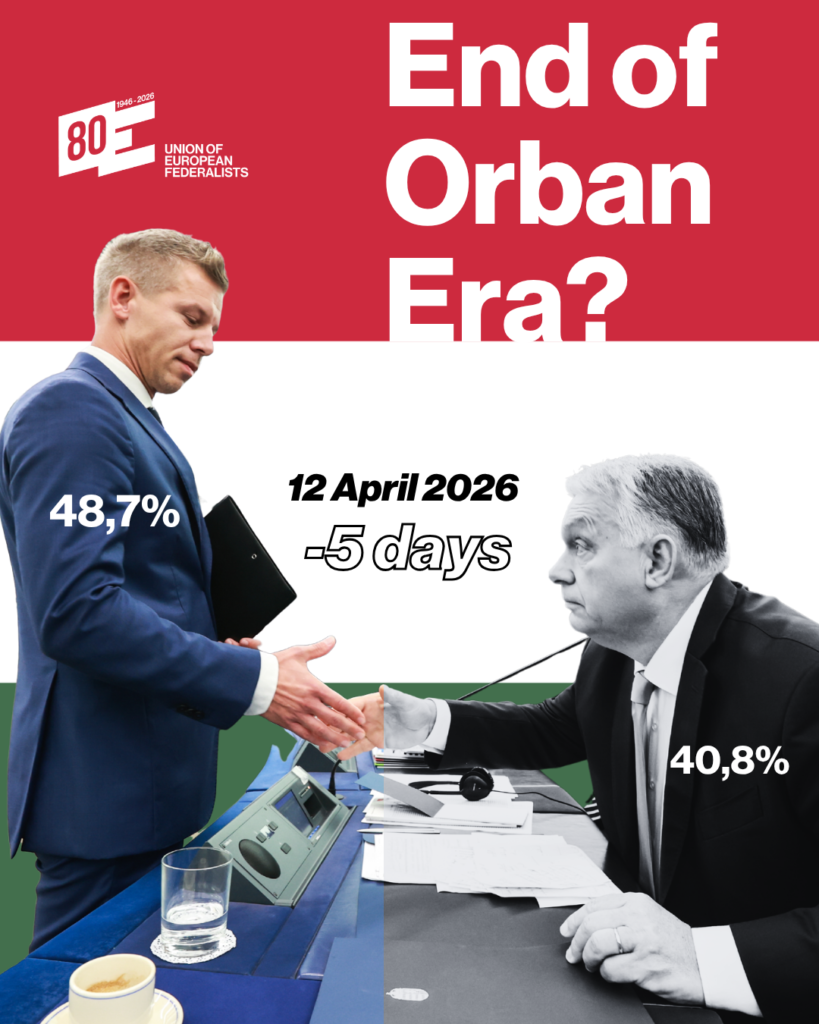
The Union of European Federalists (UEF) warmly welcomes the outcome of the Hungarian parliamentary elections of 12 April 2026. We congratulate the winner and next Prime Minister Peter Magyar and the Hungarian people for their democratic engagement, for reaffirming their commitment to European values, the rule of law, and solidarity with the rest of the Union.
The resounding defeat of Viktor Orbán constitutes an extremely positive and timely development not only for Hungary, but for Europe as a whole, and for Ukraine. At a moment when the European Union must demonstrate unity and resolve in the face of Russia’s ongoing aggression and US threats against their commitment in the transatlantic Alliance, the prospect of constructive engagement from Budapest represents a significant step forward, after all these years of obstruction by Orbán and his violations of the principle on loyal and sincere cooperation, including sharing information and coordinating his actions with Putin.
Therefore, the UEF urges the incoming Hungarian government to lift its predecessor's vetoes, and on the European institutions—most notably the Council—to act without delay, once the new Hungarian government takes office, to:
- adopt the €90 billion financial assistance package for Ukraine, ensuring sustained macro-financial support and reconstruction capacity;
- approve the 20th package of sanctions against Russia, reinforcing the Union’s economic and political pressure on the Kremlin.
At the same time, the UEF stresses that the structural weaknesses of the Union’s decision-making system remain unchanged. The end of a single obstructionist government does not resolve the systemic risks associated with unanimity in the Common Foreign and Security Policy (CFSP) and other key areas.
Therefore, the UEF identifies a window of opportunity between now and the French presidential elections of April 2027 to advance decisive institutional reforms. In particular, the European Council should:
- agree to activate the passerelle clauses provided for in the Treaties to extend qualified majority voting in CFSP and budgetary and financial matters, among others, and if unanimity is lacking, proceed with enhanced cooperations.
- agree to activate Article 42.2 TEU on establishing European Common Defence, and if unanimity is lacking, proceed under Permanent Structured Cooperation.
- follow up on the European Parliament’s proposals for Treaty revision under Article 48 TEU.
Europe must not rely on favourable political contingencies to function effectively. It must endow itself with the institutional tools necessary to act decisively, regardless of national political cycles.
The UEF stands ready to support all efforts aimed at strengthening the Union’s unity, democratic legitimacy and capacity to act.
Domènec Ruiz Devesa , President and MEP 2019-2024
Mathilde Baudouin , Secretary General

Domènec Ruiz Devesa re-elected by acclamation as President of the Union of European Federalists.
Former Spanish Member of the European Parliament Domènec Ruiz Devesa has been re-elected by acclamation as President of the Union of European Federalists (UEF) during the XXIX European Congress held in Barcelona from 20 to 22 March 2026, co-organised with UEF Spain and UEF Catalunya Federalistes d’Esquerres.
This re-election comes at a particularly symbolic moment, as 2026 marks the 80th anniversary of the organisation, founded in 1946 to promote the political unity of Europe. Ruiz Devesa is the first Spaniard to lead the UEF in its history.
A High-Level European and Institutional Congress
The opening session brought together prominent European, national, and local political figures, including the President of the Generalitat of Catalonia Salvador Illa, the Minister of Foreign Affairs José Manuel Albares,
the Mayor of Barcelona Jaume Collboni, former EU High Representative and Commission Vice President Josep Borrell, Vice-President of the European Parliament Javier López, and former President of the European Parliament Enrique Barón Crespo.
Notably, both President Illa and Minister Albares emphasised the importance of the federalist path as a response to today’s challenges, highlighting the role of a more integrated Europe in ensuring peace, social justice, and international stability. To watch the welcoming speeches, please find here below
Debating the Future of European Federalism
A key highlight of the Congress was the Spinelli Group debate titled “Is Draghi's Pragmatic Federalism enough to face current challenges?”, which gathered leading federalist figures such as Gabriele Bischoff, MEP and President of the Spinelli Group, former HR/VP Josep Borrell, and Guy Verhofstadt, former Prime Minister of Belgium, Former MEP and ex-officio Board Member of the Spinelli Group. The discussion underscored the need for a method to strengthen political ambition in European integration to address current geopolitical, economic, and security challenges. While the necessity of deeper integration is widely acknowledged, the focus must now shift to concrete actions to achieve it.
Celebrating 80 Years of Federalism
The Congress also marked the 80th anniversary of the UEF with a cocktail reception featuring an art exhibition by Lorenzo Epis, symbolising the connection between culture, European citizenship, and the federalist project.
Another important moment was the event bringing together former UEF Presidents—Jo Leinen, Mercedes Bresso, Andrew Duff, Elmar Brok, and Sandro Gozi—who reflected on the evolution of the European federalist movement. By acclamation, they all became Honorary Presidents.


A Political Agenda for a More United Europe
Throughout the Congress, which continued over the weekend, delegates debated and adopted key political resolutions outlining an ambitious vision for the future of the European Union. Key priorities include:
- overcoming unanimity in key policy areas such as foreign affairs, defence, and taxation;
- advancing towards a credible and operational European Defence Union;
- developing a common fiscal capacity, including instruments such as eurobonds;
- promoting deeper integration through coherent enhanced cooperation;
- advancing Treaty reform and strengthening the role of European citizens.
New Leadership Elected
The Congress also elected the new statutory bodies of the UEF. Alongside President Ruiz Devesa, the following Vice-Presidents were elected: Daphne Gogou, Giulia Rossolillo, Markus Ferber MEP, and Alin Mituta former MEP 2019-2024. Antonio Argenziano was elected Treasurer.
The Executive Bureau also includes Eszter Nagy, Liubba El Hadi Hamed, Roberto Castaldi, Simina Tulbure, Michael Montag, José Luis Salazar, Sebastian Camarero, and François Leray. The Secretary General Mathilde Baudouin is confirmed in her charge.

A Mandate for European Political Union
Following his re-election, Domenec Ruiz Devesa stated:
“Europe is at a moment where it must take a qualitative leap towards political union to ensure its security, prosperity, and global relevance.”
He further stressed that European federalism “is no longer an option, but a practical necessity,” calling on European institutions and national governments to act with greater ambition.
The UEF Secretariat
Brussels, 6 March 2026
As European Federalists we express our solidarity to the Iranian people and recall the urgent need for a common European foreign policy.
The Union of European Federalists strongly condemns the military escalation in the Middle East which took, in a few hours, a dramatic dimension involving 15 States. The use of force by the United States and Israel against Iran, and the subsequent retaliation by Iran against countries in the region, undermine international peace and security and constitute a clear violation of international law. The recent experience in Iraq, Libya, Syria and Afghanistan has demonstrated that wars seeking to overthrow authoritarian regimes could not successfully install democratic regimes but instead proliferate chaos and dictatorships.
We recall that all States must respect their obligations under international law, including the Charter of the United Nations, which clearly prohibits “the threat of the use of force against the territorial integrity or political independence of any state, or in any other manner inconsistent with the purposes of the United Nations.”
As European Federalists, we recall our support for democracy in Iran and we focus on standing with the Iranian people, and in particular women and youth, in their fight against authoritarianism. We condemn the regime’s violent suppression of protests over the past decades. We express our solidarity with the Iranian people, commending their courage and determination for freedom, liberty and the fight for a better future. We emphasize that Iranians deserve to live under a government that respects human rights, fundamental freedoms and human dignity.
We welcome the January 2026 EU decision to officially designate the Islamic Revolutionary Guard Corps (IRGC) as a terrorist organization, as requested by the European Parliament; a long overdue decision which puts an end to the impunity of the main actor of the Iranian regime.
We regret the absence of a strong common European Union position concerning the escalation in the Middle East, due to the division of the 27 Member States, which weakens the Union’s global role. We emphasize the direct impact of the current crisis on all Member States and the urgent need for a common European foreign policy.
We call the Union to be actively involved in initiatives aimed at an immediate cessation of hostilities and de-escalation. The risks of a wider regional conflict could have grave consequences on the proliferation of nuclear weapons, chronic economic instability and the forced displacement of people. We strongly encourage the European Union to actively participate in diplomatic initiatives looking for a peaceful settlement of the crisis in the Middle East, in full accordance with international law, including the UN Charter.
We call on all EU institutions and Member States to reject Trump’s trade threats against Spain and take the appropriate defensive measures in the event.
We finally reiterate the urgent need for a strong European common foreign policy and strategic autonomy, calling on European leaders to start the process of the necessary Treaty changes, towards a federation which will save our democratic way of life, peace and freedom while at the same time respecting European security and economic interests.
UEF STATEMENT ON FRENCH ADVANCED NUCLEAR DETERRENCE
President Emmanuel Macron’s proposal to extend France’s nuclear deterrence to European partners offers a significant political signal towards the establishment of a common European defence outside the NATO framework, even if it stops far short of creating a fully shared European nuclear force. The French proposal is a response to the relaunch of Russian and Chinese nuclear forces but also to US ambiguous stance towards European security.
With this proposal, France has declared that the overall continental security affects its vital national interests and therefore offers to integrate the interests of other European partners in its strategic reflection, including common consultations on threats; joint work on intelligence and detection, air defence, and deep-strike capabilities; the possibility to participate in nuclear military exercises; and the deployment of nuclear-armed French air forces in other European countries to enhance forward deterrence.
In addition, while the French-German joint statement of 2 March states that advanced deterrence it is meant to strengthen the NATO nuclear mission, and the “systems of collective security” of both the Atlantic Alliance (article 5 of the Treaty of Washington) and of the EU (article 42.7 Treaty on the European Union), the proposal would create a second, independent, and NATO-consistent layer of European nuclear deterrence. Both France and Germany emphasize that this plan respects the Treaty on Non-Proliferation.
On the other hand, President Macron has ruled out any allied participation in planning, implementation or decision about the use of the French nuclear arsenal. It will remain strictly under national command and control, with the President of the Republic retaining sole authority over its use. In legal terms, the force de frappe remains entirely French.
Macron has also stressed that advance deterrence is not an explicit security guarantee. Any extension of deterrence would remain deliberately ambiguous, preserving the flexibility that is central to the current nuclear strategy. As a result, partner states would gain political assurance and strategic dialogue, but not a codified, legally binding nuclear guarantee.
These two limitations constitute the price that Europe as a whole is paying because of decades of missed opportunities to integrate and strengthen its defence cooperation while national governments did not address the issue of creating shared sovereignty in time by thoroughly reforming its institutions, despite the process undertaken in this regard by the Conference on the Future of Europe and the proposals drawn up in the European Parliament in recent years.
Even in the current intergovernmental framework, however, and with the noted restrictions, this major move will not only benefit France but potentially all EU Member States, by offering a second, European layer of nuclear deterrence.
Therefore, the Union of European Federalists welcomes that some EU member states already accepted the French proposal of advanced deterrence and calls on all the others to do so, with a view of integrating it in the Common Defence envisioned on article 42 of the Treaty of the European Union, through Permanent Structured Cooperation. In this regard, the UEF recalls its policy proposal for a Common European Defense System published in March 2025, which supported already the “Europeanisation of French uclear capabilities with shared financing from willing EU member States”.
This can be the very first step towards pooling warheads and the establishment of a European multinational force comparable to NATO’s nuclear sharing arrangements, a common European nuclear budget, and share decision-making power, with an EU “nuclear button,” eventually with the transfer of operational control to the European Union.
UEF also calls all Member States and EU institutions to support our proposal on a common European defence, consisting of the national armies of the Member States and a 28th European Army, coordinated in a common structure, compatible with NATO and serving as its European Pillar.
For this purpose - since European security requires to move towards collective burden-sharing, from intelligence gathering to budget allocating, and therefore the democratic governance of this evolution - the answer lies in a parallel progressive federalization of matters of European interest, so that European citizens can decide their future and the means to reach for it, through their European Parliament and executive.
The UEF share also the French president's view that the ultimate goal is a world without nuclear arms. This is a goal that can only be fully achieved through a world federation, but a sovereign Europe could already contribute to bringing this goal closer by committing itself to building a cooperative world order based on shared rules, in which diplomacy and international law once again become the instruments for pursuing international political objectives.
As the Action Committee for a United States of Europe, they addressed a letter to President António Costa ahead of the extraordinary European Council meeting.
Brussels, January 21, 2026
On the eve of the extraordinary European Council Meeting, members, promoters, and allies of the relaunched Monnet’s Action Committee for the United States of Europe addressed a letter to President Antonio Costa, underscoring a moment of existential urgency for the European Union. The letter was published yesterday by Euractiv: LINK
The past year has marked a fundamental shift in the transatlantic relationship. What were once commercial disputes or diplomatic disagreements have, under the current U.S. administration, evolved into a systematic policy of coercion, one that repeatedly violates international law. From threats to the territorial integrity of an Arctic Member State to the unilateral imposition of arbitrary tariffs and the withdrawal of critical defense assets, these actions are not isolated incidents. They signal the collapse of a security model built on external dependency.
In response, the Action Committee has outlined eight concrete steps to forge a sovereign Europe, capable of defending its interests, values, and future.
As the poet Hölderlin wrote: "But where the danger is, also grows the saving power." That power lies in our unity. The current geopolitical moment must serve as Europe’s opportunity to achieve political unity. On security, Europe can no longer remain a fragmented protectorate; it must emerge as a sovereign actor.
The time for hesitation is over. The path forward is clear: Europe must act—now, together, and decisively.
One year after Donald Trump’s second inauguration, it is clear that the strategy of appeasement pursued by Member States and Commission has utterly failed. It has not been just a miscalculation, but an abdication of duty. From false accusations of misinformation and limitation of the freedom of speech, to the arbitrary and unilateral NATO defence spending targets and the predatory "Turnberry Tariffs" (15% vs 0%), to the pressures to alter our digital and environmental regulations, the US National Security Strategy, the sanctions against EU citizens and former officials, blatant violations of international law, and the illegal pressure for Greenland’s annexation, Europe has endured a year of impositions and humiliations. Enough is enough!
The Union of European Federalists calls for an immediate change of course through the following 7-point programmatic roadmap:
I. Immediate Measures
- Rejection of the 2025 Turnberry Tariffs: The European Parliament must refuse to approve this lopsided deal. We cannot sacrifice our sovereignty and economy to avoid upsetting the White House.
- Activation of the Anti-Coercion Instrument: The EU must use its existing tools to counter Washington’s systematic policy of economic pressure to take over Greenland, including in the digital field.
- EU Deployment in Greenland: We must put the current deployment of troops from European countries in Greenland under EU command, including the planning of exercises by the EU Rapid Deployment Capacity. Protecting the territorial integrity of the Arctic is a common European responsibility.
II. Strategic Sovereignty
- Full European Responsibility for Ukraine: We must accept that the defence of Ukraine and of Europe are intertwined, and fall on us. This requires increasing and accelerating current investments to substitute the so-called "irreplaceable" US assets, specifically increasing our satellite capabilities, intelligence feed, strategic airlift, air-to-air refuelling, and high-end electronic warfare.
- Activation of Common Defence (Lisbon Treaty): As recently requested by leaders like Pedro Sánchez, we must activate the common defence provisions in the Lisbon Treaty, or by those States willing to proceed, in order to create an EU chain of military command, including the implementation of the Kubilius plan of a 100,000-strong EU multinational force.
- Strengthened promotion of EU models of digital payments: including the digital euro, social networks, software, and artificial intelligence.
III. The Federal Leap
7. Constitutional Reform for the United States of Europe: We must immediately open the process for the reform of the Treaties on the basis of Parliament´s proposal of November 2023 to constitute the United States of Europe. This means an empowered Parliament, an Executive capable of acting, and the general abolition of national vetoes in the Council.
Appeasement only feeds authoritarianism and vassalisation; federal unity is our only way out.
As the poet Hölderlin wrote: "But where the danger is, also grows the saving power."
Brussels, 19th January 2026
Domènec Ruiz Devesa, President of the Union of the European Federalists and MEP 2019-2024
Mathilde Baudouin, Secretary General of the Union of European Federalists
The Union of European Federalists (UEF) deplores US statements questioning the status of Greenland and the sovereignty of the Kingdom of Denmark. These statements have created a situation of strategic ambiguity that directly affects the security of Europe and the credibility of the European Union as a political and security actor.
Greenland is not a marginal or remote issue. It is an integral part of the territory of a Member State of the EU and Greenlanders are EU Citizens. Any attempt to alter its status through pressure, coercion or force would constitute an aggression against a Member State and against the EU constitutional order itself.
1. A European responsibility
The UEF recalls that the security of any part of a Member State is a common European responsibility. Europe cannot accept grey zones in matters of sovereignty. Strategic ambiguity weakens deterrence and invites coercion. Clarity, unity and political resolve are therefore indispensable.
The UEF calls for the establishment, at the request of Denmark, of a limited and multinational European deterrent presence in Greenland. Such a presence would not be directed against any ally, nor would it imply the militarisation of the Arctic. Its purpose would be purely to increase deterrence, to internationalise the security of Greenland, to increase the political cost of any hostile action, and to demonstrate Europe’s readiness to defend its Member States in practice. This would also be the occasion for a military exercise of the European Union Rapid Deployment Capacity in Greenland, which has conducted 3 exercises in continental Europe and went operational last year.
2. Making mutual assistance credible
The UEF stresses the importance of Article 42.7 of the Treaty on European Union. This clause creates a binding obligation of aid and assistance between Member States in the event of armed aggression.
The UEF suggests to Denmark to make clear, in advance, that any armed aggression against Greenland would lead it to request the activation of Article 42.7 TEU. Such advance notification would strengthen deterrence by removing uncertainty and by affirming that an attack on Greenland would automatically trigger a European response.
3. Reintegrating Greenland into the European legal order
Security measures alone may not be sufficient. The long-term protection of Greenland requires a stronger anchoring within the EU legal and political framework.
The UEF supports the opening of a political process allowing Greenland, if it so decides democratically, to seek a change of status and to become a Region Outermost of the European Union. This would entail full inclusion in the Union’s legal order, with the adaptations foreseen by the Treaties.
Such a process would require the consent of the people of Greenland and a revision of the Treaties. It would nevertheless send a clear message: Greenland is fully part of Europe’s political community and of its constitutional space.
4. Denmark at the core of Europe
Denmark has already taken an important step by abolishing its defence opt-out. Two issues remain. The UEF calls on Denmark to commit to joining the euro and to renounce its remaining opt-out in Justice and Home Affairs. Full participation in these areas would strengthen Denmark’s role at the core of European decision-making and enhance collective security and coherence. These steps should not be seen as concessions nor conditions for EU solidarity, but as strategic investments in EU’s unity and resilience.
5. A decisive European Council
The UEF calls on the President of the European Council to convene an extraordinary summit dedicated to the situation in Greenland and to European defence.
This European Council should:
- express full political backing for Denmark,
- affirm readiness to provide mutual assistance under Article 42.7 TEU, if requested.
- and launch concrete steps towards the implementation of Article 42.2 TEU, with a view to building a genuine common European defence, to be accompanied by political federalisation through the reform procedure of article 48 TEU.
Conclusion
The situation surrounding Greenland is a test of EU’s maturity as a political union. A EU deterrent presence, a credible commitment to mutual assistance, the reintegration of Greenland into the EU legal order, Denmark’s full participation in the Union, and renewed momentum towards common defence and political unification together form a coherent and necessary response.
The UEF calls on European institutions and Member States to act accordingly. European Union must protect its Member States, its territory and its constitutional order—without ambiguity and without delay.
Brussels, 7 January 2025
Domènec Ruiz Devesa, President of the UEF and MEP 2019-2024
Mathilde Baudouin, Secretary General of UEF
The Union of European Federalists condemns the aggression against Venezuela and the unprecedented abduction of its president on 3 January 2026, carried out by the United States administration under President Donald Trump. Notwithstanding the authoritarian and illegitimate nature of Nicolás Maduro’s regime, this act constitutes a grave violation of international law and of the rules-based multilateral order.
The US has clearly violated the United Nations Charter, which states in Article 2 that “All Members shall refrain in their international relations from the threat or use of force against the territorial integrity or political independence of any state, or in any other manner inconsistent with the Purposes of the United Nations.” The UN Charter proposes different mechanisms to prevent conflicts or even mandate member states to use force to maintain or restore international peace and security under Chapter VII. The US administration chose not to even try to use the possibilities offered by the international organisation it has founded in 1945 in San Francisco. The Trump government is showing its complete disdain for a global regulation of conflicts and wars, where peoples are always the victims of the will of a few.
As such, the act should have been unequivocally condemned by the European Union and its Member States. This has not occurred so far, showing the weakness that arises from the division of Europeans, and the impotence that comes from acting on the international stage based on one's own national point of view. Except for Spain, European leaders have largely remained silent. This silence is not accidental. It reflects, first, a misplaced conflation between legitimate criticism of the Maduro regime and the principles of international law; and second, more seriously, a reluctance to confront President Trump.
Beyond the Venezuelan case itself—which the U.S. administration appears intent on managing unilaterally as a colonial power, without even engaging the democratic opposition, and seemingly with the primary objective of securing control over oil resources—the global consequences of this action are profound. It represents another step in Washington’s imperialist drift already visible in explicit territorial ambitions regarding Canada, Panama, and Greenland, and in the normalization of force as a tool for settling international disputes, following previous military actions in Iran and Nigeria. Trump has already hinted at similar actions toward Cuba and Colombia.
Such behaviour consolidates the strategy of partitioning the world among big autocratic imperial powers. It also legitimises wars of aggression already underway, notably Russia’s, and encourages others that may be contemplated, including a potential Chinese move against Taiwan, and brings the world closer to political chaos and a new devastating world war.
As the first anniversary of President Trump’s return to office approaches, Europe must urgently draw several lessons:
- First, President Trump must be taken seriously—always. This applies equally to his public statements and to official documents such as the U.S. National Security Strategy of December 2025. His conception of power, rooted in a logic reminiscent of Carl Schmitt, recognises no moral or legal limits. He acts from a position of dominance, fully aware that he wields the largest “stick”, and he uses it systematically—whether through military threats or economic coercion—as the starting point of any negotiation, with the aim of extracting maximum concessions and submission. This approach has already been applied successfully against the European Union in the field of trade relations. Any pretence that his actions are driven by democratic principles is illusory.
- Second, weakness in the face of abuse only incentivises further abuse. Appeasement does not work—neither in human relations nor in international politics. It did not work with Hitler, and it will not work with Putin or with Trump. The European Union must make itself respected, reaffirm its commitment to a rules-based international order, and refuse to accept faits accomplis imposed by force. This requires the forging of new alliances to organise the resistance, including with Mercosur, now more relevant than ever, the African Union, ASEAN, Japan, Canada, Australia, and so on; and the urgent launch of a process of federal-type political unification, developed in parallel with the establishment of a European defence capacity independent of the United States.
This course of action is fully in line with the proposals advanced by the renewed Action Committee for the United States of Europe, bringing together figures such as Enrico Letta, Danuta Huebner, Josep Borrell, Isabelle Durant, Guy Verhofstadt, Domènec Ruiz Devesa, Gabriele Bischoff, Pascal Lamy, Daniel Cohn Bendit, and many others. It must be pursued by those Member States willing to do so. Those European leaders who openly sympathise with Putin or Trump should remain outside this process.
- Third, President Trump’s ambition to establish political, economic, technological, and cultural hegemony explicitly encompasses the so-called “Western Hemisphere”, in line with a revived Monroe Doctrine. This includes not only the American continent, but also Greenland—part of the European Union through Denmark—as well as much of Europe, Africa, the Middle East and parts of the Pacific. Trump appears to recognise only two material limits to his ambitions: Putin’s Russia and Xi Jinping’s China, both large nuclear powers, each accorded de facto freedom of action within their respective “spheres of influence”, provided they do not interfere with his own—which would be the largest of the three.
The EU member states must choose between European independence through the European Union, or becoming fully-fledged vassals of the United States, as they already partially are through NATO dependency. In such a scenario, President Trump would effectively become the dictator of the West—able to impose his will, or even his whims, across half the world, from San Francisco to Sydney, without any meaningful counterbalance.
The Union of European Federalists therefore calls on European leaders, parliaments, and citizens to recognise the gravity of the moment and to act accordingly. In the face of imperialism, it must urgently put an end to its strategic dependencies and declare its independence. The question should no longer be whether Europe should react, but when. What else must happen before European elites understand the danger we are facing? European citizens are overwhelmingly in favor of a European army and diplomacy, and that can only be created by uniting into a federation which will save our democratic way of life, peace and freedom, while at the same time respecting the autonomy of its member states.
As Europeans, we know perhaps more than others the cost of totalitarian adventures. Our continent has been ravaged several times at the cost of annihilating entire generations. We had learned the lessons of the past by understanding that autocrats who push for war do so for their own benefit, and not for that of the people they use to carry out their project of power and destruction. It is therefore our historical duty as European peoples to finally unite into a European federation, to carry this flickering light and responsibility so that the world does not return to the shadows of the apocalypse.
Brussels, 6 January 2026
Domènec Ruiz Devesa, President of the UEF and MEP 2019-2024
Mathilde Baudouin, Secretary General of the UEF
Statement by the Union of European Federalists on the European Council Conclusions of 18 December 2025 on Ukraine
Brussels, 19 December 2025
The Union of European Federalists welcomes the decision of the European Council to resort to the issuance of common EU debt to grant Ukraine financial assistance to the tune of ninety billion euros, with the backing of the EU budget. This measure is fundamental to continue its defence operations in face of Putin´s unprovoked aggression, also for the benefit of European security as a whole.
This decision also constitutes a further and significant step - after SURE, NextGenerationEU, and SAFE - in the development of a genuine European fiscal capacity, confirming that the Union can act beyond convention, even if once again only in times of existential crisis. Still, the EU must introduce real own resources, that is, non-dependent from national contributions, to finance its debt issuances.
At the same time, we regret that the European Council failed to agree on the use of the frozen assets of the aggressor state to finance Ukraine’s defence and reconstruction. This omission represents a missed opportunity to deliver a better deal for EU taxpayers, and a strong and credible political signal, both to President Putin and to those who question Europe’s resolve, like Trump´s US. We call for continued engagement on this solution.
More broadly, the conclusions once again reveal the political unsustainability of unanimous decision-making, particularly when a few national leaders are effectively Putin´s allies, and of ad hoc arrangements in the face of strategic challenges. Effective unity of action can only be achieved by making full use of the qualified majority voting possibilities already provided for in the Treaties, and ultimately by reforming the Treaties themselves to endow the Union with the powers required to act decisively with full democratic legitimacy.
In this context, the Union of European Federalists calls on the President of the European Council, to place on the agenda of the next European Council meeting the activation of the Common Defence provisions of Article 42 of the Treaty on European Union, as well as the follow up of the proposal to reform the Treaties in accordance with Article 48 of the Treaty of the European Union.
Further use of the emergency procedure of article 122 of the Treaty on the Functioning of the European Union should be accompanied by an inter-institutional agreement to ensure the involvement of the European Parliament.
Finally, we call on the European Parliament to assume its political responsibility and to take the lead in convening a European Parliamentary Assembly (Assises), bringing together elected representatives and citizens, with the aim of relaunching the European integration process on a federal basis and with a renewed democratic mandate.
Brussels, 11 December 2025
The new US National Security Strategy aims to ensure American global preeminence, "America first," and its tool is "divide and conquer." It comes on the wake of the 28-point capitulation plan for Ukraine that mirrored Putin´s illegal demands. It identifies China and the European Union as antagonists, but not Russia. The defense of Ukraine and European security are no longer a priority. It formalizes the Trump Administration's hostility toward the European unification project. Not surprisingly, Putin quickly welcomed this document.
Trump´s US wants a deregulated European market, by watering-down our rules on digital, artificial intelligence, environment, and due diligence of companies, so US corporations can profit without any restriction. In addition, the US does not want Europeans to become autonomous in terms of security through a European defense, but rather to spend more on American weapons. It does not intend to simply focus on competing with China (as some in Europe had hoped) but considers it detrimental to American interests for the European Union to grow and strengthen. In the nationalist project of MAGA ideology, the European model—founded on freedom and the protection of citizens through rules, the rule of law, the pursuit of social justice, democracy, and inclusiveness—is also a moral competitor.
The message could not be clearer for pro-European political forces in Europe, for democratic governments, and for the EU institutions. The US has turned from ally to foe. EU leaders that are still in denial should wake up to this new reality: this is the end of America's guarantee of European security. Therefore, it is essential to step up Europe´s support to Ukraine, including though the reparations loan and the development of new capacities, and to rapidly create a European defense system in accordance with article 42 of the TEU, as European pillar of NATO, to restore Europeans' real deterrent capacity in the face of the threat from Russia, effectively supported by Trump. The tools, if desired, are available, starting with the creative use of Permanent Structured Cooperation in the field of defense (PESCO).
In this NSS, Trump has also declared its support for the national-populist and Eurosceptical political forces in European member states. Europe's enemies, who finance subversive anti-democratic movements within Europe, are extremely powerful. At the same time, European Union institutions—lacking in competence, power, and resources—and the member states—powerless and inadequate—are vulnerable and weak. Until member states agree to create shared sovereignty in key areas of foreign policy, security, and defense, and complement monetary union with banking union, a unified capital market, and a federal budget, thus creating a truly federal political union, this state of paralysis will perpetuate, and Europeans will not be able to take their destiny into their own hands. The European Parliament has reiterated the call for treaty reform to adapt institutions and decision-making mechanisms to these existential challenges. Now it is up to the most influential Member States within the EU to take the lead in building a true political union that will overcome the unanimity rule.
Therefore, and in view of the European Council meeting of the 18th of December 2025, the Union of European Federalists, and in line with the Action Committee for the United States of Europe, calls on to the Heads of State and Government to agree on:
- Full legal risk-sharing among EU countries regarding the use of frozen Russian funds as collateral for the issuance of EU debt to finance Ukraine.
- The activation of article 42.2 TEU on European Common Defence, and subsidiarily, the recourse to Permanent Structured Cooperation to build a European defense system, with a common command-and control system for the territorial defence of Europe, in order to guarantee the mutual assistance clause of article 42.7 TEU.
- The progressive scale-up of the Rapid Deployment Capacity from 5.000 to a 60,000-strong rapid reaction force, approved by the Helsinki European Council in 1999, and the communitarizing existing bilateral and multilateral military cooperation between member states; and, within this framework, launching a Joint Undertaking between the EU and member states to develo and acquire Strategic Enablers, starting with satellite surveillance, secure communications, transport of vehicles and troops, and anti-aircraft defense, which could prove vital to replace US support to Ukraine;
- The activation of the Treaty reform procedure as requested by the European Parliament in its 2023 proposal to overcome unanimity and extend the ordinary legislative procedure.
In an increasingly polarized international context, where only continent-sized empires — such as the United States, China, Russia and India — carry real weight, Europe needs a federal government capable of speaking with a single voice in the world and of protecting the rights and interests of European citizens. Their freedom, democracy and self-determination do not lie in the return to old national sovereignties, but in the completion of the European integration process, with federal, democratic, and accountable institutions able to tackle our common challenges: security, climate, innovation, migration and global competitiveness.