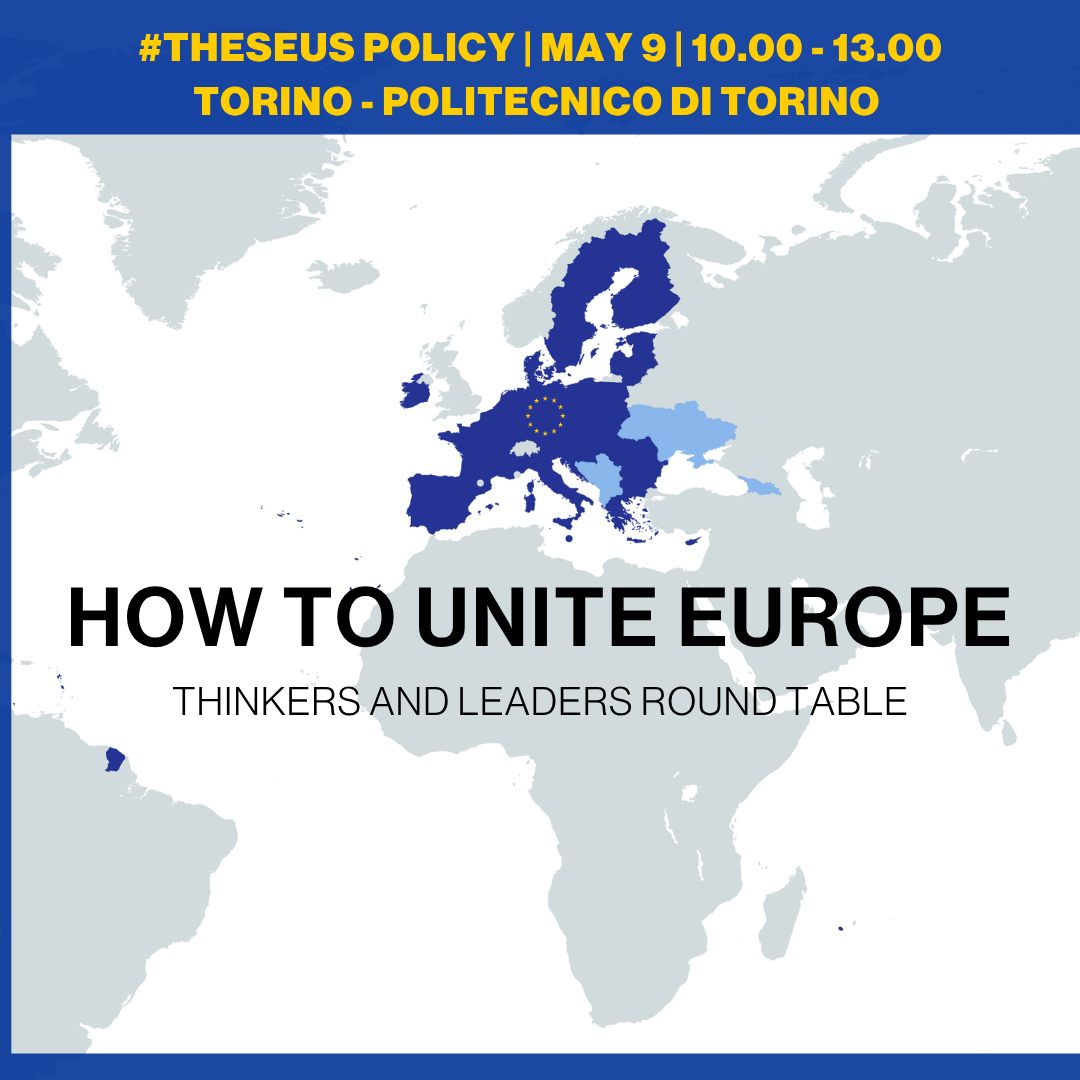
How to Unite Europe? Thinkers and Leaders Round Table
The initiative aims to encourage in-depth reflection on the challenges facing the European Union
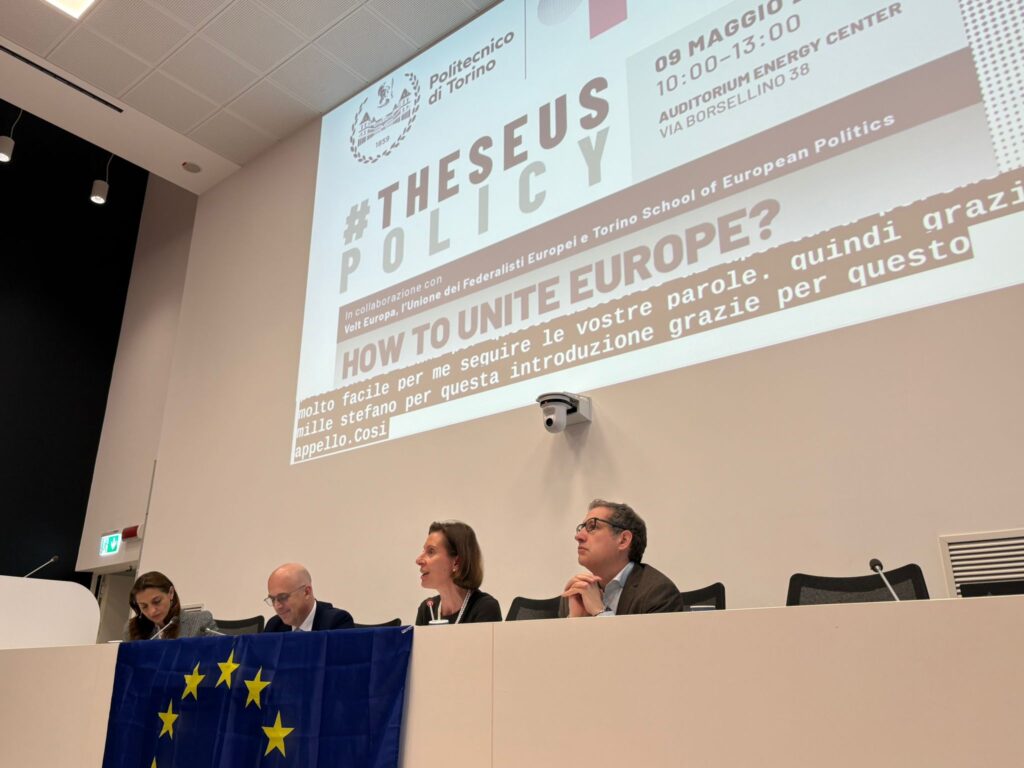
How to Unite Europe? Thinkers & Leaders Roundtable | # Theseus Policy
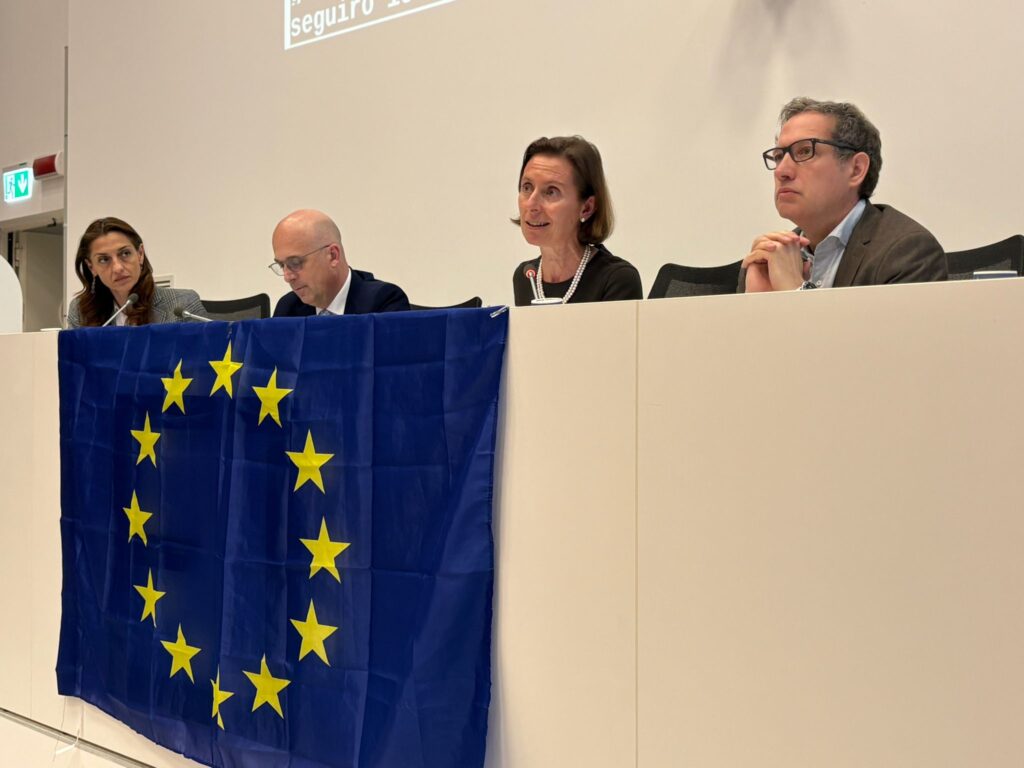
The event How to Unite Europe? Thinkers & Leaders Roundtable is the concluding event of the Theseus Policy series promoted by the Theseus Study Centre at the Polytechnic University of Turin and will take place on Saturday 9 May 2026 from 10:00 to 13:00.
The initiative aims to promote an in-depth reflection on the challenges facing the European Union at a historic juncture marked by growing international tensions and internal dynamics of fragmentation. At the heart of the debate will be the theme of building an informed and inclusive European citizenship, the definition of European identity in the 21st century, and the policies needed to strengthen the process of integration and cohesion among Member States.
10:00-10:30 Introduction:
• Paolo Gentiloni, former Prime Minister of Italy
10:45-12:15 Round Table: How to Unite Europe?
• Luiza Bialasiewicz, Professor of European Geopolitics
• Irene Tinagli, MEP to the European Parliament
• Domenec Ruiz Devesa, former Member of the European Parliament, President of the Union of European Federalists
Moderator: Stefano Sacchi, Vice-Rector for Society, the Community and Programme Implementation
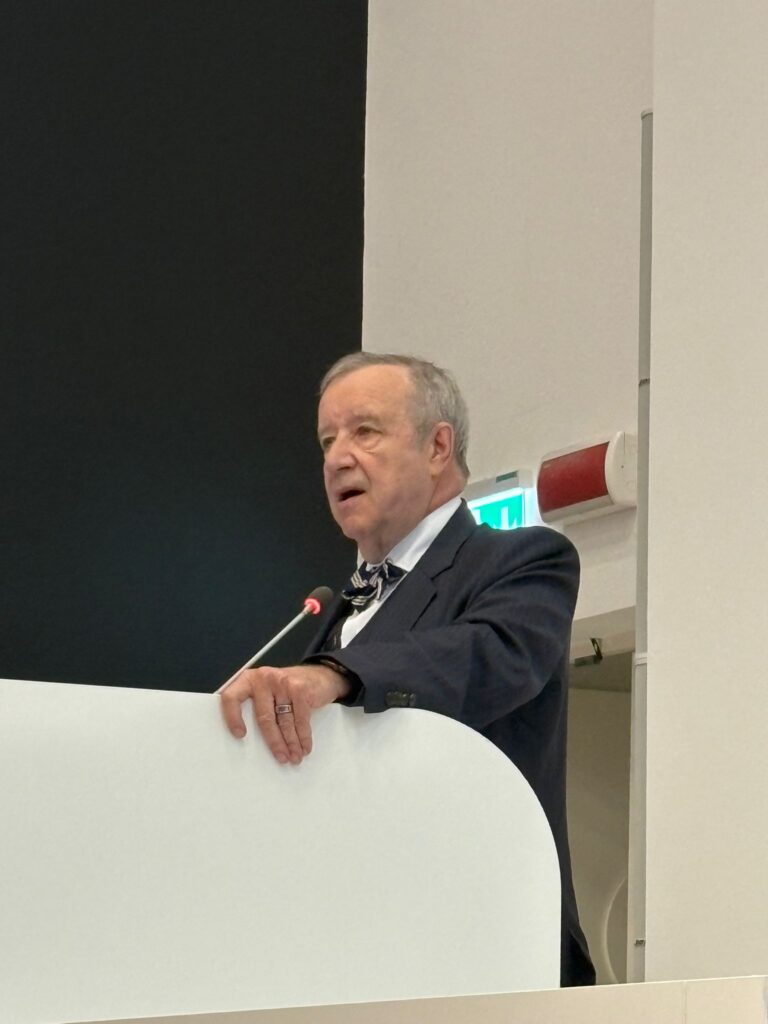
12:30-13:00 Conclusions:
• Toomas Hendrik Ilves, former President of the Republic of Estonia
A light lunch will be served at the end of the conference
REPORT
Media Articles on this event
Per l’ex Presidente estone Ilves l’UE deve agire come uno Stato (Focus Europe) by Roberto Castaldi
Translation from Italian
In his speech at the conference, Ilves stressed that, for the first time, Europe is alone and can no longer rely on the United States’ security guarantee. The EU is facing aggressive powers: Russia militarily, China economically and financially, and the United States through tariffs and security threats. We need a revolutionary change to secure a future for Europe and for our children. Member States must set aside their specific interests in favour of the broader common good in order to regain competitiveness and ensure independence.
Ilves underlined the importance of implementing the Draghi and Letta Reports by completing the single market for capital, energy, and telecommunications, rethinking competition policy and investment strategies to create European-scale companies capable of competing with American and Chinese firms. He emphasised the need for a European defence, including joint procurement, industrial cooperation, and investments in artificial intelligence, which is transforming warfare and will define the future. He also highlighted the need for EU governance reform, including overcoming unanimity, simplifying regulation, and introducing common debt to finance joint investments, particularly in defence and competitiveness.
He reflected on the revolutionary nature of the Schuman Declaration and on how the challenges of 1950 must have seemed impossible to overcome. Yet through European integration, peace and economic development were secured. Now we know what needs to be done — the Draghi, Letta, and Niinistö Reports provide important guidance — and we must put them into practice. The alternative is decline and the loss of independence.
Ilves stressed that Europeans can be strong if united or weak if divided, and he issued a call to action. “Each of us can do something,” he said, by acting, voting, and helping to ensure that change happens. In line with this message, later in the afternoon he took part in a March for Europe through the streets of central Turin, organised by the European Federalist Movement, the Do Something Committee, and Volt Europa together with numerous NGOs, political parties, and trade unions.
What should Europe do to face the challenges ahead?
We are facing a very serious problem, far more serious than the small partisan struggles taking place within the Council and Parliament. They are dealing with secondary issues while forgetting the truly important ones. We are facing a profound crisis. We suffer from a “normalcy bias”: we think the world we live in today will last forever. Just as people in Vienna in 1913 believed that the Austro-Hungarian Empire would exist forever. But that is not the case. If we do not adapt to the new context, our entire way of life could disappear, and all we will be left with is nostalgia for how things once were.
We are caught between the hammer and the anvil, between Trump, Putin, and Xi Jinping. What more do we need to wake up?
To truly deal with modernity, we must think of ourselves as a state, with the rights and powers of a state. Without a common borrowing capacity, we will not be able to finance what needs to be done. This cannot happen unless we become a far more unified entity capable of taking on debt. And given our economic weight, we can borrow at low interest rates. We must also unify our capital markets in order to secure major investments that are currently impossible because they take place only at the national level.
The future of defence does not lie in tanks, but in artificial intelligence and technology. We see this in the war in Ukraine. Why is Ukraine performing better now? Because it is technologically more advanced than the Russians. If we want to compete and defend ourselves against China — or against China through Russia, since the technology comes from China — or against attempts by the United States to destabilise us. The United States stated in its national security strategy that it wants a weak Europe. Trump keeps clashing with us. When Sánchez says, “you cannot use Spanish bases,” Trump responds, “I will increase tariffs on Spain.” Then he realises he cannot, because the European Union acts as one on trade matters. So he gets a response from the entire EU. Therefore, he cannot do it. Both Putin and Trump want a divided Europe, because every European country, even Germany, is small compared to the United States or even Russia, not to mention China. We must understand that the powers that dislike Europe do not appreciate our values and see Europe as a threat. Therefore, they are working to destabilise it.
Trump has put pressure on the EU, but also on Canada. Europeans reacted by trying to flatter Trump, whereas Canada responded very firmly. In theory, the EU is much stronger economically than Canada and far less vulnerable to the United States than Canada is, yet Canada gave a much firmer response. Is this perhaps because Canada has a federal government and Europe does not?
It is difficult to say who is more vulnerable, because Canada does not face a real direct military threat, although economically it is far more interdependent with the United States. But the answer is partly yes. Canada has a prime minister who is the head of the country and who can make decisions and say what he wants. Here, instead, we have various psychopaths competing with one another over who can be nicer to Trump. And in the end they get hit anyway, like Merz now. The only person in Europe today who carries real weight is Pope Leo XIV. The United States fears Leo XIV, not Meloni, von der Leyen, or any other leader. They can insult them as much as they like. But when they insult the Pope, then it truly becomes a problem.
Who can take the initiative towards common debt, a European defence, and a single foreign policy, as you advocate?
It should be the European Council. But to achieve this, we must win over as many governments as possible to a more pro-European line through elections. I am convinced this is possible if, at the national level, there are bold and courageous politicians willing to say that we must do this, rather than provincial leaders. For example, I would say Macron is extremely provincial on this issue. He always talks about “Europe,” but in reality what he wants are contracts for French companies, not European ones. We saw this when he tried to prevent the United Kingdom from participating in the SAFE programme.
Today we celebrate Europe Day in remembrance of the Schuman Declaration, which was actually inspired by Jean Monnet, who later also created the Action Committee for the United States of Europe. A new one has now emerged that seeks to bring together pro-European figures from across Europe. Do you intend to join them? Do you think these are the kinds of initiatives that can help bring together activists and politicians to convince public opinion and governments?
I will do anything that can be helpful. Since this can help, I will join them.
Gentiloni: una difesa europea per la pace (Focus Europe) by Roberto Castaldi
Translation from Italian
In his speech at the conference, Gentiloni observed that the EU finds itself in an unprecedented situation, with Russia, China, and the United States all acting against Europe. He stressed the need to achieve genuine strategic autonomy and to implement the Draghi and Letta Reports. He called for strengthening European democracy by abolishing or significantly limiting the use of unanimity in European decision-making processes; merging the presidencies of the European Commission and the European Council; and granting the European Parliament the power of legislative initiative. He underlined that 75% of the population feels European and supports the EU, and that national governments are therefore lagging behind citizens’ desire for greater integration. He recalled that the EU was born as a project to guarantee peace in Europe, and that today it is necessary to create a European defence in order to help secure peace around the EU as well. He added that the creation of a European defence will go hand in hand with a European fiscal capacity to finance it. A stronger EU is also essential to defend liberal democracy and to keep Europe the best place in the world to live.
What should the European Union do to relaunch itself?
I think the objectives are quite clear regarding defence and competitiveness. It is somewhat more difficult to understand how to achieve them. In this respect, it is useful that on occasions such as 9 May there is also mobilisation from public opinion and political parties. This cannot be something left solely to the dynamics of the European institutions. Therefore, the meeting that took place today in Turin can provide a useful push in this direction.
Is an initiative by a vanguard of countries possible? After all, both Schengen and the euro began with a smaller group that later expanded.
That would be absolutely necessary. There are already some small steps in this direction, such as the Spanish initiative among finance ministers to launch a core group of the six main economies. We will see whether it manages to produce interesting proposals.
The problem is always to keep in mind that things are not as simple as they are sometimes described. The difficulty in major European issues is very often the difficulty of finding agreement among the large countries. We often take refuge in the idea that the obstacle is this or that small reluctant country recklessly using its veto power. Certainly, this has happened.
Orbán was a specialist in this, but in many cases the real problem is that getting France, Germany, Italy, Poland, and Spain to agree is far from simple. That is what has often blocked us. And before, when the United Kingdom was also involved, even more so. Therefore, we need to work to create stronger cooperation among the major countries. In my opinion, this could act as a driving force for the entire Union.
France, Italy, and Spain will go to elections in 2027. With the current governments in the final phase of their legislatures, is it possible that they could take the initiative? Or will the window of opportunity come immediately after the elections, during the honeymoon phase of the new governments?
That depends on how the elections go. It could even be the opposite. Clearly, the French situation could be crucial, because France currently has a very pro-European president and executive. I do not think the same can be said about Italy at the moment. We shall see. Every country has its own story. I insist that there must also be pressure from politics, parliaments, and citizens to move towards a greater phase of integration. It is not enough simply to hope that governments will change.
Pictures