

The European Letter is back.
Europe is in danger, caught between the threat of a trade war with the United States and the uncertainty of the conflict in Ukraine, on which its security depends. The new course of American politics has revealed the unsustainability of a divided Union, incapable of supporting Kyiv and defending its own economic sovereignty. The negotiations on the Multiannual Financial Framework (MFF) 2028–2034 could become an opportunity to relaunch the process of reforming the Treaties. The European Parliament must use its veto power over the MFF to demand that the European Council initiate a procedure for revising the Treaties aimed at giving the Union genuine fiscal capacity.
The European Letter is published in 7 languages - from the edition 77 - under the auspices of the Luciano Bolis European Foundation in cooperation with the Union of European Federalists.
The European Letter is a periodical publication started in 1997 with the aim of stimulating political debate in national parliaments and governments, and in the European Parliament.
The European Letter 86 entitled "Getting Out of the Dead End", is sent to parliamentarians in the following legislative bodies:
- European Parliament
- Bundestag
- Parliament of the French Republic
- Parliament of the Italian Republic
- Cortes generales (Spanish Parliament)
- Nationalrat (Austrian Parliament)
- Belgian Federal Parliament
- Hellenic Parliament
- Eduskunta (Parliament of Finland)
Here the version avaiable:
The importance of EU regions must be acknowledged, as the renationalization of programs is detrimental to citizens.
The UEF advocates for Treaty reform and progress toward establishing genuine federal fiscal power.
Brussels, 18/07/2025
The Union of European Federalists (UEF) notes the proposed increase to the 2028-2034 EU multiannual budget (Multiannual Financial Framework, MFF) from the current 1.08 per cent to 1.25 percent of the EU GNP. This is the largest ever proposed MFF both in relative and absolute terms (around 2 trillion euros), even if the real financial needs to deliver European and global public goods are even higher (around 2 per cent of EU GNP).
However, the UEF expresses deep concern regarding the proposed cuts to several programs, particularly cohesion policy, and the renationalizing of agricultural policy.
Furthermore, the proposed approach on own resources is insufficient to address the structural limitations of the EU’s current financial system and risks perpetuating a model of dependence on national budgets.
An insufficient budget with a renationalizing drive
The MFF proposal will need to finance the EU to cope with unprecedented challenges: a trade war with Donald Trump’s America; an actual war with Vladimir Putin’s Russia; intensified competition from China; conflict in the Middle East; climate change; international migration; and the rise of the far right, with its anti-EU political agenda.
The proposed Multiannual Financial Framework (MFF), around € 2 trillion (€ 285 billion each year) represents 1,26% of the Union’s GDP. But 0,11% is devoted to the repayment of the debt made during the pandemic to finance the Next Generation EU, which any other sovereign emitter would have simply rolled out. This means the real budget is just 1,15% of GDP, that is grossly insufficient to fund Europe’s strategic objectives. The Draghi Report (2023) underlines that the Union must mobilize at least additional € 800 billion annually, of which 20% in public investments, i.e. 160 billions, to ensure long-term competitiveness and technological sovereignty. Yet the current budgetary architecture remains unfit for that purpose.
Meanwhile, calls for more defence spending are made without increasing sufficiently the overall size of the EU budget, implying that funds must be cut from cohesion, green transition, and innovation. This is an unsustainable trade-off.
The Commission’s MFF proposal proposes a renationalisation of spending programmes, thereby shifting more responsibility to Member States to the detriment of regional governments. This retreat undermines the very rationale of a common EU budget and misses a historic opportunity to build a stronger Union.
Real own resources needed and the road to a true, federal fiscal power
The Commission proposes new own resources and adjustments to existing ones, generating EUR 58.5 billion per year from the EU Emissions Trading System (ETS), the Carbon border adjustment mechanism (CBAM), the own resource based on non-collected e-waste, the tobacco excise duty, a Corporate Resource for Europe (CORE).
This is a progress but these are not genuine EU taxes.
Contrary to the functioning of federal systems, the EU budget is not the expression of a genuine fiscal capacity. Over 70% of its revenues come from direct national contributions. The so-called “own resources” are not true EU taxes, but rather national taxes collected under EU-regulated sectors (e.g. customs duties, agricultural levies) that are subsequently transferred to the EU. These resources lack both fiscal independence and meaningful scale, the two essential characteristics of a genuine fiscal power.
As such:
- The EU budget remains dependent on the will of national governments, without the ability to raise revenue autonomously;
- It is structurally limited to funding internal market development, and does not fulfil core fiscal functions, such as providing European public goods or carrying out redistributive policies.
As noted in the Monti Report on EU Own Resources (2017), for these to become true European taxes:
- They must be based on political decisions made at the EU level, thus with co-decision involving the European Parliament;
- Revenues must flow directly to the EU budget, independently of national channels;
Only by achieving these conditions can the EU develop a genuine fiscal capacity. This transformation necessitates a new legal framework that is democratically legitimate and supranational. Essentially, it requires a fundamental reform of the Treaties to confer fiscal sovereignty at the European level.
The UEF proposes four steps toward a European fiscal capacity, beginning with:
- the continuation of the NGEU program with new scale and purpose (including defense, climate policies, etc.) as long as the overall EU budget remains too small;
- the adoption of the decision on own resources and the multiannual financial framework through the ordinary legislative procedure (allowed by a specific Passerelle clause article 312.2 TFEU), i.e. through co-decision between the European Parliament and the Council deciding by qualified majority voting to enable the Union to become the master of its own budget;
- Progressive introduction of genuine European resources managed by the EU and not Member States, including:
- A Digital Tax on non-resident Service Providers;
- A Financial Transactions Tax;
- The Emissions Trading System (ETS2) that cover the emission of road transport, buildings, and other sectors;
- the elimination of the ratification by the Member States: Article 311 provides not only for unanimity in the Council, but also for approval by the Member States in accordance with their respective constitutional rules;
The European Parliament must stop accepting the logic of intergovernmental scarcity and instead act as a constitutional actor. The Parliament must demand a larger budget following its mandate of five years and not seven, protect current programs and the regional focus, call for fiscal powers, and support Treaty reform, as it did in its resolution of 22 November 2023.
The current Treaties permit some alignment of national tax systems and the introduction of new revenue sources for the EU budget, or even a specific budget for the eurozone. However, they significantly restrict the development of a true European fiscal authority because of the need for unanimous agreement and ratification under Articles 311, 312, 113, and 352 TFEU, which makes substantial reform extremely difficult under the existing framework.
The EU must become the master of its own budget—capable of setting strategic priorities, ensuring solidarity, and delivering results that only a continental scale of governance can provide.
“We stand at the crossroads of unprecedented global challenges. In this context, the proposed Multiannual Financial Framework, which is supposed to represent a step forward for the coming years, falls short of what is truly needed, primarily due to insufficient funding. To secure Europe's future, we must transition to our own real resources that ensure stability, self-sufficiency, and political accountability. The renationalization of key programs undermines our collective strength and dilutes the very essence of European solidarity. It is imperative that we empower the EU with a genuine fiscal capacity, enabling us to meet our strategic objectives and uphold our commitment to all European citizens.” said Domènec Ruiz Devesa, President of the UEF.
The recurring deadlocks during MFF negotiations show the need for a properly functioning European federation focusing on essential duties, eliminating national contributions that make Brussels dependent on member states and removing Brussels' scrutiny over state budgets. Instead, it would involve fiscal transfers sufficient for the EU to achieve its political goals, as set by representatives of European citizens and member states. Without addressing the need for a federal political compact, Europe risks repeating the same mistake of ineffective and slow processes, missing the opportunity to enhance freedom, solidarity, and protection for the EU, its citizens, and member states.
Sources
- EU Commission Press Release
- UEF Manifesto 2023
- UEF Resolution 2024
- Paper used by UEF during the Conference on the Future of Europe: The financing of the European Union: a proposal for the Treaty Reform to give the EU true Fiscal Capacity
- The Future of European competitiveness | The Draghi Report 2023
- The Monti Report 2017 - Final report and recommendations of the High Level Group on Own Resource
PRESS CONTACT
Mathilde Baudouin
Secretary General of the Union of European Federalists
secretariat@federalists.eu
Brussels, 15/07/2025
The Union of European Federalists (UEF) warmly welcomes the final agreement reached on 17 June 2025 between the European Parliament and the Council on the revised rules for the statute and funding of European political parties and foundations. This text will be voted tomorrow 16 July in the AFCO Committee.
This long-awaited reform represents an important step forward for strengthening European democracy. By improving transparency, simplifying funding procedures, and clarifying the legal framework for cross-border activities, the new regulation finally enables European political parties and foundations to operate more effectively across the Union. The harmonisation of the co-financing rate at 95% and the formal recognition of joint political activities offer greater financial stability and legal certainty to actors striving to give voice to citizens across borders. The mandatory implementation of internal gender equality measures, decision-making parity, and anti-harassment policies updates how European parties are governed.
A vital but incomplete step
While these measures will enhance the capacity of political actors to “contribute to forming European political awareness and to expressing the will of citizens of the Union” as enshrined in the Treaties, they fall short of completing the political architecture necessary for a functioning European democracy.
“European political parties will not have a role in national referenda on European issues, for example. It is disappointing that the Council solely focused on putting in place safeguards to limit the activities and governance of political parties and foundations.” Said Gabriele Bischoff, S&D shadow rapporteur and newly appointed Chair of the Spinelli Group.
As UEF has consistently advocated, a genuine European political space cannot emerge without the establishment of a Europe-wide constituency with transnational lists for the European Parliament elections. This remains a core and long-standing demand of the UEF, as reiterated in our Resolution on Transnational Lists adopted in Rome in November 2023.
The introduction of transnational lists—headed by Spitzenkandidaten nominated by European political parties—would significantly strengthen the democratic legitimacy of EU institutions, deepen citizens’ engagement with European politics, and link the outcome of European elections more directly to the leadership of the European Commission.
Next steps towards a political space for the Union
The UEF therefore calls on the European institutions to build on the progress made with the reform of Regulation 1141/2014 by taking the following steps (Resolution On the new European Electoral Law - Towards a union-wide constituency to strengthen the European public sphere):
- Adopt a European Electoral Law under Article 223 TFEU establishing a pan-European constituency for future European Parliament elections;
- Ensure that a significant proportion of MEPs are elected via transnational lists, with clear criteria for geographical and gender balance;
- Reform the Spitzenkandidaten process, ensuring that the President of the European Commission is elected by a majority in the European Parliament;
- Amend the legal framework to allow citizens to directly found and register European political parties, empowering a new generation of pro-European civic activism.
Some of these proposals are already reflected in the position of the European Parliament, as outlined in the Report on the 2024 European Elections, for which UEF President Domènec Ruiz Devesa served as co-rapporteur during his 2019–2024 mandate as an MEP, alongside MEP Sven Simon.
Only through such reforms can we move from a Union of governments to a Union of citizens—where politics is truly European in scope, ambition, and substance.
"The next elections to the European Parliament must aim to assess the past five years of activity of the EU institutions, in a true exercise of democracy and European politics" said Ruiz Devesa. "We cannot allow them to become just a collection of 27 parallel national elections driven by domestic agendas. Instead, we must Europeanise the debate and stimulate voter participation by putting European issues at the centre of the media and political discourse."
As Europe faces external threats and internal challenges, now is the time to be bold.
The UEF calls on the European Parliament and the Council to act with courage and vision to complete the democratic construction of our Union.
PRESS CONTACT
Mathilde Baudouin
Secretary General of the Union of European Federalists
secretariat@federalists.eu
The European Letter is back.
After years of stagnation, the Franco-German engine could finally give new impetus to the European integration process. The election of Friedrich Merz as Chancellor and Emmanuel Macron's leadership for the next two years open a valuable political window to advance the Union on ambitious projects of sovereignty sharing. In a context marked by U.S. disengagement, external authoritarian threats, and growing pressure from internal nationalisms, a common response becomes indispensable.
Winning together on crucial challenges such as security, defense, strategic autonomy, and competitiveness is decisive not only for the future of Europe but also for the internal stability of France and Germany—now threatened by industrial decline, territorial inequalities, and above all the rise of radical right-wing forces. Only by strengthening Europe can Paris and Berlin also strengthen themselves. This is the crossroads: to relaunch a more sovereign and cohesive Union, or to suffer the erosion of their own political, economic, and democratic stability.
The European Letter is published in 7 languages - from the edition 77 - under the auspices of the Luciano Bolis European Foundation in cooperation with the Union of European Federalists.
The European Letter is a periodical publication started in 1997 with the aim of stimulating political debate in national parliaments and governments, and in the European Parliament.
The European Letter 85 entitled "Reactivating the Franco-German Engine", is sent to parliamentarians in the following legislative bodies:
- European Parliament
- Bundestag
- Parliament of the French Republic
- Parliament of the Italian Republic
- Cortes generales (Spanish Parliament)
- Nationalrat (Austrian Parliament)
- Belgian Federal Parliament
- Hellenic Parliament
- Eduskunta (Parliament of Finland)
Here the version avaiable:
EU Made Simple, our partner for producing high-quality videos viewed by tens of thousands of people, has decided to create a documentary series dedicated to the mothers and fathers of Europe.
The first episode was produced with the collaboration and sponsorship of the UEF.
Enjoy watching.
Watch here the other episodes of the Series: LINK
In 1941, on a remote prison island, one man imagined a united Europe. Altiero Spinelli had no army, no country — just a bold idea and a smuggled manifesto. This is the untold story of how the EU's founding vision was born in exile. From fascist prisons to the European Parliament, his journey changed history.
Discover the radical origins of European federalism and the Ventotene Manifesto.
The Vice-President of Europa Union Deutschland (UEF Germany), Gabriele Bischoff, will take over the rotating Presidency of the parliamentry intergroup.
Brussels, June 25, 2025
The Vice-President of Europa Union Deutschland (UEF Germany), Gabriele Bischoff, MEP S&D, will take over the rotating Presidency of the parliamentary intergroup. He was appointed today by the Spinelli Group Board meeting in Brussels.
As Gabriele Bischoff inherited the rotating presidency of the Spinelli Group from Lukas Mandl, MEP EPP, the UEF stands beside her leadership and ensures her the support of all federalists.
The Spinelli Group and the UEF warmly thank Lukas Mandl for his chairmanship.
“It has been an honor to serve as Chair of the Spinelli Group for the past nine months. Many Europeans, are concerned regarding the future of this European Union and of the European continent. What they demand is a reform of the European Union. So how would a reform of the European Union work? It works through an EU treaty. Since the Treaty of Lisbon there was no treaty reform at all, but this is how an EU reform works, via treaty changes, via a treaty reform.” Lukas Mandl.
The revision of the European Treaty has been a long-standing demand of the UEF. Gabriele Bischoff stressed the importance of making the Treaty reforms and aswers to the questions of social justice and the reduction of inequality the focus of her work together with the Spinelli Group.
Gabriele Bischoff said: "Thank you very much for your trust. It is a great honour for me to be the new chair of the Spinelli Group. As the first woman to hold this office, but certainly not the last, I am particularly looking forward to this task.
The Spinelli Group is committed, in the spirit of the Ventotene Manifesto, to deeper European integration and the further development of the EU and its treaties.
The Ventotene Manifesto, written in 1941, emphasised even then that a united Europe can only be strong if it can provide answers to questions of social justice and the reduction of inequality.
In this sense: ‘The road ahead is neither easy nor safe. But it must be taken, and it will be taken!"

RELATED LINKS
See the Board Members of the Spinelli Group LINK HERE
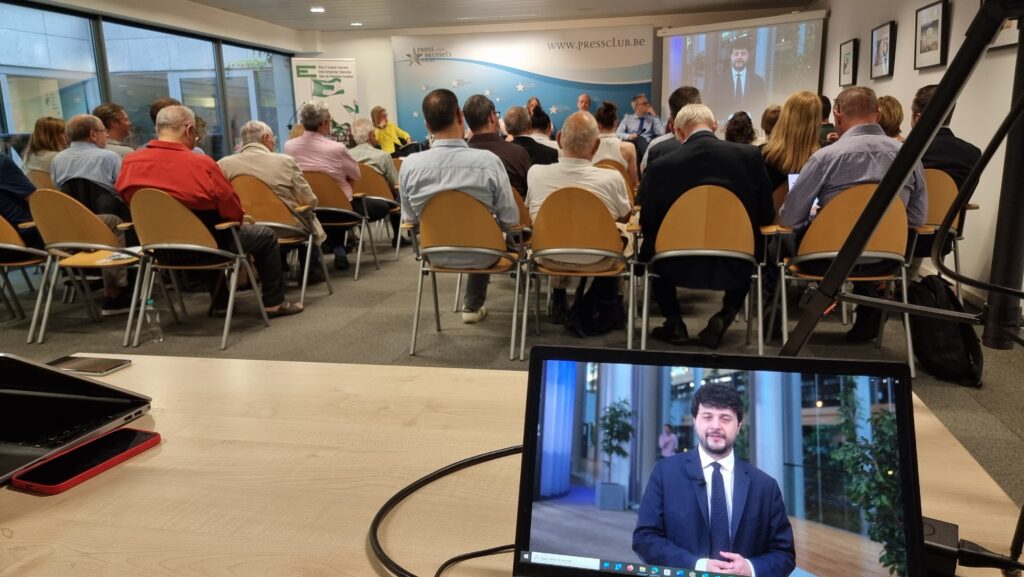
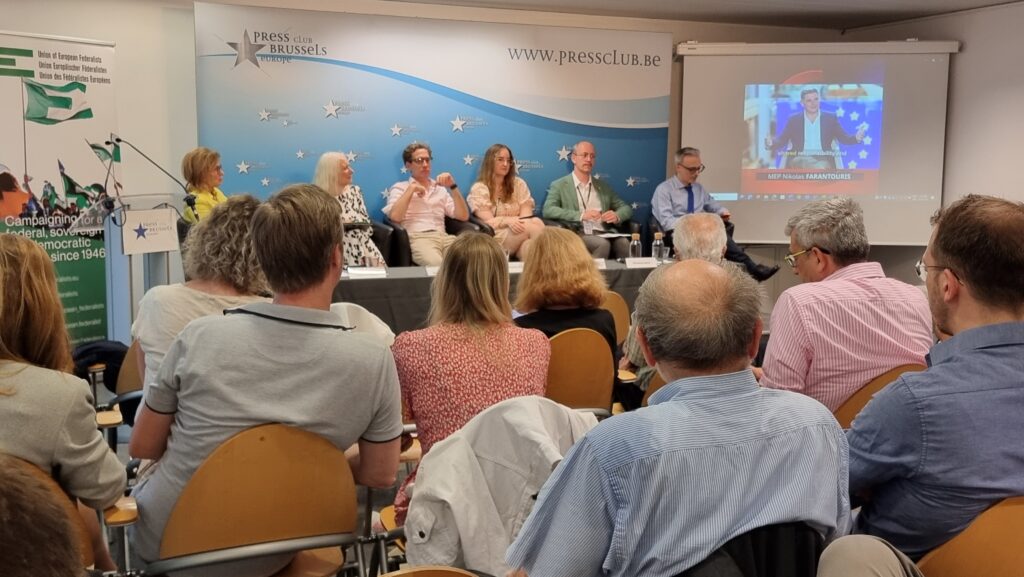

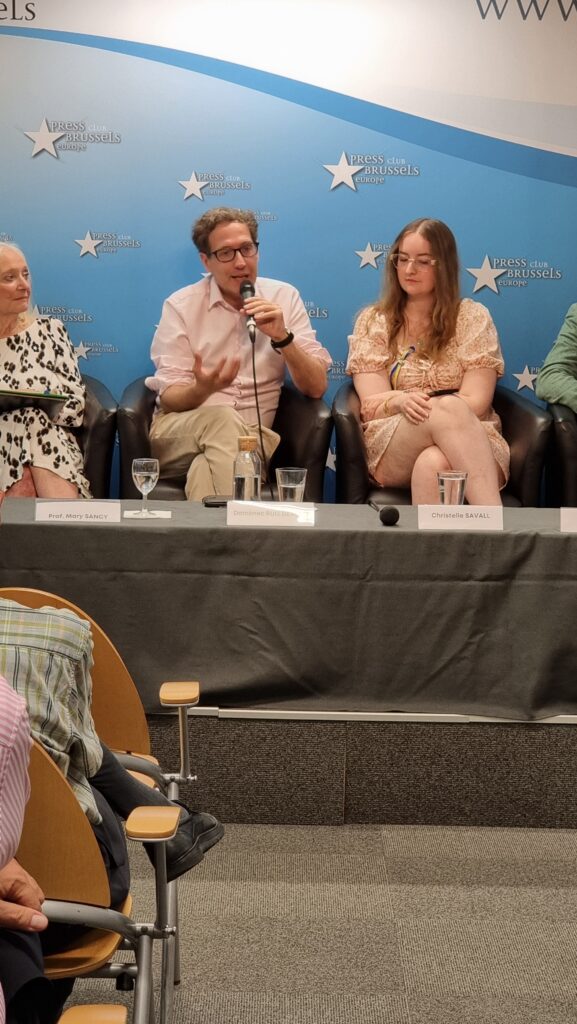
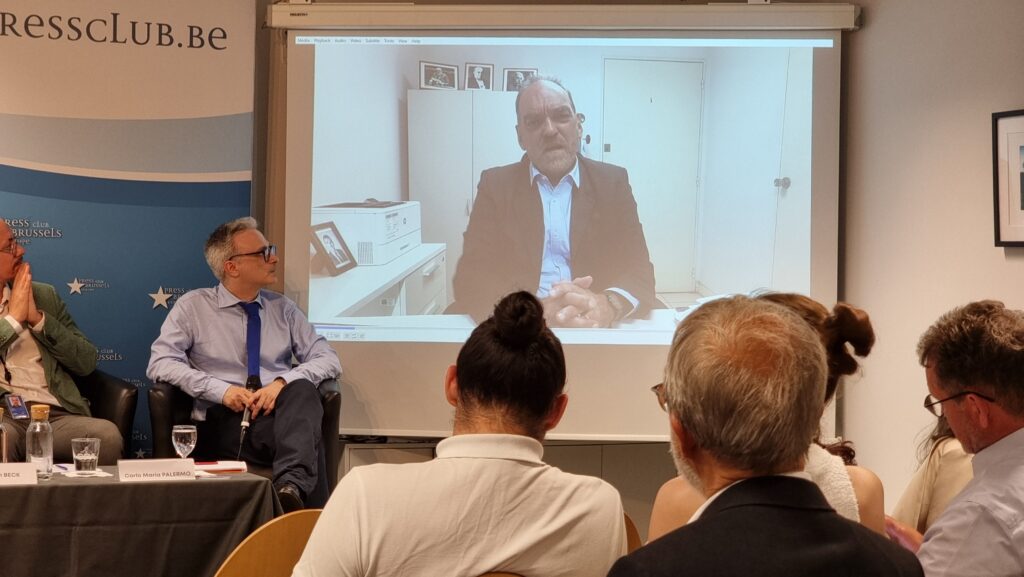
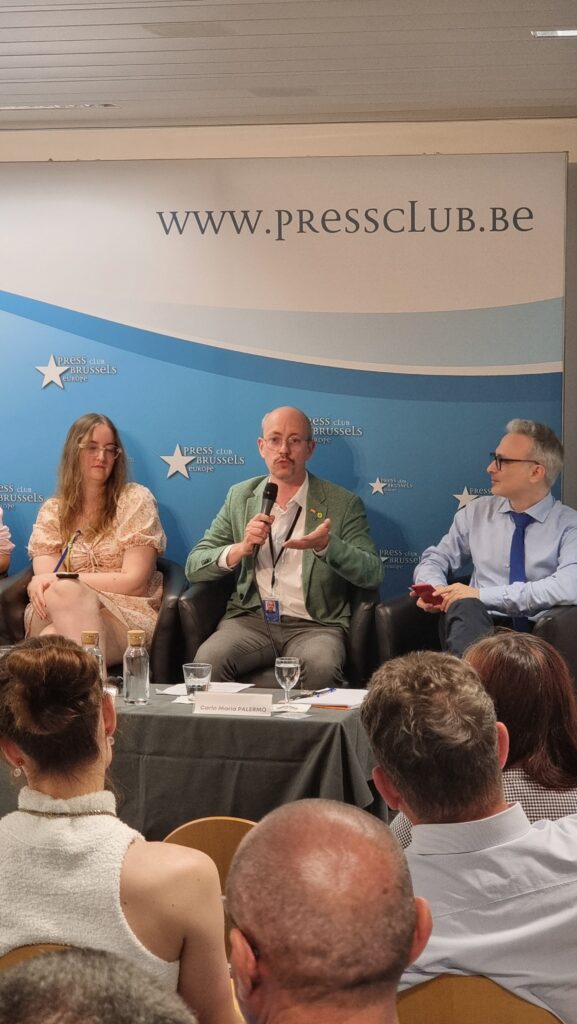
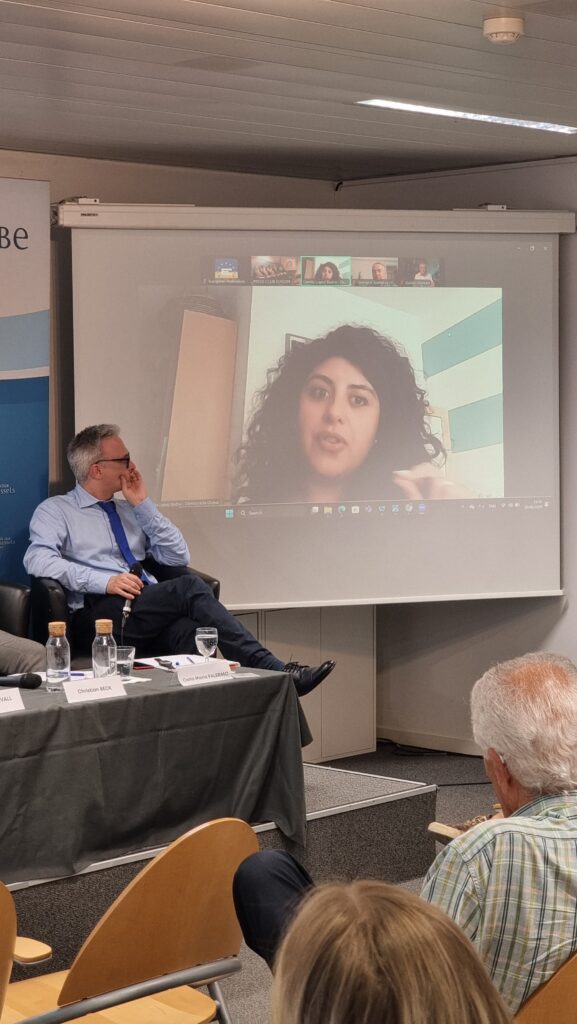
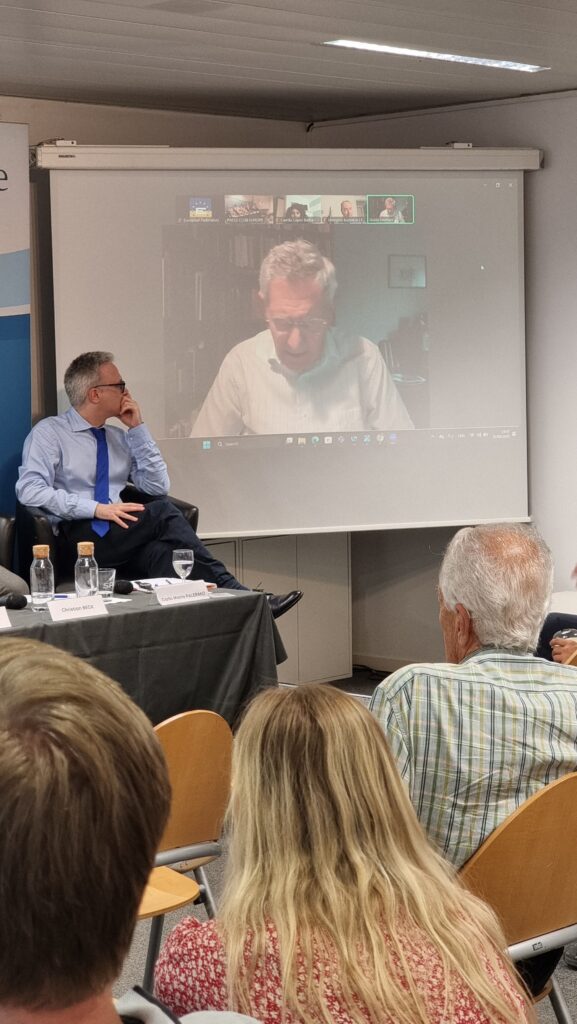
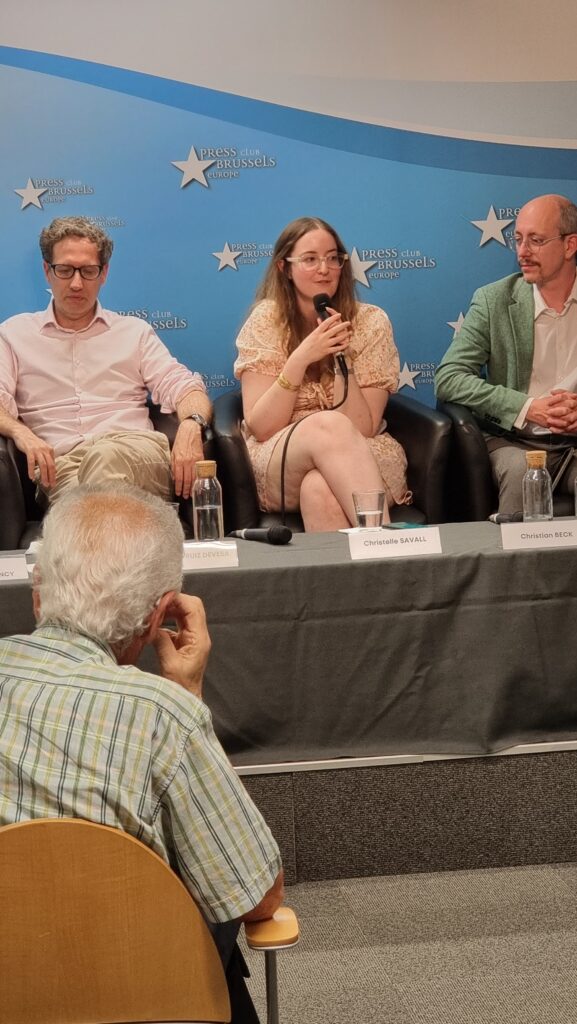
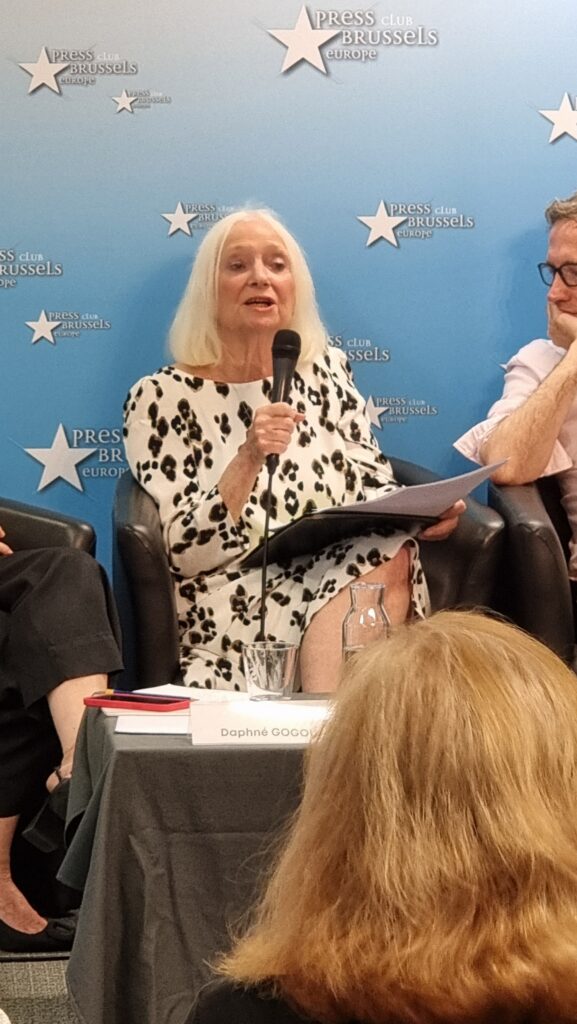
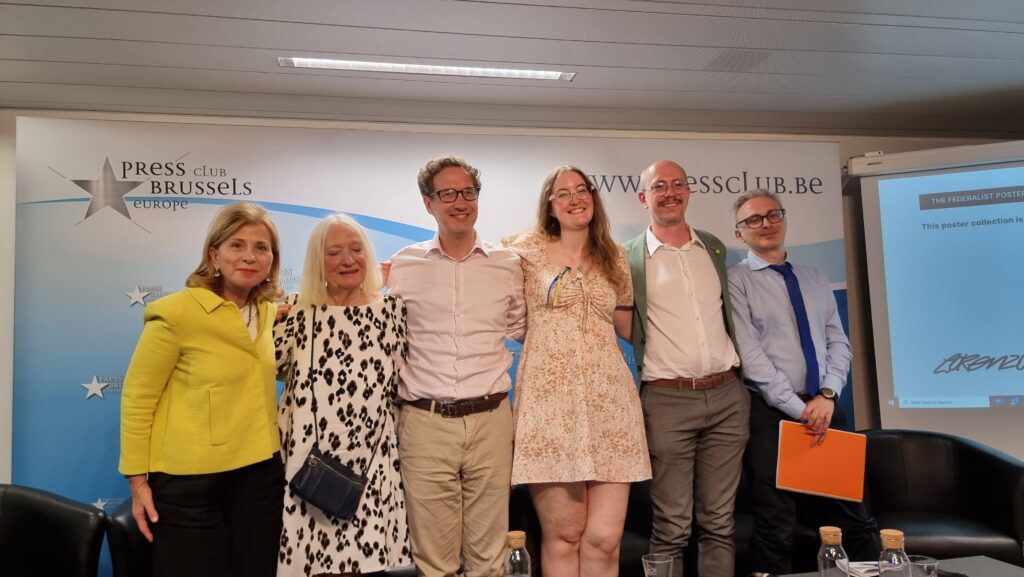
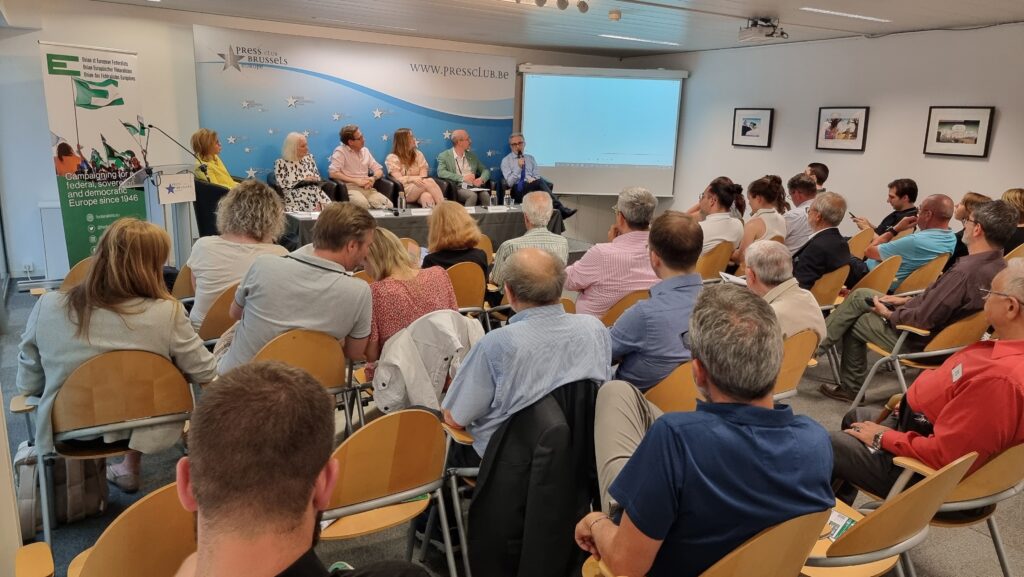
The “Altiero Spinelli” Institute of Federalist Studies (ASI) and the Municipality of Ventotene has been organizing an international seminar on the island of Ventotene for 41 years, in partership with the Union of European Federalists and JEF Europe. In the same period the Ventotene Italian Seminar (43 edition) is organized.
This island off the Italian coast is the place where Altiero Spinelli, author of the Federalist Manifesto of Ventotene, was imprisoned during the Second World War. Every year, young federalists gather here to discuss federalist ideas on European and global issues with the leading experts of the European and World Federalist Movement. The seminar is a unique and intense experience on federalist studies.
Here we are building the future of Europe!
APPLICATIONS
- Application forms must be submitted online by June 25, 2025.
- Applications submitted by candidates older than 35 years will not be taken into consideration.
The form to apply is this LINK
For any request here, send an email to: director@istitutospinelli.org
ADMISSION
By July 15, the ASI will select the participants and will provide them with detailed information concerning the procedure for confirmation, the program, and how to reach Ventotene.
PARTICIPATION CONDITIONS
A) CONDITIONS FOR INTERNATIONAL PARTICIPANTS
Participants (with the exclusion of Italian participants)
Selected participants will receive, without any cost, full board and accommodation from lunch on
August 31 to lunch on September 5 (included).
Travel expenses will NOT be reimbursed. With advanced booking it will be possible to fly to Rome or
Naples (the closest airports) with low–cost flights from many European airports.
Seat Deposit
A seat deposit of 100 € shall be paid in advance by both European and non-European participants,
once they have been selected, in order to confirm their participation. The full amount of 100 € will be
returned to each participant at the end of the seminar, provided that s/he will have attended all sessions. Instructions for providing the funds will be given in the notice of acceptance. The deadline for
the payment of the deposit is July, 24. The deposit might be returned to participants who eventually
will not take part in the Seminar but only if they communicate to the ASI their impossibility to participate before July, 30.
Participants will be invited to provide the details (Beneficiary, IBAN code, BIC/SWIFT code) of the bank
account where the reimbursement will be transferred.
B) CONDITIONS FOR ITALIAN PARTICIPANTS TO THE INTERNATIONAL SEMINAR
The conditions for Italian participants are the same designed for the participants of the national seminar (150 € participation fee and 70% travel reimbursement up to a maximum reimbursement of 50 €: for more info, see the “Bando” on the ASI website). Participants selected to take part in the seminar
shall pay the participation fee of 150 € before July, 24. No seat deposit is requested. The fee might be
returned to participants who eventually will not take part in the Seminar only if they communicate to
the ASI their impossibility to participate before July, 30. Participants will be invited to provide the details
(Beneficiary, IBAN code) of the bank account where the reimbursement of travel expenses will be
credited.
C) WORKING LANGUAGE
English will be the working language for the international seminar.