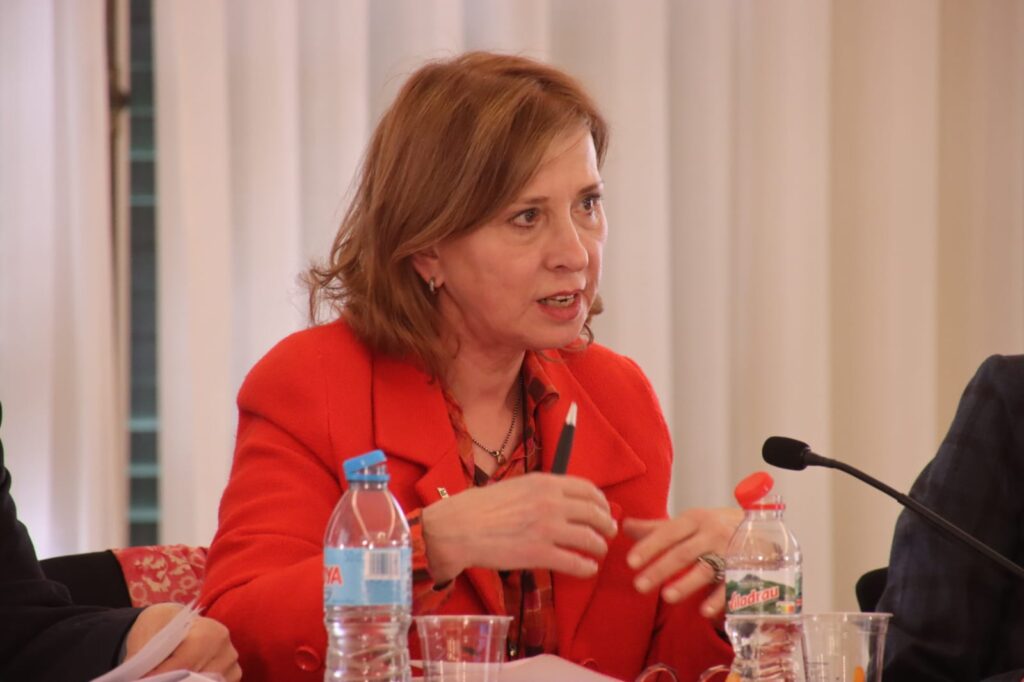
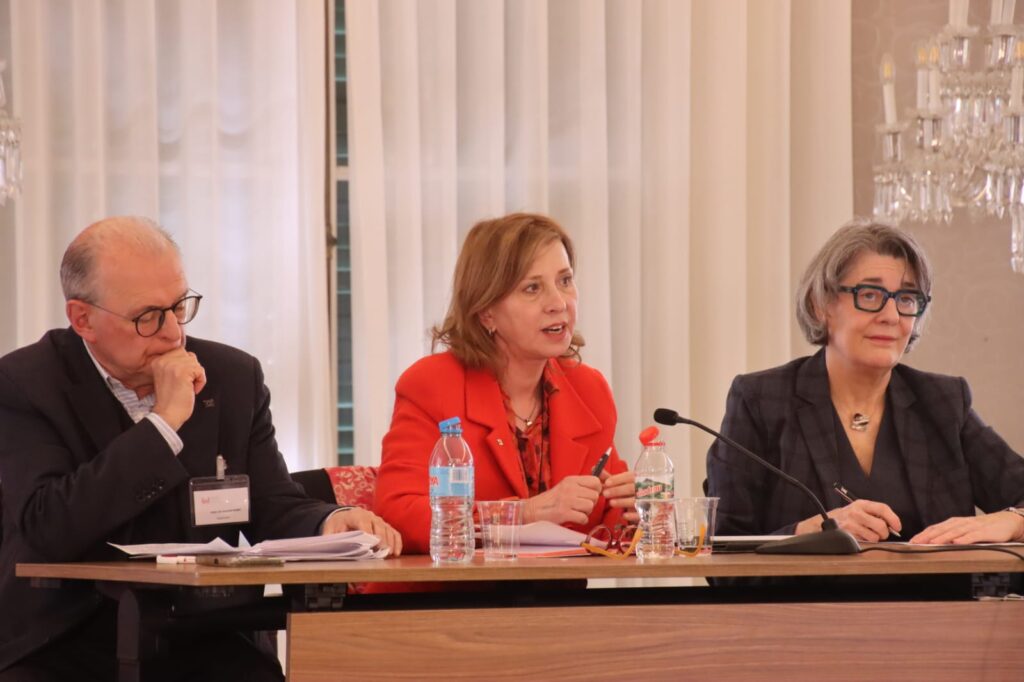
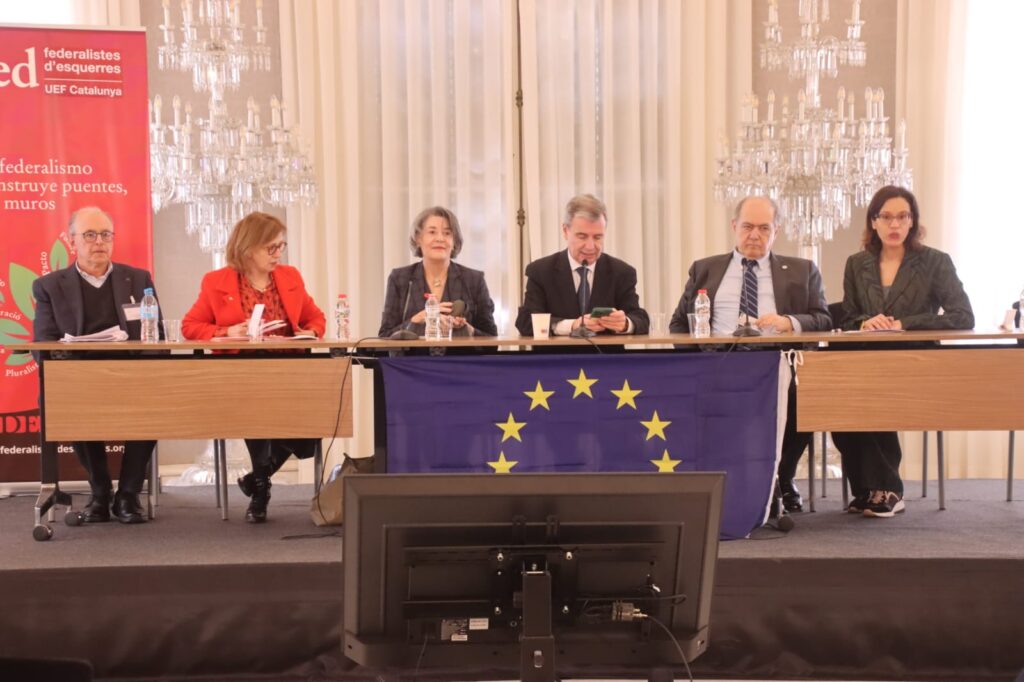
Thanks to the initiative of Giulia Rossolillo, Vice-President of the Union of European Federalists, the Fondazione Mario e Valeria Albertini, in cooperation with the Department of Law of the University of Pavia, Collegio Ghislieri, and the Centre for Studies on the European Union (CSUE), organized a cycle of three public debates entitled “European Union: Autonomous Actor or Vassal?”.
The events, hosted in the Aula Goldoniana of Collegio Ghislieri in Pavia, aimed to address a crucial question: can the European Union act as a truly autonomous global actor, or does it remain structurally dependent on external powers?
As outlined in the official programme , the cycle covered three key dimensions of European sovereignty: artificial intelligence, monetary policy, and fiscal integration.
First Debate: The Ethical Dimension of Artificial Intelligence
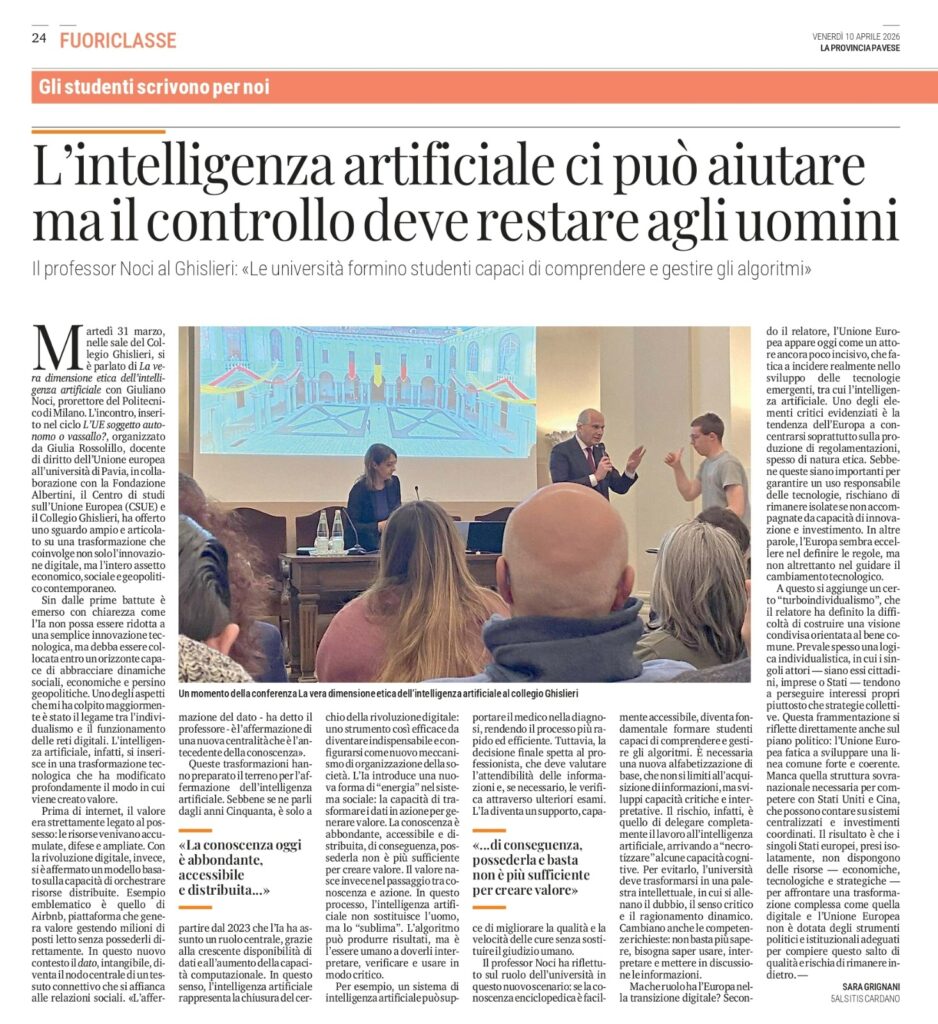
The first meeting, held on 31 March at Collegio Ghislieri, featured Giuliano Noci (Politecnico di Milano) and addressed “The True Ethical Dimension of Artificial Intelligence.” The debate, moderated by Giulia Rossolillo, opened a broader reflection on the systemic impact of artificial intelligence on contemporary society.
Article based on this event
Artificial intelligence can help us, but control must remain in human hands
Professor Noci at Ghislieri: “Universities must train students capable of understanding and managing algorithms”
On Tuesday, March 31, at Ghislieri College, a discussion was held on The True Ethical Dimension of Artificial Intelligence with Giuliano Noci, vice-rector of the Polytechnic University of Milan. The meeting, part of the series The EU: autonomous actor or vassal?, organized by Giulia Rossolillo, professor of European Union law at the University of Pavia, in collaboration with the Albertoni Foundation, the Center for European Union Studies (CSUE), and Ghislieri College, offered a broad and detailed perspective on a transformation involving not only digital innovation, but the entire contemporary economic, social, and cultural framework.
From the very beginning, it became clear that AI cannot be reduced to a simple technological innovation, but must instead be understood within a broader horizon embracing social, economic, and even geopolitical dynamics. One of the aspects most emphasized by the speaker was the relationship between individualism and the functioning of digital networks. Artificial intelligence is part of a technological transformation that has profoundly changed the way value is created.
Before the internet, value was closely tied to ownership: resources were accumulated, defended, and expanded. With the digital revolution, however, a model emerged based on the ability to orchestrate distributed resources. A symbolic example is Airbnb, a platform that generates value by managing millions of beds without directly owning them. In this new context, data — intangible in nature — becomes the central node of a connective network intertwined with social relationships.
“Knowledge today is abundant, but distributed…”
The speaker’s point was clear: “Information alone is no longer sufficient.” These transformations prepared the ground for the rise of artificial intelligence. Although AI has been discussed since the 1950s, it is only from 2023 onward that it has taken on a central role, mainly thanks to data availability and increased computational capacity. In this sense, artificial intelligence represents the completion of the digital revolution: a tool so effective that it becomes indispensable and acts as a mechanism for organizing society.
AI introduces a new form of “energy” into the social system: the ability to transform data into action in order to generate value. Knowledge is abundant, accessible, and distributed; therefore, merely possessing it is no longer enough to create value. Value instead comes from recognizing the hidden and relational meaning of data, and from being able to interpret and use it.
For example, an artificial intelligence system can assist a doctor in diagnosis, making the process faster and more efficient. However, the final decision belongs to the professional, who must evaluate the reliability of the information and, if necessary, verify it through further examinations. AI thus becomes a support tool, capable of improving the quality and speed of healthcare without replacing human judgment.
Professor Noci also reflected on the role of universities in this new scenario: if encyclopedic knowledge is easily accessible, it becomes essential to train students capable of understanding and managing algorithms. A new basic form of literacy is needed — one that does not stop at acquiring information, but develops critical and interpretative skills. The risk, in fact, is that the use of new technologies may generate cultural dependence and a progressive loss of critical autonomy.
But what role does Europe play in the digital transition? According to the speaker, the European Union currently appears to be a still weak and not very influential actor, struggling to truly shape the development of emerging technologies, including artificial intelligence. One critical aspect highlighted was Europe’s tendency to focus mainly on producing regulations, often of an ethical nature. Although these are important for ensuring the responsible use of technology, they risk remaining isolated if not accompanied by innovation and investment capacity.
In other words, Europe seems to excel at defining rules, but not equally at leading technological change. Added to this is a certain “turbo-individualism,” which the speaker described as the difficulty of building a shared vision oriented toward the common good. An individualistic logic often prevails, in which actors — whether citizens, companies, or states — tend to pursue particular interests rather than collective strategies. This fragmentation is also directly reflected at the political level: the European Union struggles to develop a strong and coherent common direction.
What is lacking is the supranational structure necessary to compete with the United States and China, which can rely on centralized systems and coordinated investments. As a result, individual European states, taken separately, do not possess the economic, technological, and strategic resources needed to face a complex transformation such as the digital one. Furthermore, the European Union itself lacks the political and institutional tools required to make this leap in quality, and therefore risks falling behind.
Sara Grignani 5ALS itsi Cardano
Second Debate: European Monetary Sovereignty and the Digital Euro
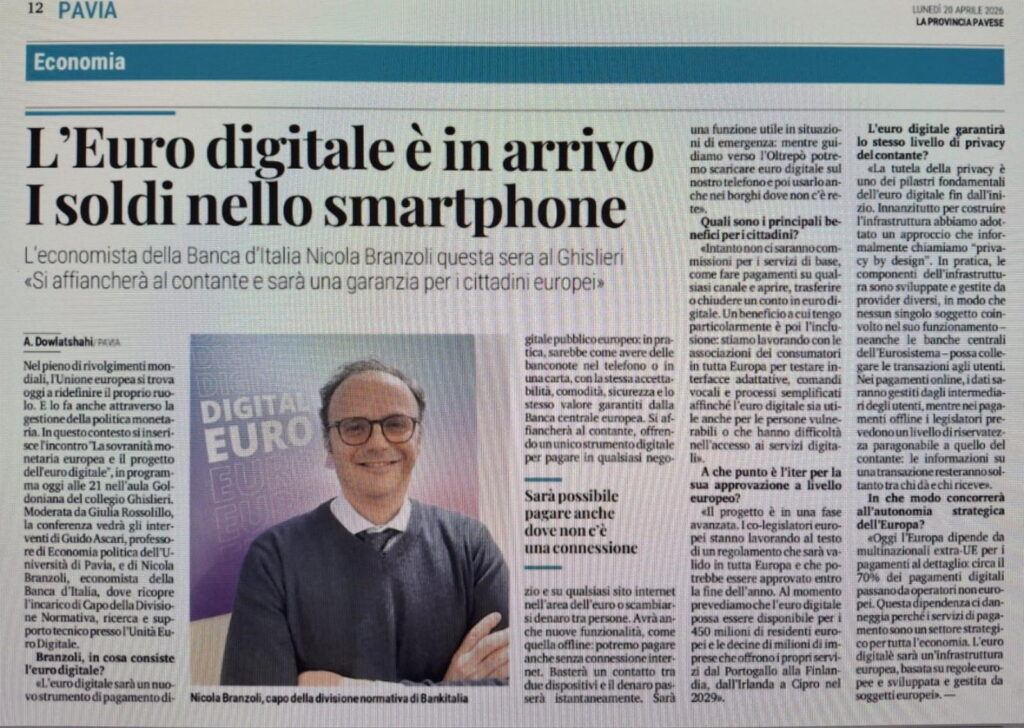
The second meeting, held on 20 April, featured Guido Ascari (University of Pavia) and Nicola Branzoli (Banca d’Italia), focusing on “European Monetary Sovereignty and the Digital Euro.”
The discussion framed the digital euro as a strategic tool for strengthening European autonomy in payments and finance.
Articles based on this event
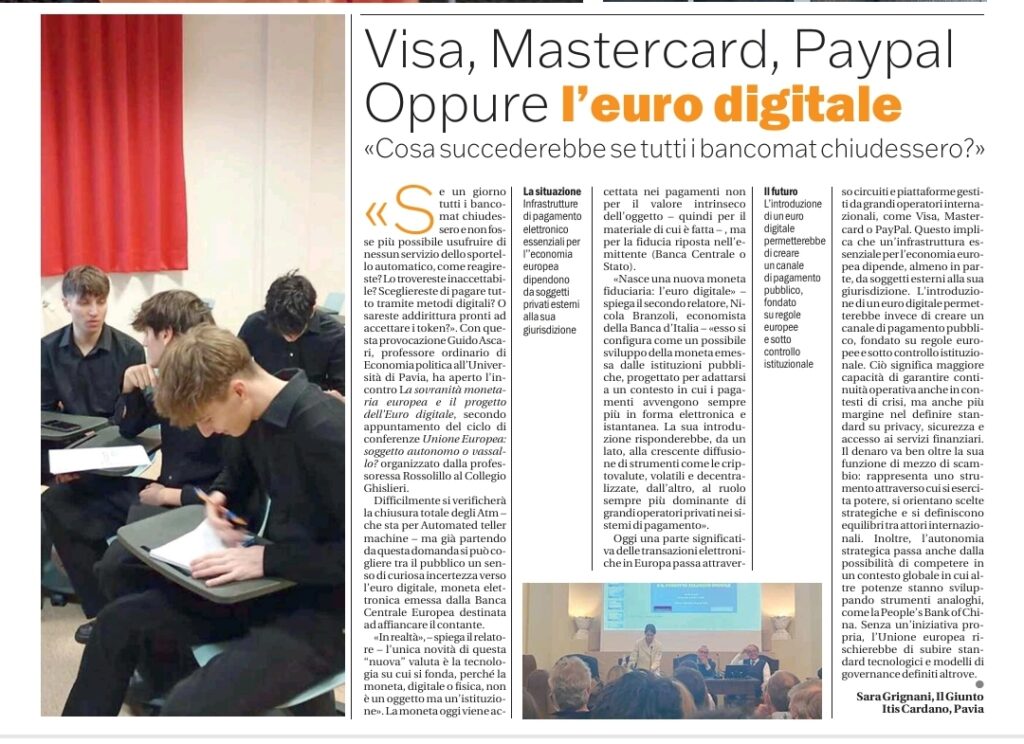
Visa, Mastercard, PayPal Or the Digital Euro “What would happen if all ATMs shut down?”
“What if one day all ATMs shut down and it was no longer possible to use any cash machine service? How would you react? Would you find it unacceptable? Would you choose to pay exclusively with digital methods? Or would you even be ready to accept tokens?” With this provocative question, Guido Asperti, professor of Political Economy at the University of Pavia, opened the meeting European Monetary Sovereignty and the Digital Euro Project, the second event in the conference series European Union: autonomous actor or vassal? organized by Professor Rossillo at Ghislieri College.
A complete shutdown of ATMs — Automated Teller Machines — is unlikely to occur, yet this question already reveals among the audience a sense of curious uncertainty toward the digital euro, an electronic currency issued by the European Central Bank intended to complement cash.
“In reality,” the speaker explained, “the only novelty of this ‘new’ currency is the technology on which it is based, because money, whether digital or physical, is not an object but an institution.” Today, money is accepted in payments not because of the intrinsic value of the object — that is, the material it is made of — but because of the trust placed in the issuer (the Central Bank or the State).
“A new fiduciary currency is emerging: the digital euro,” explained the second speaker, Nicola Branzoli, economist at the Bank of Italy. “It is taking shape as a possible evolution of money issued by public institutions, designed to adapt to a context in which payments are increasingly electronic and instantaneous. Its introduction would respond, on the one hand, to the growing spread of instruments such as cryptocurrencies, which are volatile and decentralized; and on the other hand, to the increasingly dominant role of large private operators in payment systems.”
Today, a significant share of electronic transactions in Europe passes through networks and platforms managed by major international operators such as Visa, Mastercard, or PayPal. This means that an infrastructure essential to the European economy depends, at least in part, on entities outside its jurisdiction. The introduction of a digital euro would instead make it possible to create a public payment channel, based on European rules and under institutional control. This would mean a greater ability to guarantee operational continuity even in times of crisis, as well as more room to define standards concerning privacy, security, and access to financial services.
Money goes far beyond its function as a medium of exchange: it represents a tool through which power is exercised, strategic choices are directed, and balances among international actors are defined. Moreover, strategic autonomy also depends on the ability to compete in a global context where other powers are developing similar instruments, such as the People’s Bank of China. Without its own initiative, the European Union would risk having to accept technological standards and governance models defined elsewhere.
Sara Grignani, Il Giunto ITIS Cardano, Pavia
Third Debate: European Debt and the Future of the Union
The final meeting, scheduled for 28 April, featured Massimo Bordignon (Università Cattolica del Sacro Cuore) and will address “European Debt and the Future of the Union.”
The discussion tackeld one of the most politically sensitive issues for European integration:
“Common debt is not only an economic instrument — it is a step toward political union.”
Conclusion
Across all three debates, a clear message emerged: European autonomy requires deeper integration and stronger coordination.
“The question is no longer whether Europe should act together, but whether it can afford not to.”
The cycle highlighted how technological, monetary, and fiscal sovereignty are interconnected dimensions of a broader political challenge.
Ultimately, the initiative reaffirmed a core federalist insight:
“Without unity, Europe risks remaining a global vassal rather than becoming a true autonomous actor.”
Analysis, Contributions, Social Media and Debates
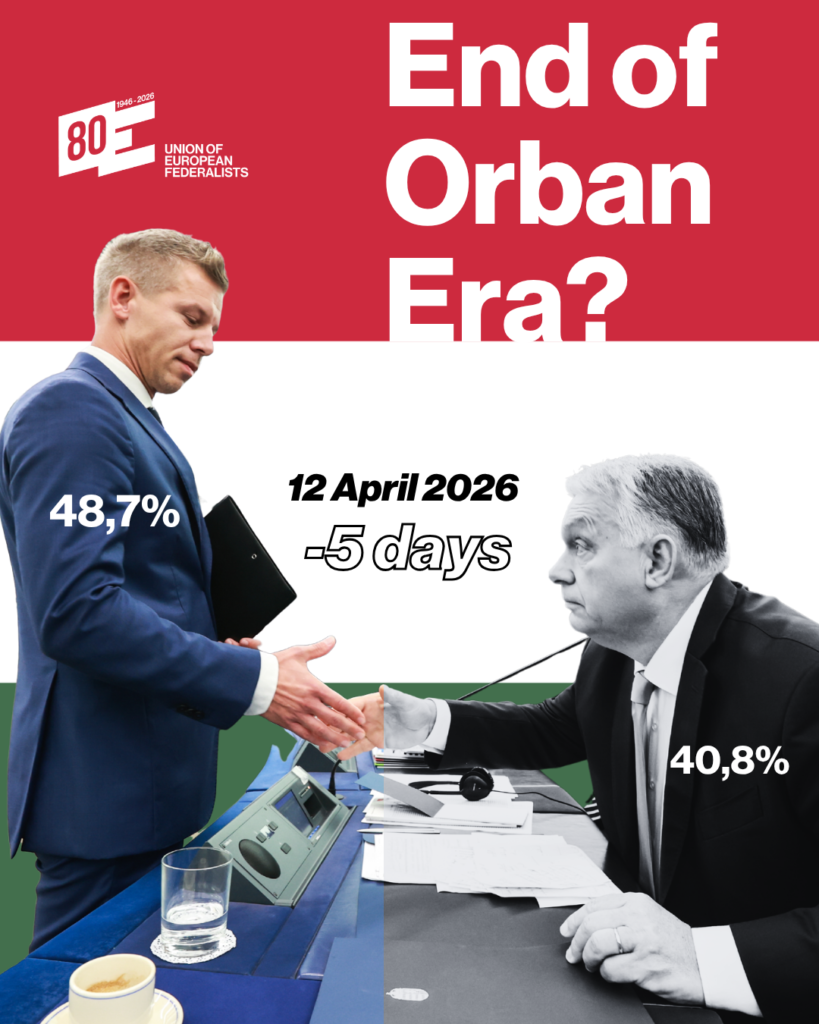
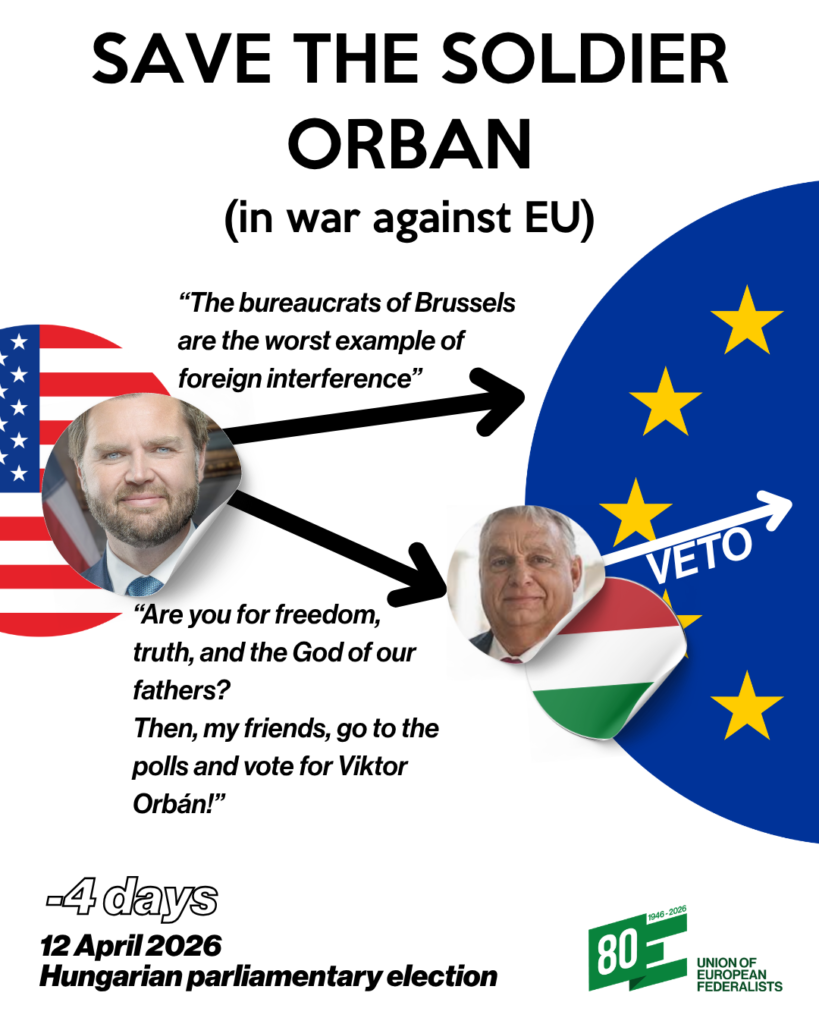
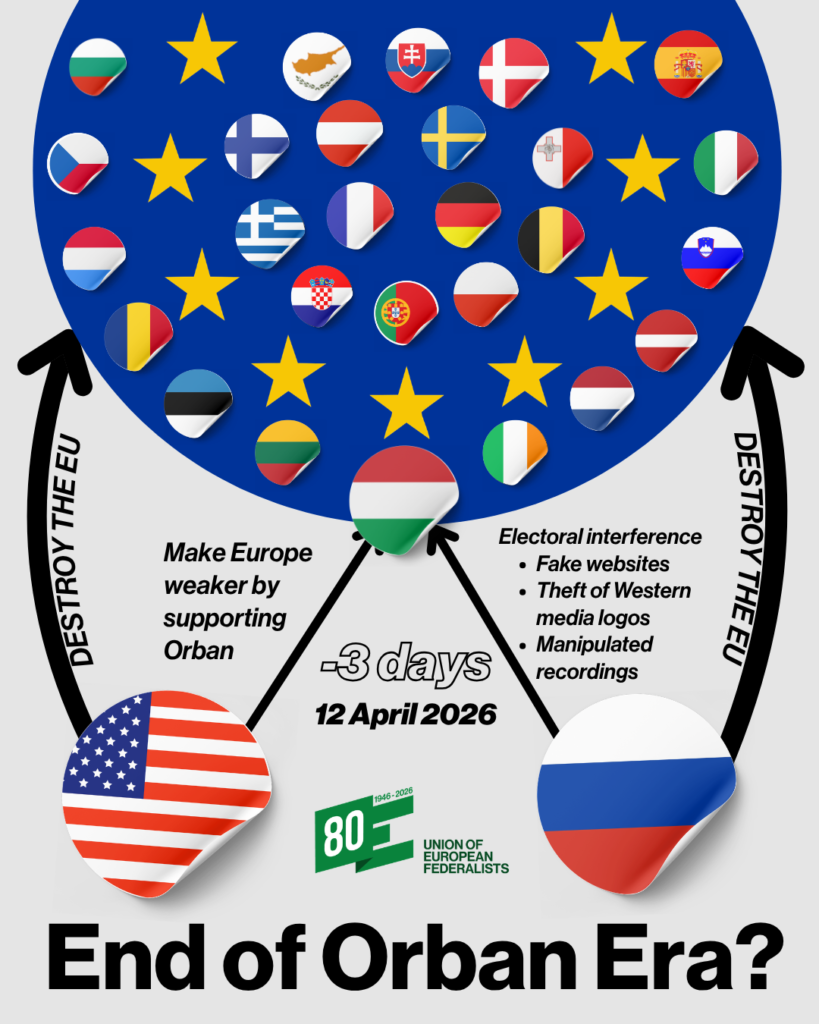
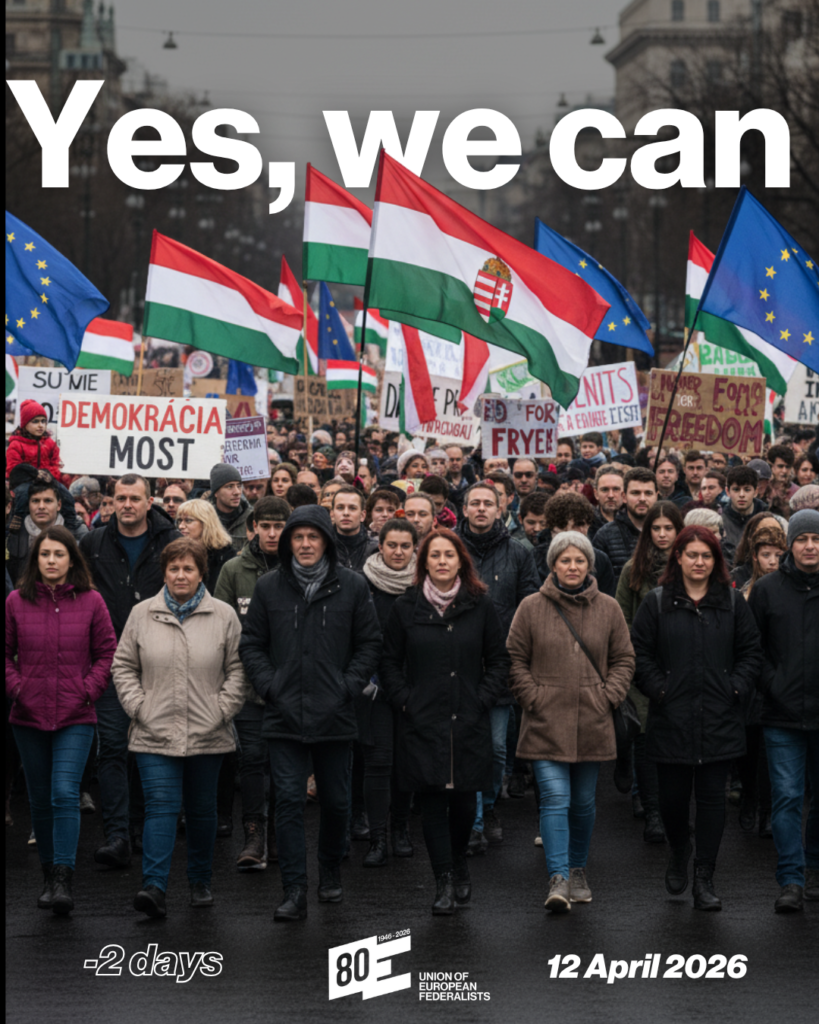
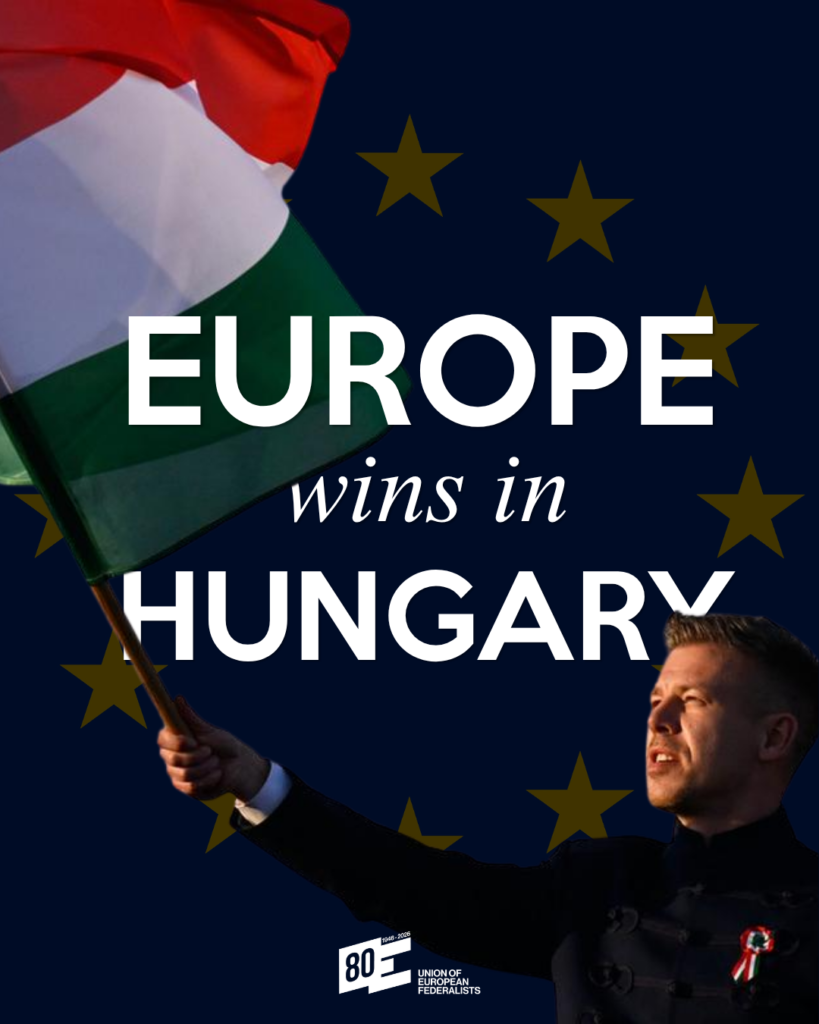
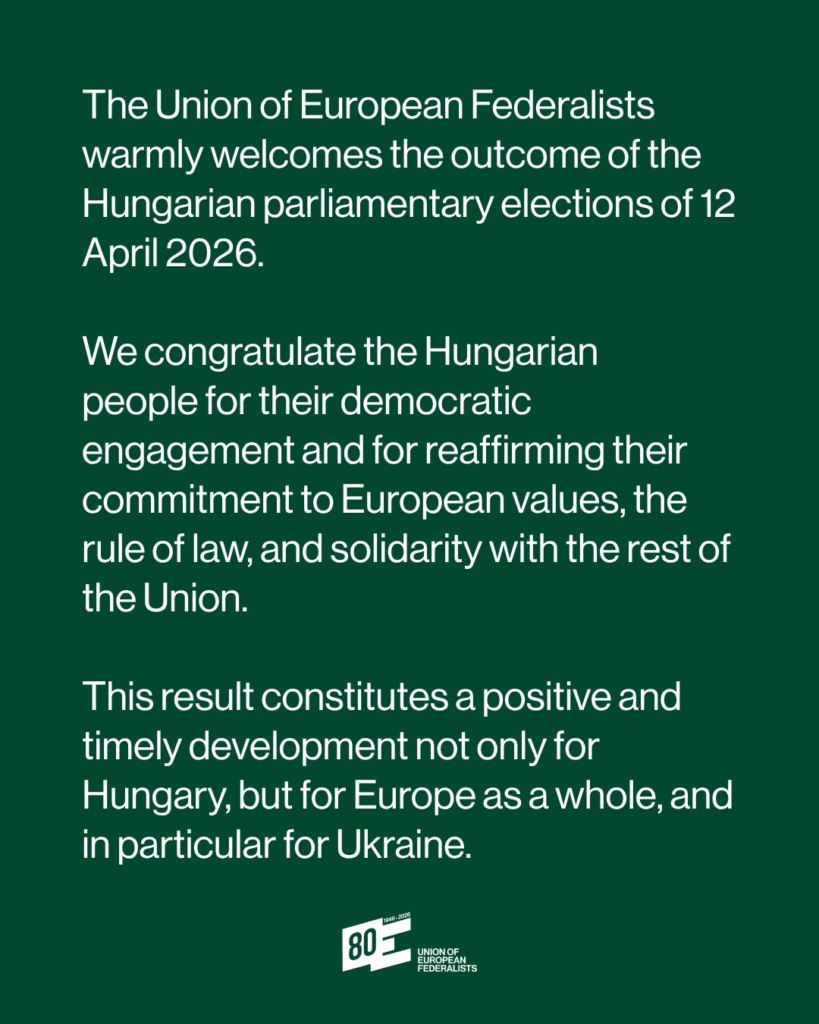
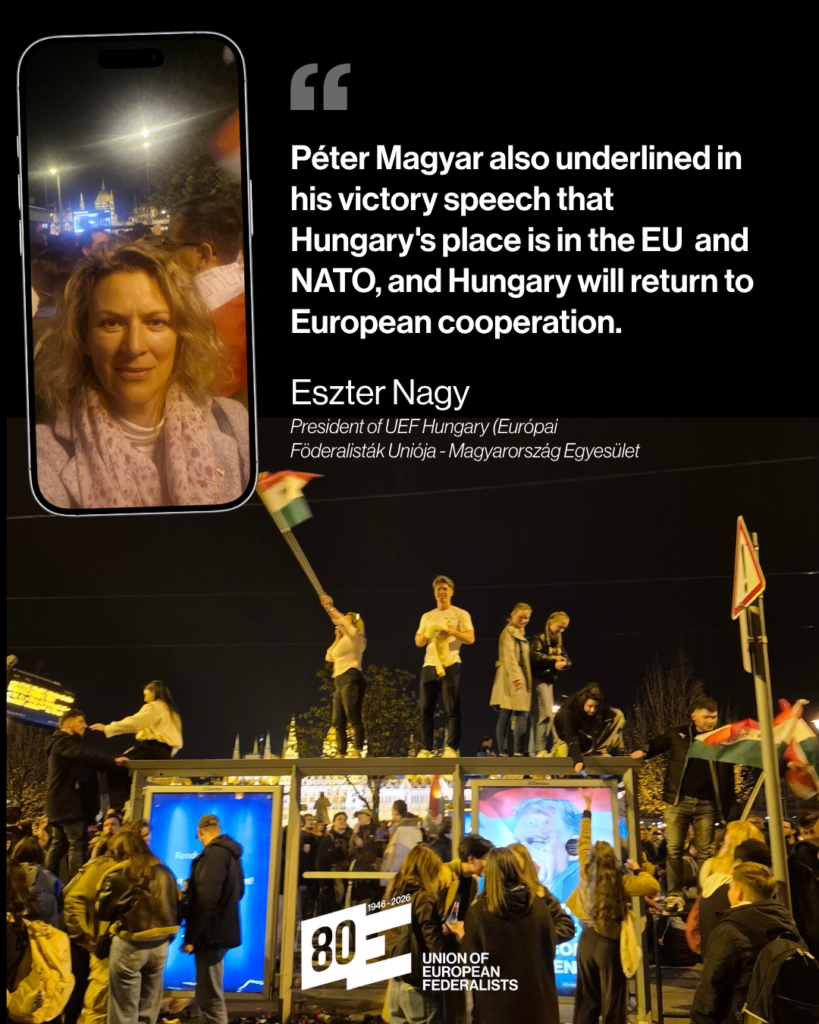
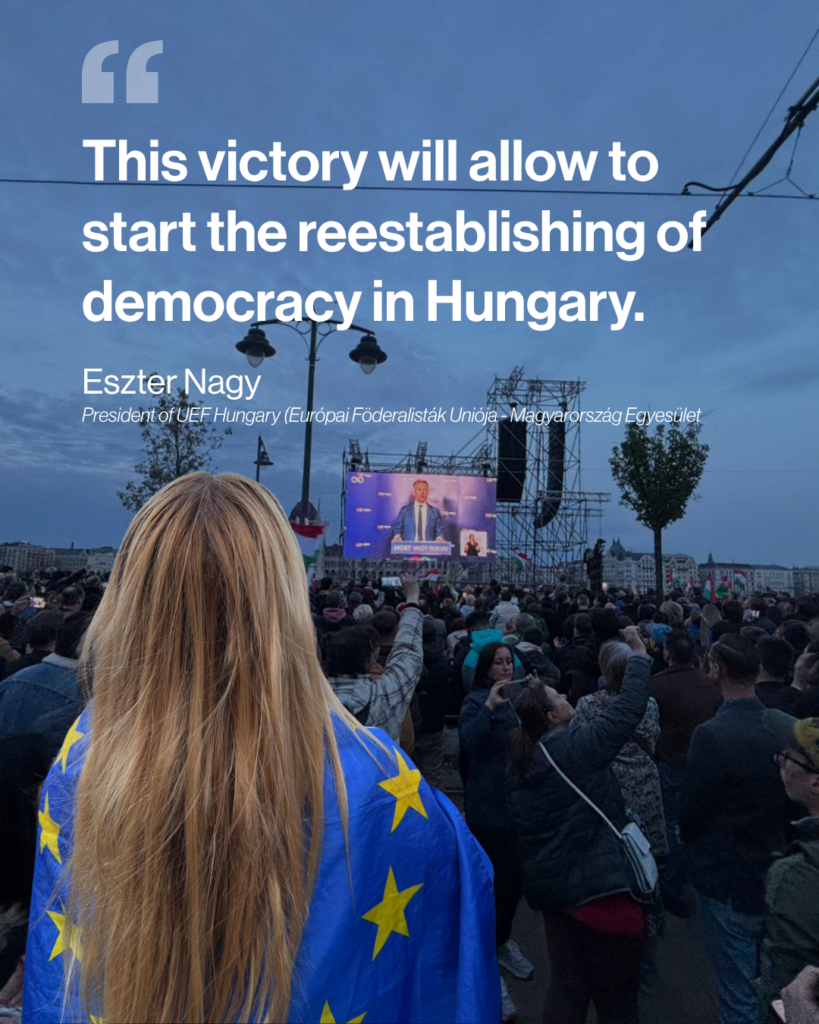
Here below the collections of publications and interventions made by actors of our federalist movement around the Hungarian elections.
France
Read here three articles written by Charles Nonne, spokesperson of the French section of the UEF, political analyst and former press correspondent for Le Courrier des Balkans, and published in French newspapers La Croix, La Tribune and Le Taurillon.
La Croix, entitled "Hongrie : "La défaite d'Orban serait un moment aussi historique de la rupture du rideau de fer"" : LINK HERE
La Tribune, entitled "OPINION. « Législatives en Hongrie : l’heure de vérité pour la démocratie européenne »" : LINK HERE
Le Taurillon, entitled "Les élections hongroises de 2026 sont l'heure de vérité pour la démocratie en Europe" : LINK HERE
Italy
Watch here the intervention of UEF EB Member and MFE Secretary-General Roberto Castaldi in the Italian Program Omnibus/La7 (12 April 2026).
Have participated the Vice-Secretary of State of Hungary, Marton Ugrosdy, Fabrizio Agnocchetti, Expert on Hungary, Il Domani journalist, Francesca De Benedetti. Watch HERE
Read here the Newsletter of the Movimento Europeo Italia dedicated to the elections in Hungary:
Here are some of the best Reels posted by UEF Hungary, including those created in collaboration with other national and local branches, other organisations (Pulse of Europe) and Jef Europe.
We would like to share with you an article published in Frankfurter Allgemeine Zeitung (FAZ) and written by Sven Simon, MEP EPP, Professor of International and European Law at Philipps University of Marburg and Chair of the Committee on Constitutional Affairs of the European Parliament (AFCO).
"The world order on which Europe’s security and well-being were founded has given way to a policy of imperial power. If the EU wishes to continue to play a role in the future, it must become more capable of taking action.
The international order on which Europe’s security and well-being were based for decades no longer exists. It is not weakened, nor is it in a state of transition: it has vanished. In its place, a world of imperial structures, strategic power politics and the systematic exploitation of dependencies is taking hold. In this order, it is not formal equality that matters, but the capacity to act politically – whether actors shape events or are shaped by them.
Europe finds itself at the centre of this new reality: too large to be ignored, yet too fragmented to be taken seriously as a power. In key policy areas – security, energy, technology, industry and capital markets – national sovereignty alone is no longer capable of acting. Under the conditions of the new world order, strategic sovereignty can only be organised at the European level.
Federal strength rather than national fragmentation
The experience of the European Union has long confirmed this. Where Europe has federal decision-making and oversight structures, it is able to act and assert itself. The internal market, trade policy, competition law and monetary policy demonstrate what is possible when responsibilities are concentrated and decisions are made in a binding manner. Where, on the other hand, Europe clings to national fragmentation, it emerges politically weakened, pitted against one another and dependent on external actors.
Coordination alone does not generate power in this world. A confederal order remains a collection of national vetoes. What appears to individual states as protection actually creates vulnerability in the context of imperial competition. With growing dependence on energy imports, critical raw materials, global supply chains and foreign technology, the strategic risk for Europe is increasing. Those who lose their economic and security autonomy will, in the long term, also lose the ability to defend their own values.
Trust is being undermined
The ability to act at the federal level in certain policy areas is therefore inevitable from a geopolitical perspective. It is precisely this necessity, however, that is meeting with ever-increasing political and social resistance across Europe. The reason for this lies less in the issue itself than in the institutional structure of the European Union. The EU possesses considerable regulatory power; its decisions increasingly affect highly political key sectors of state sovereignty. At the same time, its institutional architecture is only capable to a limited extent of ensuring political responsiveness, public accountability and adaptive governance.
Highly political decisions emerge within a complex, multi-level system that diffuses political responsibility, depersonalises political conflicts and systematically prioritises legal continuity over the capacity for political correction. In practice, European law is easier to create than to amend or repeal. This structural asymmetry generates dissatisfaction – not because European politics is fundamentally rejected, but because it is perceived as difficult to correct from a political perspective.
It is precisely this lack of capacity for revision that undermines trust. Where political decisions cannot be visibly reviewed, adjusted or, in case of doubt, even revoked, the impression of technocratic inevitability is created. Federal solutions then appear not as a necessity, but as an irreversible transfer of powers. In this way, institutional shortcomings block the political mediation that is precisely required during those phases of integration that would be objectively necessary.
The EU must be reformed now!
From this diagnosis emerges a reform architecture comprising five interconnected elements.
Firstly, a European executive is needed that is clearly politically accountable, whose actions can be attributed to the Parliament. European politics needs visible accountability, not just efficient procedures. In other words: the European Commission must become politically electable and removable.
Secondly, the European Parliament must be substantially strengthened, in particular through a genuine right of legislative initiative – not primarily to create new laws, but to be able to propose independently which existing European laws should be amended, adapted or repealed. Political accountability without autonomous decision-making power remains incomplete. It is precisely the ability to correct flawed strategic decisions that has been lacking so far, yet it is fundamental to democratic acceptance.
European law must not be irreversible
Thirdly, strategic policy requires dynamic European law. In key policy areas, systematic mechanisms for review and revision must be established, for example through review and sunset clauses. European law must not be understood as an irreversible end state, but as a politically verifiable decision. The possibility of amending or repealing EU law in a targeted manner is not a sign of weakness, but a prerequisite for democratic stability.
Fourthly, functional federalisation is necessary – where appropriate within the framework of enhanced cooperation. In areas of genuine European interdependence, clusters of sovereignty must emerge that bring together decision-making and oversight powers, without pursuing generalised centralisation.
What role will Europe still play in the future?
Finally, Europe’s capacity to act requires a political declaration. Formal transparency is not enough. A forum for accountability linked to the European Parliament could contribute to this, without transferring decision-making powers. It could bring together, on a case-by-case basis, MEPs from the majority and the minority, representatives of national parliaments and the European executive in a clear accountability role, to make decisions publicly comprehensible both before and after their adoption.
The old order has vanished. The new one has not yet been written. It is time to decide whether Europe will be an object or a subject in this world. The capacity to act at a federal level is inevitable from a geopolitical perspective, but politically sustainable only if European power remains verifiable, correctable and democratically accountable. This is not a technical detail, but the key to democratic acceptance."
We would like to share here an article signed by Domenec Ruiz Devesa, President of the UEF, and published in the Spanish media Información with the title: Las inasumibles dependencias europeas: defensa y energía
Domènec Ruiz Devesa re-elected by acclamation as President of the Union of European Federalists.
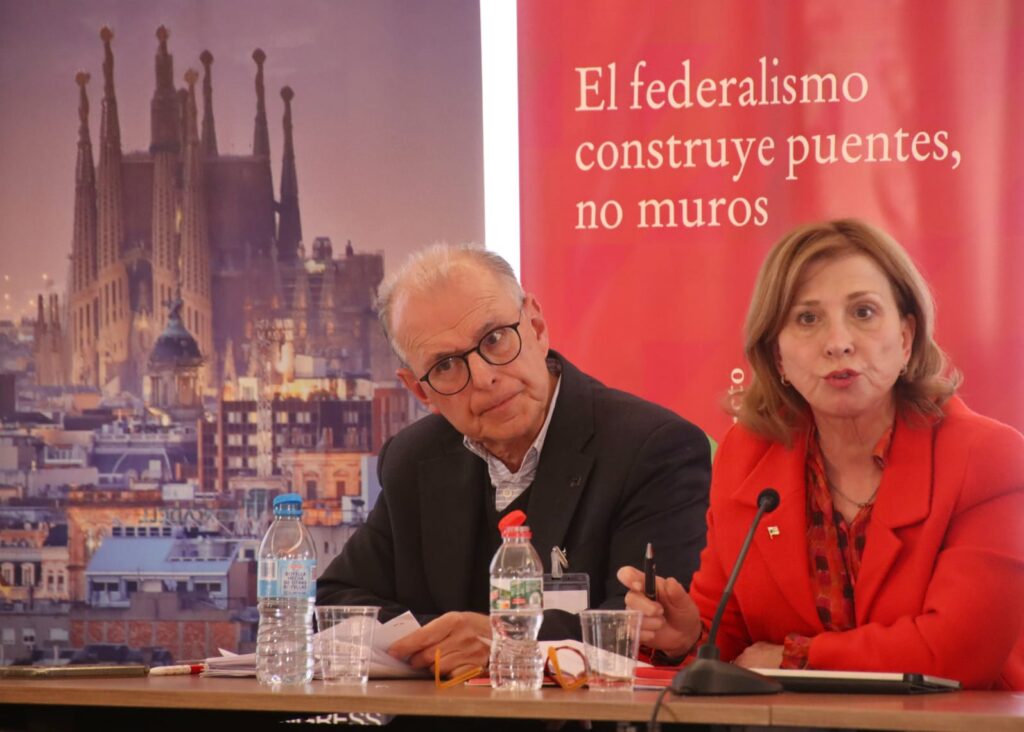
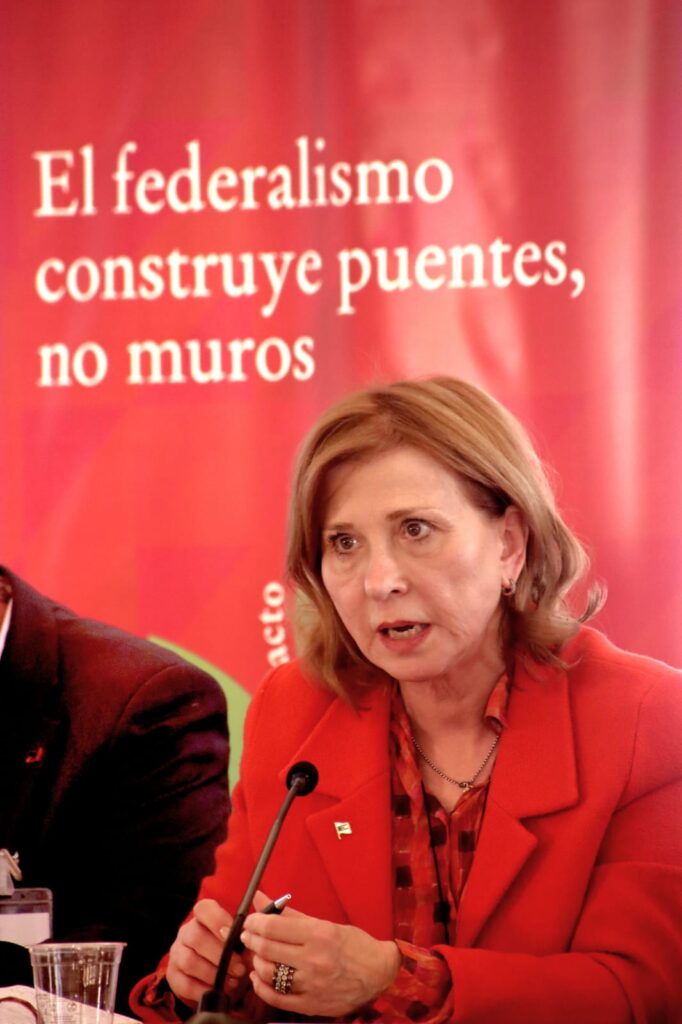
Former Spanish Member of the European Parliament Domènec Ruiz Devesa has been re-elected by acclamation as President of the Union of European Federalists (UEF) during the XXIX European Congress held in Barcelona from 20 to 22 March 2026, co-organised with UEF Spain and UEF Catalunya Federalistes d’Esquerres.
the Mayor of Barcelona Jaume Collboni, former EU High Representative and Commission Vice President Josep Borrell, Vice-President of the European Parliament Javier López, and former President of the European Parliament Enrique Barón Crespo.
Notably, both President Illa and Minister Albares emphasised the importance of the federalist path as a response to today’s challenges, highlighting the role of a more integrated Europe in ensuring peace, social justice, and international stability. To watch the welcoming speeches, please find here below
Debating the Future of European Federalism
A key highlight of the Congress was the Spinelli Group debate titled “Is Draghi's Pragmatic Federalism enough to face current challenges?”, which gathered leading federalist figures such as Gabriele Bischoff, MEP and President of the Spinelli Group, former HR/VP Josep Borrell, and Guy Verhofstadt, former Prime Minister of Belgium, Former MEP and ex-officio Board Member of the Spinelli Group. The discussion underscored the need for a method to strengthen political ambition in European integration to address current geopolitical, economic, and security challenges. While the necessity of deeper integration is widely acknowledged, the focus must now shift to concrete actions to achieve it.
Celebrating 80 Years of Federalism
The Congress also marked the 80th anniversary of the UEF with a cocktail reception featuring an art exhibition by Lorenzo Epis, symbolising the connection between culture, European citizenship, and the federalist project.
Another important moment was the event bringing together former UEF Presidents—Jo Leinen, Mercedes Bresso, Andrew Duff, Elmar Brok, and Sandro Gozi—who reflected on the evolution of the European federalist movement. By acclamation, they all became Honorary Presidents.
A Political Agenda for a More United Europe
Throughout the Congress, which continued over the weekend, delegates debated and adopted key political resolutions outlining an ambitious vision for the future of the European Union. Key priorities include:
overcoming unanimity in key policy areas such as foreign affairs, defence, and taxation;
advancing towards a credible and operational European Defence Union;
developing a common fiscal capacity, including instruments such as eurobonds;
promoting deeper integration through coherent enhanced cooperation;
advancing Treaty reform and strengthening the role of European citizens.
New Leadership Elected
The Congress also elected the new statutory bodies of the UEF. Alongside President Ruiz Devesa, the following Vice-Presidents were elected: Daphne Gogou, Giulia Rossolillo, Markus Ferber MEP, and Alin Mituta former MEP 2019-2024. Antonio Argenziano was elected Treasurer.
The Executive Bureau also includes Eszter Nagy, Liubba El Hadi Hamed, Roberto Castaldi, Simina Tulbure, Michael Montag, José Luis Salazar, Sebastian Camarero, and François Leray. The Secretary General Mathilde Baudouin is confirmed in her charge.
The elected Executive Bureau of the UEF. LINK HERE for the Names.
A Mandate for European Political Union
Following his re-election, Domenec Ruiz Devesa stated: “Europe is at a moment where it must take a qualitative leap towards political union to ensure its security, prosperity, and global relevance.”
He further stressed that European federalism “is no longer an option, but a practical necessity,” calling on European institutions and national governments to act with greater ambition.
The UEF Secretariat
Ahead of the European Council meeting of 19–20 March, the Action Committee for the United States of Europe has taken an initiative to contribute to the ongoing debate on the future direction of the European Union.
Last week, the Action Committee transmitted a letter to Pedro Lourtie, Head of Cabinet of the President of the European Council, together with a document drafted in the format of European Council conclusions. The initiative was undertaken on behalf of the President of the Union of European Federalists (UEF), Domènec Ruiz Devesa, with the aim of providing a constructive federalist contribution to the current reflection on how the Union can strengthen its capacity to act.
The document focuses on three key areas currently at the centre of the EU agenda: European sovereignty in security and defence, digital sovereignty, and progress towards a deeper political union. It proposes a set of measures designed to reinforce the Union’s ability to respond effectively to the growing geopolitical and technological challenges facing Europe.
In particular, the contribution highlights the need to overcome the limitations of unanimity in decision-making, to advance the discussion on institutional reform based on the European Parliament’s proposal of 23 November 2023 to revise the Treaty of Lisbon, and to promote a coherent framework of strengthened cooperations among Member States willing to move forward in key policy areas.
Among the priorities identified are the further deepening of the internal market, stronger tax coordination, and greater integration of foreign policy and defence. The initiative aims to encourage concrete progress in these areas while supporting a broader federalist vision of the European Union.
Through this contribution, the Action Committee seeks to participate constructively in the debate on how to equip the European Union with the political and institutional tools necessary to act effectively and protect its citizens in an increasingly complex global environment.
The Political and Activity Report 2025 provides a comprehensive overview of the organisation’s initiatives, campaigns, and political actions carried out throughout the year. The report highlights the federalist movement’s efforts to promote democratic reform of the European Union, strengthen European integration, and mobilise civil society and political leaders around the vision of a more united and sovereign Europe.
Introduced by a foreword from the leadership of the organisation, the report underlines the importance of renewed political commitment to European unity in a rapidly changing geopolitical environment. As emphasised in the foreword, the federalist movement aims to “promote debate, translating challenges into concrete action and driving the political will to move forward in European integration.”
Throughout its pages, the report presents the key activities undertaken by UEF and its partners: advocacy for treaty reform, initiatives supporting a European Defence Union, public campaigns and institutional dialogue aimed at advancing the project of a federal Europe. These actions reflect the broader mission of the federalist movement to strengthen democratic governance at the European level and to contribute to shaping the future of the Union. ()
Additional publications and past reports are available in the Federalists’ Series, the UEF library of policy papers, analyses and activity reports documenting the work of the federalist movement over the years: LINK HERE https://federalists.eu/library-series/federalist-reports/
The Union of European Federalists (UEF) has published a new policy paper titled “Is a Federal European Union Possible? Yes — but not at Twenty-Seven.” The paper examines one of the central institutional challenges facing the European Union today: how to overcome the paralysis created by unanimity in key policy areas and enable the Union to act effectively in an increasingly unstable geopolitical environment.
Written by Domènec Ruiz Devesa, President of the UEF and former Member of the European Parliament, the paper argues that the current decision-making system — where unanimity is still required in fields such as foreign policy, defence, taxation and EU finances — severely limits the EU’s capacity to respond to strategic challenges.
The analysis highlights how repeated vetoes by individual governments can block decisions affecting hundreds of millions of Europeans. With the prospect of future enlargements, this structural problem risks becoming even more acute.
The policy paper explores several possible institutional pathways to overcome the veto system and move towards a more federal and effective Union. Among the options discussed are the use of the passerelle clauses of the Lisbon Treaty, a broader Treaty reform process, and the creation of a federal core of willing Member States through enhanced cooperation mechanisms embedded within the EU framework.
According to the paper, a vanguard group of countries ready to deepen integration could advance common policies in areas such as foreign policy, defence and fiscal capacity, while remaining fully anchored within the European Union’s institutional structure.
At a time when Europe faces growing geopolitical pressures and internal fragmentation, the policy paper contributes to the ongoing debate on how the EU can strengthen its democratic legitimacy, strategic autonomy and capacity to act.